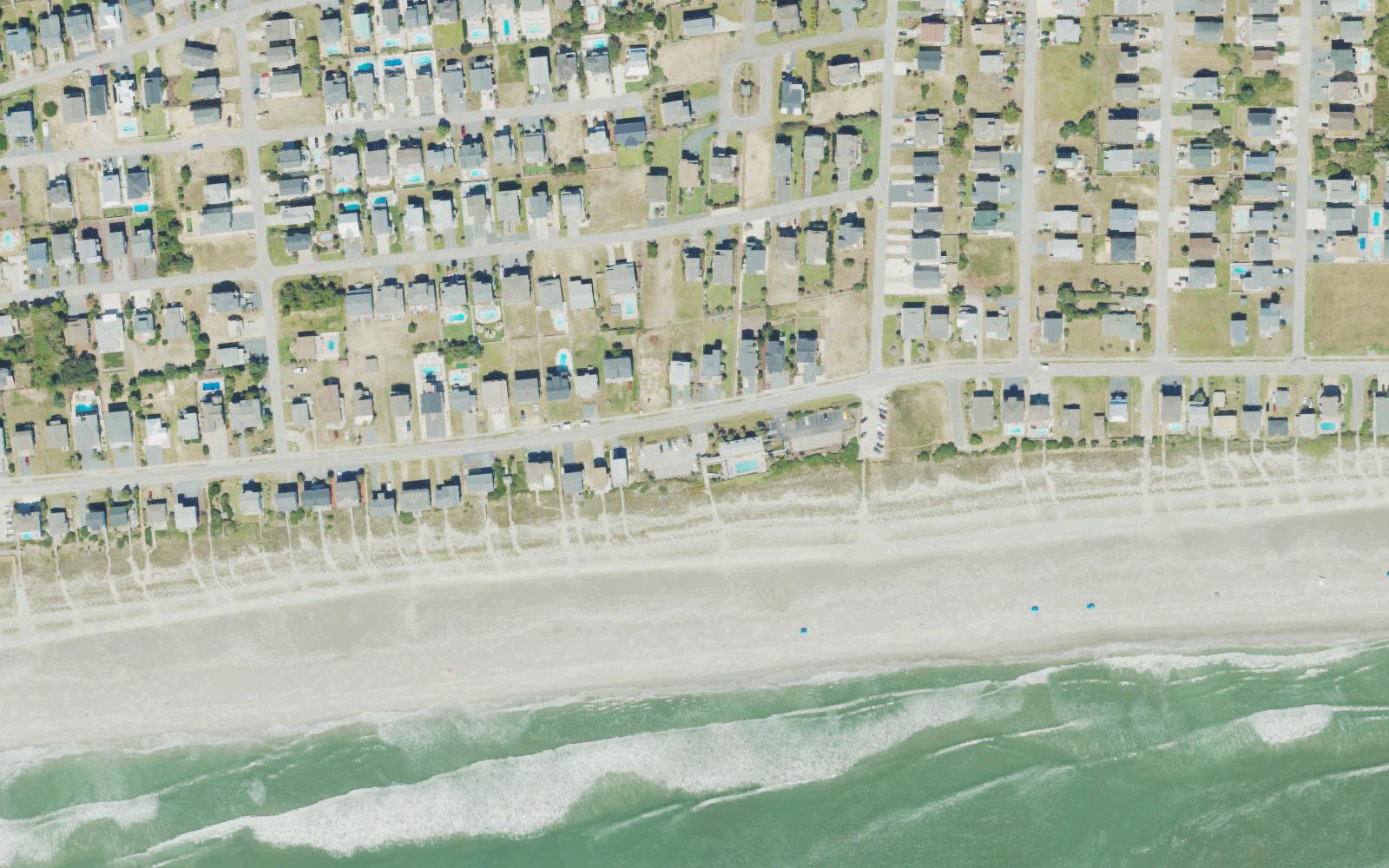
Buying a beach house near Wilmington is less about the house than about three decisions you make before you write an offer: whether you will occupy it, rent it, or both; which island fits how you actually use a coast; and whether you can carry it in a year when it sits empty. Your financing, your insurance form and your tax treatment all change based on that first answer. The houses are the easy part.
- Second home, rental, or investment: pick before you shop
- What your money buys, island by island
- Financing a coastal second home
- Insurance is the line item that surprises people
- Property tax, occupancy tax and income tax
- If you plan to rent it: the rules that actually apply
- Setbacks, erosion and the physical risk you are buying
- Running the real annual number before you offer
Second home, rental, or investment: pick before you shop
Almost every problem we untangle for coastal buyers traces back to a decision made loosely at the start. People say “we will use it some and rent it some,” then learn at the loan application that a lender has to put the property in one box, and that the box changes the rate, the insurance form and the tax return.
A true second home
Fannie Mae’s rule is specific. A second home has to be a one-unit dwelling, suitable for year-round occupancy, occupied by you for some portion of the year, and under your exclusive control. It must not be primarily used or operated as a rental, and it must not be subject to any agreement that gives a management firm control over the occupancy of the property. Fannie Mae Selling Guide B2-1.1-01, read November 2026.
That last clause is the one people trip over. Handing the keys to a rental company that controls the calendar is exactly what the rule describes. On a second-home loan, you need to be the one who decides when the house is occupied.
The guide does leave room for some rental use. If a lender identifies rental income, the loan can still be delivered as a second home as long as that income is not used to qualify you and the other requirements are met. Same source. Renting a few weeks in July is not disqualifying. A full-season management agreement is a different matter.
An investment property
Anything that is not your principal residence and fails the second-home test is an investment property. Fannie Mae states that a loan-level price adjustment applies to all investment property loans, on top of any other pricing adjustments. Same source. That is the structural reason an investment loan costs more than a second-home loan on the same house.
A house you will eventually retire into
The most common version we see at Oak Island, Southport and Holden Beach: buy in your fifties, use it on weekends, rent it lightly, move in at retirement. That plan belongs in the second-home box from day one, and our guide to retiring in Wilmington is the companion to this one.
- FHA’s single-family insurance programs are limited to owner-occupied principal residences HUD Handbook 4000.1, November 2026
- VA purchase loan eligibility requires that you will live in the home you are buying with the loan VA.gov, November 2026
What your money buys, island by island
County medians are a poor guide to beach pricing, since the beach towns sit well above them, but they do tell you what kind of market you are negotiating in.
| County | Median sale price | Days on market | Year over year |
|---|---|---|---|
| New Hanover (Wrightsville, Carolina, Kure) | $464,000 | 61 days | -1.3% |
| Brunswick (Oak Island, Holden, Ocean Isle, Sunset, Caswell, Bald Head) | $394,000 | 93 days | +3.7% |
| Pender (Surf City, Topsail Beach) | $499,000 | 83 days | +16.1% |
Source: our county market updates, drawn from Redfin county housing-market pages, three months ending September 2026, read October 17, 2026. Beach-town prices run above these county medians.
The practical read: Brunswick County is slow, with roughly 2,334 active listings and about 38 percent of them already carrying a price cut as of September 2026. Same source. A patient buyer has real negotiating room there this winter. Pender’s large percentage jump came on about a hundred sales a month, so treat it as noise rather than a trend.
The New Hanover beaches
Wrightsville Beach is the most expensive and the most year-round, closest to downtown Wilmington, and the island where you are most likely to pay a premium for a lot and a teardown. Carolina Beach is the rental island of the three, with a boardwalk, a marina and a mix of cottages, condos and newer builds. Kure Beach sits just south and is quieter, with Fort Fisher at the end of the road; we compared them in Carolina Beach or Kure Beach. Figure Eight Island is private and bridge-gated, with its own infrastructure obligations.
The Brunswick beaches
Oak Island is the largest of the Brunswick beaches and, for most budgets, the most house per dollar, with a long-established rental trade. Our post on Oak Island as a rental gets into the seasonality. Holden Beach is quieter and family-oriented, with no commercial strip on the island, and we broke down the carrying costs in what it costs to own a home on Holden Beach. Ocean Isle Beach has a strong canal-home market, and we have been honest about its tradeoffs in the downsides of owning on Ocean Isle.
Sunset Beach sits at the South Carolina line. Caswell Beach is small and golf-oriented, with far less rental turnover than Oak Island next door. Bald Head Island is ferry-only with no cars, and its cost structure is unlike anywhere else here, as we covered in what it really costs to live on Bald Head Island.
The Topsail beaches
Surf City is the commercial center of the Topsail area, with a high-rise bridge and a growing mainland side. Topsail Beach, at the south end, is the quietest of all of them. We compared the two in Surf City or Topsail Beach, and looked at Surf City as a rental market in is Surf City a good place to buy a beach rental. For the mainland version of this decision, Southport gives you a working waterfront town and none of the oceanfront insurance exposure. Everything we have written is indexed at our neighborhood guides page.
Financing a coastal second home
Start with the rate environment. Freddie Mac’s survey put the 30-year fixed average at 7.11 percent and the 15-year at 6.45 percent for the week ending November 12, 2026. That is an average on owner-occupied loans, and a second-home or investment loan prices above it.
- 30-year fixed average 7.11% Freddie Mac PMMS, November 2026
- 15-year fixed average 6.45% Freddie Mac PMMS, November 2026
- An investment property loan carries a loan-level price adjustment on top of other adjustments Fannie Mae Selling Guide B2-1.1-01, November 2026
We will not print a down payment percentage here, because the required amount moves with the program, your credit profile and the lender’s overlays. Do this instead: before you tour anything, get a written loan estimate for the exact occupancy type you intend, at a price point in your range. If you are undecided, have it priced both ways. The gap between the two quotes is the real cost of the rental plan.
Condos are their own conversation
Much of the coastal inventory under $500,000 is condominium, especially at Carolina Beach and Surf City. Condo financing depends on the project’s approval status, reserves, insurance and share of investor-owned units, and that review happens after you are under contract, which is late to find a problem. Ask for the association’s budget, reserve study and master insurance certificate during due diligence.
Competing with cash
A meaningful share of beach purchases close in cash. If you are financing you are competing against those offers, and the way you win is usually not price. It is a short, firm due diligence period with a pre-underwritten loan behind it, which is what our Buyer Advantage Program is built to do.
Insurance is the line item that surprises people
This is where a coastal second home behaves least like the house you live in. Three separate things are going on, and buyers routinely meet all three in the same week.
Your policy is probably a dwelling policy, not a homeowners policy
Homeowners forms are built for owner-occupied houses. A property you occupy part of the year, or rent out, is commonly written on a dwelling form instead. The two are rated on separate tracks in North Carolina, and 2026 was eventful for the dwelling track.
- Dwelling insurance, which covers non-owner-occupied property such as rentals and vacation homes, was capped at 5% a year for two years, the first increase in October 2026 and the second in October 2027; insurers had asked for close to 68% Public Radio East, April 23, 2026
- The January 2025 homeowners settlement set beach territories in New Hanover, Brunswick and Pender at 16% effective June 1, 2025 and 15.9% the following year, against a statewide average near 15%, with no new filing before June 2027 Port City Daily, January 2025
Wind and hail may not be in that policy at all
Many coastal carriers exclude windstorm and hail, and the coverage is bought separately, often through the North Carolina Insurance Underwriting Association. The deductible is a percentage of your Coverage A dwelling amount, not a flat dollar figure, and a named storm deductible works the same way. The NC Department of Insurance gives the arithmetic plainly: a 2 percent named storm deductible on a $300,000 home is $6,000 out of pocket, and it generally applies from the time a named storm advisory, watch or warning is issued for any part of North Carolina until 24 hours after the last one ends. NC Department of Insurance, windstorm and hail, read November 2026. We go deeper in our guide to coastal NC homeowners insurance.
Flood coverage settles differently on a second home
Almost nobody knows this going in. Under the National Flood Insurance Program’s Dwelling Form, your claim is settled at replacement cost only if your building coverage is within 80 percent of the home’s replacement cost and the home is your principal residence. Otherwise you are paid actual cash value, which is replacement cost less depreciation, and contents claims are always paid that way. FEMA, NFIP Summary of Coverage, December 2023.
- Dwelling Form maximums: $250,000 building, $100,000 contents FEMA, NFIP Summary of Coverage, December 2023
- Replacement cost settlement requires the home to be your principal residence; otherwise actual cash value applies FEMA, NFIP Summary of Coverage, December 2023
- Increased Cost of Compliance can pay up to $30,000 toward raising, demolishing or relocating a substantially damaged home FEMA, NFIP Summary of Coverage, December 2023
Read that again if you are buying a $900,000 oceanfront house as a second home. The federal program caps the building at $250,000 and depreciates the payout. Excess flood coverage from the private market closes that gap and needs to be priced during due diligence. Our full treatment is in the Wilmington flood zones and flood insurance guide, with a shorter piece on what it costs to insure a beach house in NC. Get a real quote in writing inside your due diligence period, not an estimate and not last year’s number from the seller.
Property tax, occupancy tax and income tax
Property tax
You pay a county rate plus a town rate. North Carolina’s county rates for fiscal year 2026-2027 are published by the Department of Revenue.
| County | Rate per $100 of value | Last reappraisal | Next scheduled |
|---|---|---|---|
| New Hanover | $0.3060 | 2025 | 2029 |
| Brunswick | $0.3420 | 2023 | 2027 |
| Pender | $0.7375 | 2019 | 2027 |
Source: NC Department of Revenue, 2026-2027 property tax rates and reappraisal schedules for North Carolina counties.
Pay attention to that last column. Brunswick and Pender both revalue in 2027, and Pender has been running on 2019 values, so many owners there will see a large assessment change and new rates set against the new base. If you buy in Surf City or Topsail Beach this winter, budget for a different tax picture in 2027.
- Carolina Beach 17.12 cents, Kure Beach 19.5 cents, Wrightsville Beach 5.31 cents per $100, fiscal year 2026-2027 Port City Daily, July 2026
- Oak Island $0.20 per $100 for fiscal year 2026-2027, of which 3 cents is designated for the Beach Nourishment Fund Town of Oak Island adopted budget, FY 2026-2027
That Oak Island line is worth sitting with. Beach nourishment is a line in the budget you help pay, and on some islands it also arrives as a special assessment. Ask what the town’s nourishment funding plan is, and whether an assessment is pending.
Occupancy tax, if you rent
Short-term stays are taxed on top of sales tax, at rates set by local act.
- New Hanover County: 3% countywide plus an additional 3% for Wilmington, the beach towns and unincorporated areas, so 6% in total NC Restaurant and Lodging Association, July 2026
- Brunswick County: 1% county, plus 5% at Oak Island, Holden Beach, Ocean Isle Beach, Sunset Beach and Caswell Beach, and 3% at Southport; Bald Head Island is 6% and exempt from the county 1% NC Restaurant and Lodging Association, July 2026
- Pender County: 3% county plus 3% at Surf City and Topsail Beach NC Restaurant and Lodging Association, July 2026
- Sales and use tax on top: 7% in New Hanover, 6.75% in Brunswick and Pender NC Department of Revenue, effective July 1, 2026
At Oak Island that is 6 percent occupancy plus 6.75 percent sales tax on every booking. It comes out of the guest’s payment, but you are responsible for collecting and remitting it, and a management company doing it for you does not move the liability off your name.
Income tax
North Carolina taxes individual income at a flat 3.99 percent for tax year 2026. NC Department of Revenue, read November 2026. Rental income from the house is taxable here regardless of where you live.
Federally, two IRS thresholds shape the plan. Rent the house fewer than 15 days in the year and you do not report the rental income or deduct rental expenses. If your personal use exceeds the greater of 14 days or 10 percent of the days it is rented at a fair rental price, the house counts as a residence, and you divide expenses between rental and personal use by the number of days. Rental expenses cannot exceed gross rental income, though unused amounts may carry forward. IRS Topic 415, read November 2026. We are brokers, not accountants, and that conversation belongs with a CPA before the offer.
If you plan to rent it: the rules that actually apply
The state limits what towns can require
North Carolina law says a local government may not require an owner or manager to obtain a permit or permission to rent residential real property, or to register rental property with the local government. The exceptions are narrow: properties with more than four verified violations in a rolling 12 months, two or more in a rolling 30 days, or properties in the top ten percent for crime or disorder under a local ordinance. N.C. Gen. Stat. 160D-1207(c).
That statute is why you will not find a registration program at most of these towns, and why the rule governing your house is almost never a short-term rental ordinance. It is the zoning use table for your parcel, plus your HOA or condominium declaration, as we showed in can I run a short-term rental in Carolina Beach.
So the question is not whether the town allows Airbnb. It is: what is this parcel’s zoning district, what does the use table say about transient lodging there, and what do the recorded covenants say. A private restriction is enforceable even where the town permits the use, as we found writing about HOA and insurance costs at Ocean Isle Beach.
The Vacation Rental Act governs the bookings
A vacation rental is the rental of residential property for vacation, leisure or recreational purposes for fewer than 90 days, to someone who has a permanent residence to return to. N.C. Gen. Stat. 42A-4(3). The money rules are strict. Advance payments go into a trust account, no more than 50 percent of the total rent may be disbursed before the tenant occupies the property, and sales and occupancy taxes and security deposits may not be disbursed before the tenancy terminates. N.C. Gen. Stat. 42A-16.
Bookings can come with the house
This is the clause that catches buyers who close in March and find the summer calendar already full and not theirs.
- A rental ending within 180 days after the new owner’s interest is recorded binds the new owner, who takes title subject to that agreement N.C. Gen. Stat. 42A-19(a)
- Past 180 days, the tenant generally cannot enforce the agreement unless the new owner agreed in writing, and is entitled to a refund N.C. Gen. Stat. 42A-19(a)
- The seller must disclose the booked periods before the sale contract is signed, deliver each tenant’s name, address and agreement within 10 days of transfer, and the buyer must notify each tenant within 20 days N.C. Gen. Stat. 42A-19
If the house has a rental history, ask for the booking calendar and the existing agreements in writing during due diligence. Those bookings are either a benefit you are acquiring or a constraint you are inheriting, and which one depends on whether you wanted the house in July.
Setbacks, erosion and the physical risk you are buying
Oceanfront land here is regulated under the Coastal Area Management Act, and the rules determine whether you can rebuild, how big, and where on the lot.
The oceanfront construction setback is measured landward from the first line of stable natural vegetation. For structures under 5,000 square feet it is 60 feet, or 30 times the setback factor. That factor comes from the long-term shoreline change rate, calculated on 50 or more years of data, and stays at its default of 2 where the shoreline is accreting or eroding at less than two feet per year. Faster erosion raises the factor and your setback, and larger structures require greater distances. NC Division of Coastal Management, read November 2026.
- Minimum 60-foot setback for structures under 5,000 square feet, measured from the first line of stable natural vegetation NC Division of Coastal Management, November 2026
- Current setback factors were approved by the Coastal Resources Commission on February 28, 2019; a 2025 erosion rate update is still under evaluation and not yet in effect NC Division of Coastal Management, November 2026
Two consequences. On a narrow oceanfront lot with a high erosion rate, the buildable envelope can be smaller than the footprint standing there today, so the house you are buying may not be the house you could rebuild. And if your lot sits near a line, the rate that governs it may change.
Ask three questions on any oceanfront or inlet-adjacent lot: what is the setback factor for this stretch of shoreline, where does the first line of stable natural vegetation sit relative to the house, and is the parcel inside a designated Inlet Hazard Area. The Division of Coastal Management can answer all three before due diligence ends.
Elevation, flood zone and the certificate
Get the elevation certificate. It drives the flood premium and tells you where the lowest floor sits relative to base flood elevation. If the seller does not have one, having it produced during due diligence is money well spent, and our flood zone guide explains how to read it.
Salt, wind and the maintenance curve
A beach house does not age like an inland house. Hardware corrodes, condensers in salt air have shorter lives, and decks, railings and paint all cycle faster. Budget well above what you would for a comparable house in an inland Wilmington neighborhood, and hire an inspector who works the islands regularly.
Running the real annual number before you offer
Here is the exercise we walk every coastal buyer through, and it takes about an hour once the quotes are in hand. Write down twelve lines. Principal and interest at the rate you were quoted for your occupancy type. County property tax. Town property tax. Homeowners or dwelling premium. Wind and hail premium if it is separate. Flood premium, including excess flood above the NFIP limits. HOA or condominium dues, plus any special assessment history. Utilities in the months the house sits empty. Maintenance reserve, set higher than you would inland. Pest and termite contract. Management fee if you are renting. Beach nourishment assessment if the town has one pending.
Then do it twice: once with zero rental income, once with the income you actually believe in. If the zero-income version does not work, the house does not work, because a hurricane in September takes the fall shoulder season with it.
With that number you can shop with conviction, and you can negotiate, which in Brunswick County this winter is not a small advantage. Our Brunswick County market update, New Hanover County market update and Pender County market update are refreshed monthly, and you can browse listings on our property search.
A beach house is a worse financial investment than most buyers expect and a better life purchase than most spreadsheets can show. The drawbacks are real. Insurance here has been rising on both tracks and is likely to keep rising. The federal flood program caps building coverage at $250,000 and pays depreciated value on a house that is not your principal residence. Brunswick and Pender both revalue in 2027, Pender off a 2019 base. Rental income is seasonal and reduced by management fees, cleaning, taxes and the weeks you block for yourself. Brunswick County ran 93 days on market in the three months ending September 2026, so this is not an asset you can exit quickly. And on an oceanfront lot, the setback rules may mean you could not rebuild what is standing there today. None of that is a reason to walk away if you want a beach house and can carry it in an empty year. It is a reason to buy with the numbers in front of you.
Related questions people also ask
Can I use an FHA or VA loan to buy a beach house in North Carolina?
Not for a vacation home. HUD Handbook 4000.1, read November 2026, limits FHA’s single-family insurance programs to owner-occupied principal residences, and VA.gov lists living in the home you are buying as a purchase loan eligibility requirement. If the beach house will be your primary residence those programs are on the table; if it is a second home or a rental, you are looking at conventional financing or cash.
Do I have to register my beach house with the town before renting it?
Generally no. North Carolina law states that a local government may not require an owner or manager to obtain a permit to rent residential real property or to register rental property with the local government, subject to narrow exceptions for properties with repeated verified violations, under N.C. Gen. Stat. 160D-1207(c). What does govern your house is the zoning district it sits in and any recorded HOA or condominium restriction, and both should be checked parcel by parcel before you buy.
What happens to the summer bookings if I buy a rental house in the spring?
Under the North Carolina Vacation Rental Act, if a rental ends within 180 days after your interest is recorded, you take title subject to that agreement and the tenant can occupy the house. Past 180 days, the tenant generally cannot enforce it against you unless you agreed in writing, and is entitled to a refund. The seller must disclose the booked periods before the sale contract, under N.C. Gen. Stat. 42A-19.
Why would my flood claim be paid at actual cash value instead of replacement cost?
Because of how the federal program settles homes that are not primary residences. Under the NFIP Dwelling Form, replacement cost settlement requires both that your building coverage is within 80 percent of the home’s replacement cost and that the home is your principal residence, per FEMA’s NFIP Summary of Coverage dated December 2023. A second home fails the second test, so the building claim is paid at actual cash value, meaning replacement cost less depreciation. Contents claims are paid at actual cash value in every case.
Which Wilmington-area beach town has the lowest property taxes?
It depends on the combination of county and town rate rather than either one alone. For fiscal year 2026-2027 the county rates are 30.6 cents in New Hanover, 34.2 cents in Brunswick and 73.75 cents in Pender per $100 of value, according to the NC Department of Revenue, and town rates stack on top, with Wrightsville Beach at 5.31 cents and Kure Beach at 19.5 cents per Port City Daily in July 2026. Because assessed values differ enormously between islands, the rate alone will mislead you. The tax bill on a comparable house is the only fair comparison.
Pick the island you think you want, then ask us for a carrying-cost worksheet on one specific listing there: the tax bill at current rates, an insurance quote on your name and occupancy type, the HOA history, and the rental picture if you want one. It will tell you more than another month of browsing. We would rather you walk away from the wrong house with the numbers in hand than close without them, and we are glad to talk it through before you get on a plane.
Sources, all read November 2026 unless dated: Fannie Mae Selling Guide B2-1.1-01; HUD Handbook 4000.1; VA.gov purchase loan eligibility; IRS Topic 415; NC Department of Insurance windstorm and hail; NC Division of Coastal Management oceanfront setback and erosion rates; N.C. Gen. Stat. 160D-1207 and Chapter 42A sections 42A-4, 42A-16 and 42A-19; NC Department of Revenue 2026-2027 property tax rates and reappraisal schedules, sales and use tax rates effective July 1, 2026, and the 2026 individual income tax rate; Town of Oak Island adopted budget FY 2026-2027. Freddie Mac Primary Mortgage Market Survey, week ending November 12, 2026. FEMA NFIP Summary of Coverage, December 2023. Public Radio East, April 23, 2026. Port City Daily, January 25, 2025 and July 10, 2026. NC Restaurant and Lodging Association, 2026 North Carolina Occupancy Taxes, July 2026. Our county market updates, from Redfin county pages for the three months ending September 2026, read October 17, 2026.