Yes, for a buyer who is buying bookings rather than a bargain. Surf City has a rental economy large enough to measure, and the three numbers that decide whether it works for you are the 6 percent occupancy tax you collect and remit, the vacation rental agreements you inherit at closing under North Carolina law, and a tax and insurance bill that does not care how many weeks you rent.
We get this question from two very different buyers. One wants a house the family uses in June and rents the rest of the season. The other is running a return calculation and wants to know whether Topsail Island beats Oak Island or Ocean Isle. Both get the same answer: Surf City’s rental demand is real and documented, and the carrying costs here have moved enough in two years that the margin is thinner than it was.
How big is the rental market here, actually?
You do not have to guess. Towns that levy an occupancy tax report what they collect, which is a direct read on how much lodging revenue moves through a town in a year. Our Surf City community guide carries the geography and school assignments behind the figures below.
- Town of Surf City occupancy tax collections, at its own 3 percent rate: $1,768,728 2026 Profile of North Carolina Occupancy Taxes and Their Investment, Magellan Strategy Group, July 2026, fiscal year 2024-25 collections
- That implies roughly $59 million of taxable lodging revenue inside the town limits that year Our arithmetic on the Magellan Strategy Group collections figure and the 3 percent rate
- Town of Topsail Beach, same tax and year: $726,926 Magellan Strategy Group, July 2026
- Pender County collected $4,509,972 countywide, of which $4,411,996 passed through to municipalities and $97,976 stayed with the county Magellan Strategy Group, July 2026, fiscal year 2024-25
- Pender County median sale price $499,000, up 16.1 percent year over year, with 83 days on market and 430 active listings Our Pender County market update, three months ending September 2026
- Surf City population estimated at 4,998 in 2024, up from 3,894 in 2020 Town of Surf City FY 2026-2027 budget documents
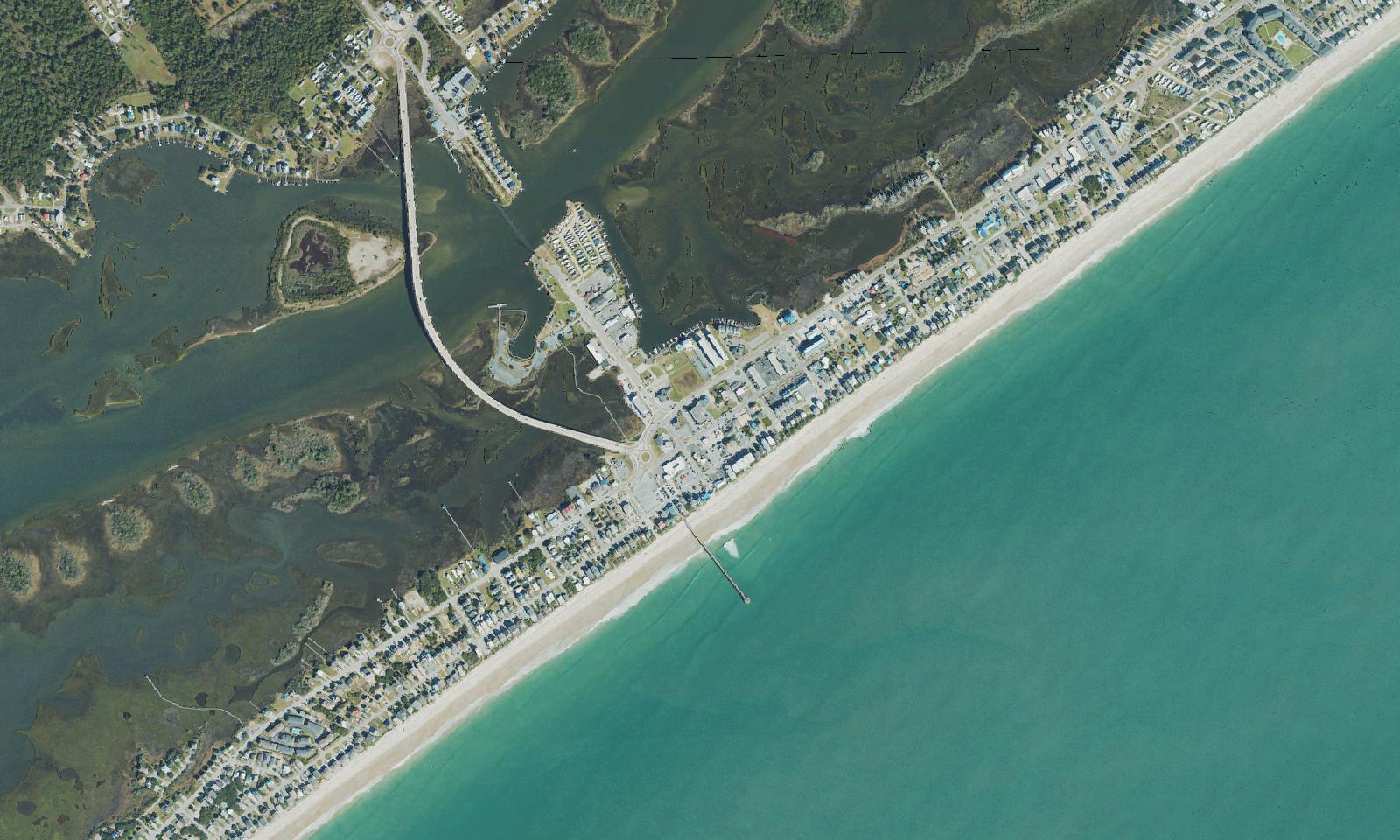
Read those two lines together. A town of roughly five thousand year-round residents moved something on the order of $59 million in taxable lodging revenue in a single fiscal year, and Surf City collected more than double what Topsail Beach did on the same 3 percent rate. That gap is the argument for Surf City over the quieter end of the island: renters can walk to restaurants, shops and the pier, and the town has a year-round services base that supports them in April and October as well as July. Our comparison of Surf City and Topsail Beach covers that difference in detail.
Be careful with the Pender County price line. The county closes around a hundred homes a month, so a 16.1 percent jump in a three-month median says as much about which houses happened to sell as about what houses are worth. Our Pender County market update notes the county’s median list price is up less than 1 percent over the same year, which is the steadier guide.
What you collect, and what you owe
Occupancy tax in Surf City is 6 percent in total: Pender County levies 3 percent and the town levies its own 3 percent on top. You collect it from the guest and remit it, and the county’s schedule is monthly, due on or before the fifteenth of the month after the tax accrues, with quarterly filing allowed for very small amounts. State and local sales tax also applies to accommodations, so confirm the current combined rate with the North Carolina Department of Revenue before you set your rates rather than after.
Where the money goes is worth knowing. Surf City’s 3 percent may be used only for tourism-related expenditures, a list that includes fire protection, public facilities and utilities, solid waste and sewage treatment, and the control and repair of waterfront erosion. Pender County’s proceeds from accommodations inside Surf City are routed back to the town for beach nourishment, so a meaningful share of what your guests pay comes back as sand in front of your house.
Then the bills that arrive whether you rent or not. The Town of Surf City set its property tax rate at 47.5 cents per $100 of value for fiscal 2026-2027, down 5.5 cents from 53 cents. Pender County held its rate at 73.75 cents on a 4 to 1 vote on June 15, 2026, and built the budget on 2025 valuations because Senate Bill 889 suspended the county’s 2026 reappraisal for a year. One wrinkle specific to this town: Surf City extends across the county line into Onslow County, so which county rate applies depends on which side of the line your parcel sits. Confirm that with the town and the county before you model anything.
Insurance is the line that has moved most. The Department of Insurance settlement announced January 17, 2025 approved 16 percent on June 1, 2025 and 15.9 percent on June 1, 2026 for the beach territory that covers Pender, New Hanover, Brunswick, Carteret and Onslow counties. Flood is a separate policy, and the National Flood Insurance Program caps building coverage on a single-family home at $250,000, so an oceanfront house worth well above that carries a gap you either accept or insure privately. Our guide to coastal North Carolina homeowners insurance works through the named-storm deductible, which on a rental is the number that decides whether a bad September is an inconvenience or a crisis.
You inherit the bookings, and that is the law
This is the part that catches first-time beach rental buyers, and it is not negotiable. North Carolina’s Vacation Rental Act, Chapter 42A of the General Statutes, defines a vacation rental as residential property rented for vacation, leisure or recreation for fewer than 90 days to someone who has a permanent residence elsewhere. If you buy a house with that kind of booking on the calendar, the Act decides what happens next.
Under section 42A-19, a vacation rental that ends no later than 180 days after your interest is recorded comes with the house: you take title subject to it and you must honor it, at the rate and terms the seller agreed to. If the agreement runs beyond that 180-day window, the tenant cannot enforce it against you unless you agree in writing, and the tenant is entitled to a refund. The seller has to disclose the periods the property is under vacation rental agreements before the sale, and within ten days after transfer must give you each tenant’s name and address and copies of the agreements. You then have twenty days after the transfer to notify each tenant in writing of the sale and whether their stay survives it. If you keep the seller’s rental agent as your own, you are generally relieved of sending those notices for the bookings you have to honor.
The money has rules too. Advance payments can only be collected if the agreement authorizes them, must land in a trust account at an insured institution within three banking days, and no more than half the total rent may be disbursed before the tenant takes occupancy. Security deposits and taxes cannot be paid out before the tenancy ends. That matters at closing, because the trust funds attached to bookings you inherit have to transfer to you or your agent, and reconciling them is a line item for the closing attorney rather than an afterthought.
So ask for the booking calendar and the trust account reconciliation on day one of due diligence, not day ten. A June closing on a house booked solid through Labor Day means you own somebody else’s pricing for your first season.
What the town can and cannot require of you
Short-term rental regulation in North Carolina is genuinely unsettled, and you should not accept a confident answer from either direction. State law at G.S. 160D-1207(c) limits a city’s ability to require short-term rental owners to obtain a permit or register the rental, and a North Carolina court struck down a municipal registration requirement on that basis, as North Carolina Lawyers Weekly reported on April 13, 2022. Senate Bill 291 in the 2025-26 session would set statewide rules; as of January 2026 it had not advanced.
What that means for you is narrower than it sounds. A town may not be able to make you register, but it can still regulate parking, occupancy, noise, trash and the connection to its utility system, and Surf City runs its own water and sewer enterprise rather than leaving the island on septic, which is part of why occupancy limits here are set the way they are. Call the Surf City planning department about the specific address, in writing, during due diligence, and ask about parking count, maximum occupancy and pending ordinance changes. That call has killed more bad rental purchases for our clients than any spreadsheet.
We do not publish rental income projections, and you should be skeptical of anyone who hands you one. The $59 million figure above is town-wide and from fiscal 2024-25; it tells you the market is deep, not what your house will book. Bedroom count, oceanfront against second row, parking, pet policy and the management company you choose will swing a single address’s revenue more than the town average ever could, and the two consecutive double-digit insurance increases in the beach territory have already taken a bite out of whatever pro forma you were shown last year. The honest version is this: at a 30-year fixed of 7.40 percent, a Surf City rental that depends on peak-season bookings to cover the note has very little room for a soft July, a roof claim or a named-storm deductible. If that describes your plan, buy less house or wait, and if a second row house two blocks off the beach rents nearly as well for meaningfully less money, we will point you at that instead.
Related questions people also ask
Do I have to honor existing vacation rental bookings when I buy in Surf City?
Usually yes. North Carolina’s Vacation Rental Act provides that if a vacation rental ends no later than 180 days after your interest in the property is recorded, you take title subject to that agreement and must honor it as written. Agreements that extend beyond that window are not enforceable against you unless you agree in writing, and the tenant is entitled to a refund of what they paid. Because the seller must disclose those rental periods before the sale, the booking calendar is something you can and should request during due diligence rather than discovering after closing.
What taxes do I collect on a Surf City vacation rental?
Occupancy tax in Surf City totals 6 percent, made up of Pender County’s 3 percent and the town’s own 3 percent, according to the Magellan Strategy Group profile of North Carolina occupancy taxes published in July 2026. You collect that from the guest and remit it to Pender County on a monthly schedule. State and local sales tax applies to accommodations as well, and the combined rate should be confirmed with the North Carolina Department of Revenue, since getting it wrong means you under-collected from guests who have already checked out.
Can I use a second home loan if I plan to rent the house out?
Not reliably. Second home financing generally assumes the property is for your own use and is not held primarily for rental income, while an investment property loan expects rental use and typically comes with a higher rate and a larger down payment. Lenders ask the question directly on the application and they do look at listing activity, so describing a rental as a second home to get better terms is a problem rather than a strategy. Tell your lender what you actually plan to do, get the terms for that use, and run your numbers on those terms.
Pick two or three specific Surf City addresses and ask for three documents on each before you fall for one: the existing vacation rental calendar, a homeowners and flood quote on that address, and written confirmation from the town of parking and occupancy limits. Those three pieces turn a rental purchase from a guess into a decision. Send us the addresses you are weighing and we will pull them together with you, including the version of the answer where a different town is the better buy.
Sources: 2026 Profile of North Carolina Occupancy Taxes and Their Investment, Magellan Strategy Group, July 2026, reporting fiscal year 2024-25 collections and occupancy tax allocation rules. Pender County Tourism, occupancy tax remittance schedule. Our Pender County market update, three months ending September 2026. Town of Surf City FY 2026-2027 Budget Ordinance, June 30, 2026, for the municipal tax rate and population estimate. WECT, June 16, 2026, and Port City Daily, June 19, 2026, on the Pender County rate of 73.75 cents and Senate Bill 889. NC Department of Insurance homeowners rate settlement, announced January 17, 2025. North Carolina General Statutes Chapter 42A, sections 42A-3, 42A-4, 42A-15, 42A-16 and 42A-19. G.S. 160D-1207(c) and North Carolina Lawyers Weekly, April 13, 2022, on municipal short-term rental registration. FEMA National Flood Insurance Program building coverage limit.