No. Under the North Carolina Offer to Purchase and Contract, the home is sold in its current condition, and you are not required to make any repair the buyer’s inspection turns up. What you are required to do is decide, during the buyer’s due diligence period, whether saying no is worth the risk that the buyer walks.
This is the question we get most from Raleigh sellers the day the inspection report lands, usually with a long PDF attached and a request list that reads like a renovation. The contract is on your side here, but the market is not always. Wake County had 5,476 active listings in October 2026, up 7.5 percent from a year earlier, with 53 days on market and 3.9 months of supply (Triangle MLS via our Wake County market update). That is balanced, not a seller’s market, and a buyer who terminates has other houses to look at. So the real answer has two parts: what the paper says, and what a smart seller does with it.
What does the NC contract actually say about repairs?
Nearly every resale in Wake County is written on the North Carolina Bar Association and NC REALTORS Standard Form 2-T, Offer to Purchase and Contract, most recently revised July 2025. Paragraph 4(d) is the one that matters. It says, in capital letters, that unless the parties agree otherwise, the property is being sold in its current condition. It goes on: the seller may, but is not required to, engage in negotiations for repairs, and any repair agreement is an addition to the contract that must be in writing and signed by both parties (Form 2-T, revised 7/2025, paragraph 4(d)).
The NC Real Estate Commission has said the same thing in plainer words. Asked whether there is a limit to the repairs a buyer can request, the Commission’s answer was that the buyer is free to ask for any number of things, but the seller is not obligated to agree to any of them, and repairs, if any, are completely negotiable (NC Real Estate Commission bulletin, “Due Diligence Questions and Answers,” February 2014). Buyers usually send the request on NC REALTORS Form 310-T, the Due Diligence Request and Agreement. You can sign it, counter it, or decline it.
Two more clauses frame the decision. Paragraph 4(g) gives the buyer the right to terminate for any reason or no reason during the due diligence period and get the earnest money back. Paragraph 4(h) says closing constitutes acceptance of the property in its then-existing condition unless provision is otherwise made in writing. In practice that means your no is final once the due diligence period ends, and the buyer’s walk-away right is final too (Form 2-T, revised 7/2025).
- Wake County active listings 5,476, up 7.5 percent year over year Triangle MLS (Doorify), October 2026
- Wake County days on market 53, up 3 days from a year earlier Triangle MLS (Doorify), October 2026
- Wake County months of supply 3.9 Triangle MLS (Doorify), October 2026
- Form 2-T current revision 7/2025 NC Bar Association and NC REALTORS, Standard Form 2-T
So what happens if you say no?
The buyer has three choices: close anyway, terminate during the due diligence period, or ask for a price cut or a credit instead of the repair. The due diligence fee you were paid is yours to keep in every one of those outcomes unless you materially breach the contract (Form 2-T, paragraph 1(l)). The earnest money goes back to the buyer if they terminate inside the period (paragraph 4(g)). So the arithmetic of a no is simple: you keep the fee, lose the contract, and go back on the market with the days-on-market clock still running and a disclosure problem you did not have before.
That last part is the one sellers underestimate. Once you know about a defect, you know about it. The NC Residential Property and Owners’ Association Disclosure Statement lets you check No Representation rather than disclose, but as we tell sellers, checking that box down the entire form does not always protect you and can spook the next buyer into ordering more inspections than they otherwise would. And your listing agent has an independent duty under Commission rules to disclose material facts they know about. A cracked heat exchanger found by buyer one does not disappear when buyer one leaves.
The other thing to understand is timing. In Wake County in October 2026, the median home took 53 days to go under contract (Triangle MLS). If a deal falls apart in week three of due diligence and you relist, you have spent a month and a half of market time and your listing now shows a back-on-market flag that buyers’ agents will ask about. Our post on what it costs to sell a house in Raleigh shows how carrying costs stack up during that gap.
Which repairs should a Raleigh seller actually agree to?
We sort inspection requests into three piles with our sellers, and the sorting is usually more useful than the arguing.
Safety and systems
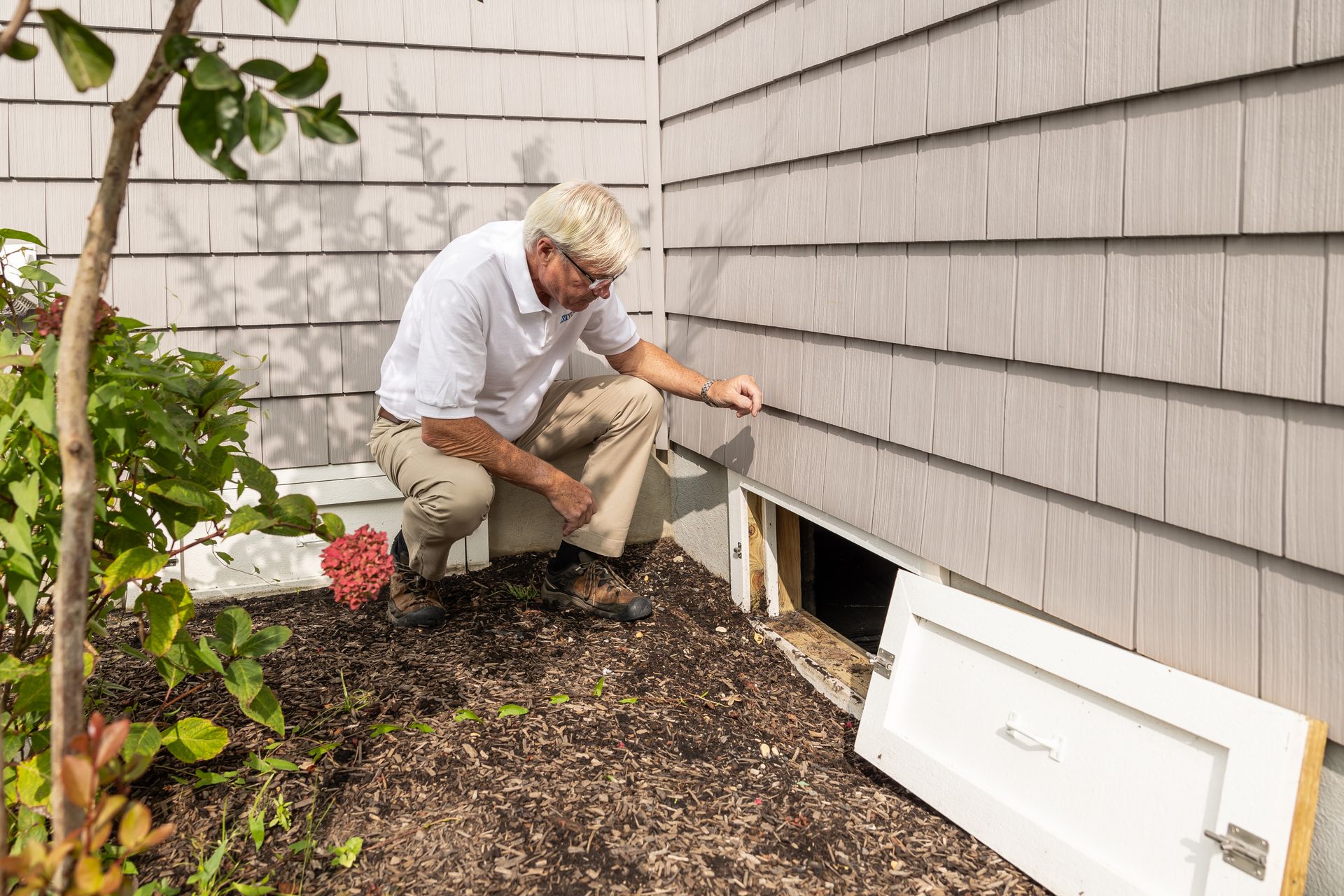
Active roof leaks, a failed heat pump, electrical panels with known defect histories, active water in the crawl space, a failed septic component in the parts of Wake County on private systems, and radon above the EPA action level. These are the items the next buyer will find too, and the ones most likely to show up on an appraisal or a lender’s conditions. We generally recommend fixing them or crediting for them, because refusing just moves the fight to the next contract.
Deferred maintenance
Rotten trim, worn caulk, a water heater past its service life that still works, a 2008 roof with a few more years in it. These are negotiable. A credit toward closing costs often beats a repair here, because the buyer gets to choose the contractor and you do not have to warrant somebody else’s work. Credits are limited by the buyer’s loan program, so ask your agent to confirm the cap with the buyer’s lender before you offer one.
Cosmetic and wish list
Paint, a dated vanity, a request to replace all the windows because the inspector noted fogged seals in two of them, a demand that you remove a tree. A polite no is fine.
If you do agree to repairs, paragraph 8(m) of Form 2-T requires that they be done in a good and workmanlike manner and gives the buyer the right to verify them before settlement. The Commission’s guidance is that the work does not have to be finished before the due diligence period ends, only before settlement (NCREC bulletin, February 2014). But NC REALTORS legal counsel has pointed out the catch: if you fail to complete agreed repairs properly, the buyer may terminate even after the due diligence period expires and recover the earnest money, the due diligence fee and their costs under paragraph 23(b) (NC REALTORS Q&A, “Must repairs be performed during the due diligence period?”). So use licensed contractors, keep the receipts, and finish early enough for a re-inspection.
The contract gives you the right to say no, but the market decides whether it is a good idea. In October 2026 Johnston County had 4.7 months of supply and Chatham had 5.3 (Triangle MLS), and a seller in those markets who refuses a reasonable repair request may not see another offer for two months. Inside the Beltline or in a hot Cary school zone with multiple offers, the calculus flips. The other hard case is a seller who genuinely cannot afford the repair. In that situation we talk about a credit, a price reduction or, when the house needs more than a credit can cover, whether a cash offer that skips the inspection negotiation entirely nets you more after the math. It sometimes does and sometimes does not, and we show you both numbers.
Related questions people also ask
Can a buyer back out after the due diligence period in North Carolina?
Only in narrow cases. Under the North Carolina Offer to Purchase and Contract, the buyer’s right to terminate for any reason ends when the due diligence period expires, and a buyer who walks after that typically forfeits the earnest money. The exceptions are a seller’s breach, such as failing to complete agreed repairs in a good and workmanlike manner or failing to deliver clear title, which can let the buyer terminate and recover the earnest money and due diligence fee.
Does the seller keep the due diligence fee if the buyer terminates?
Yes, in almost every case. The due diligence fee is paid to the seller on the effective date of the contract in exchange for the buyer’s right to walk away during the due diligence period, and it is non-refundable unless the seller materially breaches the contract. If the deal closes, the fee is credited to the buyer at closing. The earnest money is different and goes back to a buyer who terminates on time.
Should I get a pre-listing inspection before selling in Raleigh?
Often, yes, especially on an older home or one with a crawl space, an older roof or a septic system. A pre-listing inspection lets you fix or price around the big items before a buyer finds them, and it reduces the chance of a renegotiation three weeks into a contract. The trade-off is that anything it finds becomes a known material fact you or your agent must handle in disclosure, so go in prepared to address what it turns up.
Before you list, walk your house with the inspection report you would least like to receive in mind: roof age, HVAC age, crawl space, water heater, electrical panel. Fix or price around the big ones now. Then talk with our team about how to handle the request list when it comes, so a repair negotiation does not cost you the contract.
Sources: North Carolina Bar Association and NC REALTORS Standard Form 2-T, Offer to Purchase and Contract, revised 7/2025, paragraphs 1(l), 4(d), 4(g), 4(h), 8(m) and 23(b); NC Real Estate Commission bulletin, “Due Diligence Questions and Answers,” February 2014; NC REALTORS legal Q&A, “Must repairs be performed during the due diligence period?” and “Which form should be used to request repairs of the seller?” (Form 310-T), read November 20, 2026; NC Real Estate Commission Residential Property and Owners’ Association Disclosure Statement; Triangle MLS (Doorify) statistics for Wake, Johnston and Chatham counties, October 2026 closings, via our Triangle market updates, pulled November 10, 2026.