
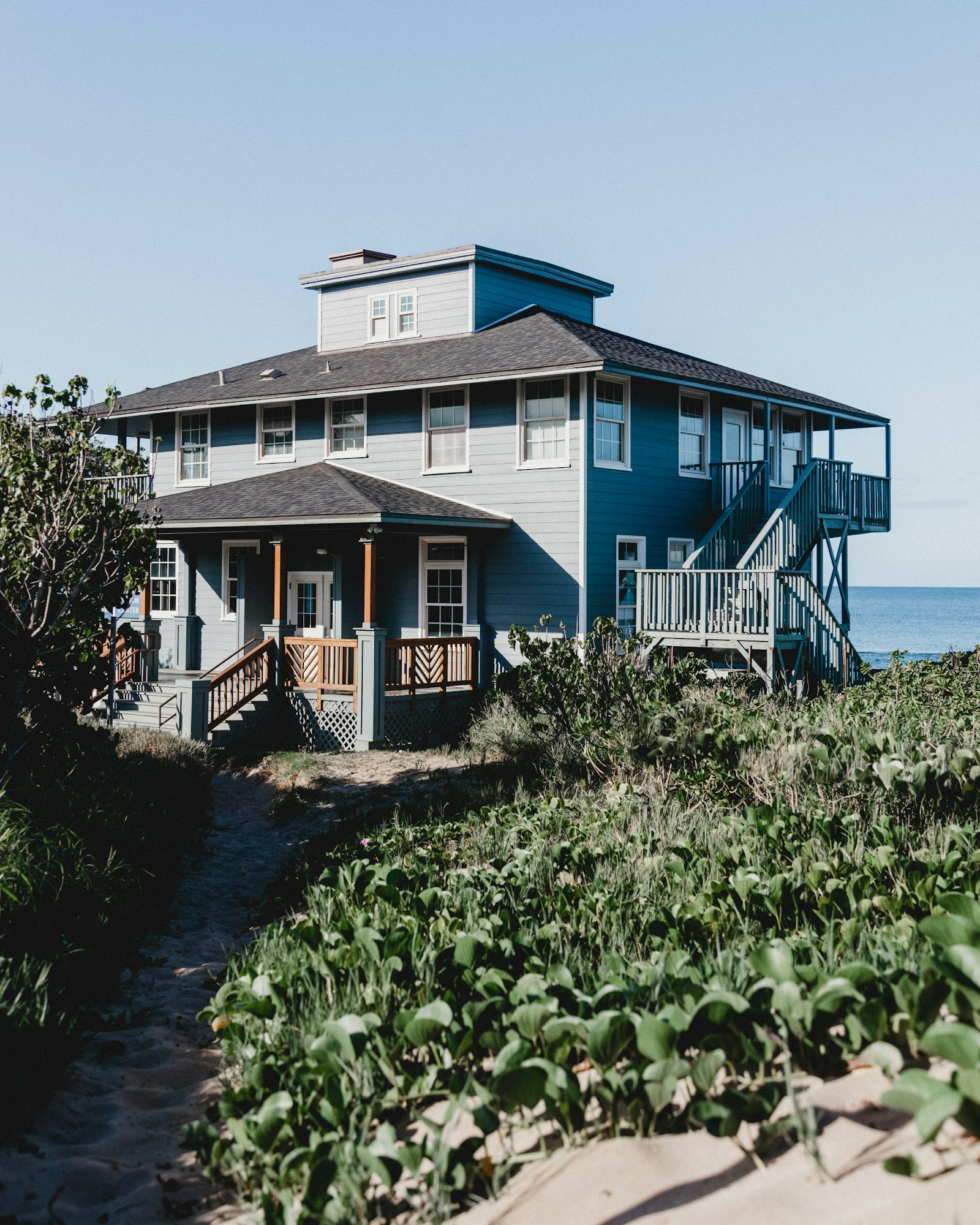
Oak Island is one of the easier places on the North Carolina coast to own a rental, because the town has never written a short-term rental ordinance and the entry price is well below Wrightsville Beach or Carolina Beach. The catch is that you are buying into a slow market, with homes averaging 126 days to sell, and you owe 6% in occupancy tax plus a town tax rate that includes a dedicated beach renourishment line.
We get asked about Oak Island more than any other rental market in Brunswick County, and usually by a buyer who has run the numbers on Wrightsville Beach, found them impossible, and started looking south. That instinct is sound. Oak Island is a 12-mile barrier island in Brunswick County with more than 60 public beach accesses, more than almost any other beach community in the state, and a price point that makes the New Hanover beaches look like a different asset class (Tidal Realty Partners Oak Island guide, 2026).
But a rental is a business, and the questions that decide whether it works are about rules, taxes and liquidity, not about the view. Here is what we tell buyers before they write an offer.
The rules are unusually permissive, which is the real advantage
The only rental-specific obligation the Town of Oak Island publishes for owners is a tax one. Owners renting to the same person for less than 90 continuous days must register with the town and file an accommodations tax return monthly, even in months with no rentals, by the 20th of the following month (Town of Oak Island Finance Department, read October 2026). If a rental agency manages the property, the agency takes on that reporting and payment obligation instead, which is one practical argument for using one.
Searching the town’s published materials in October 2026, we did not find a town short-term rental ordinance: no cap on rental nights, no primary-residence requirement and no permit scheme. What governs you appears to be state law, principally the North Carolina Vacation Rental Act, which sets the rules on written rental agreements, security deposit handling and occupancy disclosures, plus the ordinary building, safety and zoning code.
We want to be precise about that, because it is an absence rather than a published rule, and an absence is harder to verify than a number. Across the country the trend in beach towns has been toward more restriction, not less. Before you buy on the strength of this, call the Town of Oak Island planning department and ask directly what applies to your address today, and check whether anything is on the council’s agenda. That is a ten-minute call and it is worth making.
Run the tax math before you run the income projection
Three separate taxes touch an Oak Island rental, and buyers routinely model only one of them.
- Town of Oak Island accommodations tax: 5% of gross receipts, made up of a 3% tourism tax and a 2% beach protection and renourishment tax Town of Oak Island Finance Department, read October 1 2026
- Brunswick County room occupancy tax: 1%, in effect since January 1 1998 Brunswick County, read October 1 2026
- Town of Oak Island property tax, fiscal year 2026 to 2027: 20 cents per $100 of value, split 10 cents to the general fund, 7 cents to fire and 3 cents to beach renourishment Port City Daily, May 14 2026
- Brunswick County property tax: 34.20 cents per $100 of value for the fiscal year beginning July 1 2025 Brunswick County tax rates, read October 1 2026
- Late filing penalty on accommodations tax: 5% per month, capped at 25% of tax owed; up to 50% for fraudulent misrepresentation Town of Oak Island Finance Department, read October 1 2026
Six percent in occupancy tax across the town and county is collected from your guest rather than paid out of your margin, but it raises the total the guest sees, and it is your legal obligation to collect and remit it on time. The monthly filing requirement is the part that catches first-time owners. You file whether or not you rented, and the penalty for drifting is 5% a month.
One note on the property tax: as of July 2026, Brunswick County took over tax billing and collections for the Town of Oak Island, so owners who used to get two bills now receive a single combined one. If you are budgeting from an old closing statement, check that you are not reading half the number.
The honest weak point is liquidity, not demand
Oak Island’s median home price sat between roughly $690,000 and $708,000 in early 2026, with a median listing price near $737,000, and homes averaged 126 days on market against 57 a year earlier. The sale-to-list ratio was around 97%, and price growth has settled into a modest 2% to 4% range (Tidal Realty Partners Oak Island guide, 2026). Across Brunswick County as a whole, the median sale price was $409,000 for the three months ending August 2026, with a 98-day median time to sell and roughly 2,250 active listings, the most inventory in the region (Tidal Realty Partners Brunswick County market update, August 2026 data).
Read those two paragraphs as a buyer and they are good news: a 97% sale-to-list ratio and four months of marketing time mean you have room to negotiate, which is not something we could have told you in 2021. Read them as a future seller and they are the risk. An investment that takes four months to convert back to cash is not a liquid one, and if your plan requires selling inside two or three years, that is the number that should give you pause, not the rental income.
It is also worth knowing who lives there. The year-round population is approaching 9,800, with a median age of 61.5, a homeownership rate near 88% and a median household income around $83,500 (Tidal Realty Partners Oak Island guide, 2026). This is a settled, owner-occupied community with a rental season layered on top, not a wall-to-wall investor market. That stability is part of the appeal, and it also means your neighbors are mostly permanent residents.
Two things we would want a buyer to sit with. First, the apparent absence of a short-term rental ordinance is an advantage today and a risk over a ten-year hold. Towns write these rules when enough year-round residents push for them, and an island with 88% homeownership and a median age over 60 has exactly the electorate that tends to ask for restrictions eventually. We are not predicting it. We are saying do not underwrite a thirty-year plan on a rule that a board can change at a regular meeting. Second, look closely at the 2% of every rental night and 3 cents of every $100 of value that go to beach renourishment. That is the island telling you, in its own budget, that keeping the beach in front of your investment is a permanent recurring cost. It is well managed and it is funded, but it is not optional and it is not going away, and a storm year can change the scale of it. If what you actually want is appreciation with less operating complexity, a long-term rental inland, or a Southport property held as a second home, may serve you better than a weekly rental here.
Related questions people also ask
Does Oak Island allow short-term rentals?
Yes, and as of October 2026 we found no town short-term rental ordinance imposing a cap on rental nights, a permit scheme or a residency requirement. Owners operate under North Carolina’s Vacation Rental Act along with the normal building, safety and zoning rules that apply to any property. Owners do have to register with the town for accommodations tax and file returns monthly, and that obligation applies to any rental of less than 90 continuous days to the same person. Because rules like this can change at a council meeting, confirm what applies to your address with the town planning department before you buy.
What taxes do you pay on a vacation rental in Oak Island NC?
There are two layers of occupancy tax on the rental income and ordinary property tax on the home itself. The Town of Oak Island levies 5% of gross receipts and Brunswick County levies 1%, for a combined 6%, which you collect from the guest and remit (Town of Oak Island and Brunswick County, October 2026). You also pay town and county property tax on the home, now issued as a single combined bill. Rental income is separately taxable at the state and federal level, so a conversation with a tax professional is worth having before you close.
Is Oak Island cheaper than Wrightsville Beach or Carolina Beach?
Substantially, yes, and that gap is the main reason buyers look there. Oak Island sits in Brunswick County, which has the lowest median sale price and the most inventory of the three counties we serve, while Wrightsville Beach is the premium market in New Hanover County and trades well above it. The trade-off you are making is drive time and pace rather than quality of beach. Oak Island is further from downtown Wilmington and its market moves more slowly in both directions.
Before you make an offer, ask the listing agent for the property’s actual rental history, gross and net, for the last two full seasons, and put the real numbers against the full carrying cost: mortgage, combined town and county property tax, wind and flood insurance, management fees and the monthly accommodations tax filing. A projection from a rental calculator is not evidence; two years of settlement statements are. We are glad to pull that history, check the tax lines with you and tell you honestly whether the deal works.
Sources: Tidal Realty Partners Oak Island neighborhood guide, 2026; Tidal Realty Partners Brunswick County market update, August 2026 data; Town of Oak Island Finance Department accommodations tax page, read October 1 2026; Brunswick County room occupancy tax and tax rates pages, read October 1 2026; Port City Daily, “OKI avoids tax rate increase even as costs rise,” May 14 2026.



