Your commute will almost certainly get shorter. The mean one-way commute in New Hanover County is 21.4 minutes against 28.6 minutes in Fulton County and 32.4 minutes across metro Atlanta, on the Census Bureau’s 2024 American Community Survey one-year estimates.
The bigger difference is not the average, it is the tail. In metro Atlanta, 26.1 percent of commuters are in the car 45 minutes or more each way and 13.8 percent are at an hour or more. In New Hanover County those figures are 8.4 percent and 5.8 percent. Atlanta’s long commute is a normal commute. Wilmington’s long commute is an exception.
So if you are moving here from Dunwoody or Marietta and you expect to feel liberated, you probably will. What surprises people instead is how concentrated our congestion is, and how few ways there are around it.
What the numbers actually say
We pulled four geographies so the comparison is apples to apples: your county, your metro, our county and our metro, all from the same 2024 American Community Survey release.
The clearest single measure is the share of people whose drive is under 20 minutes. In New Hanover County it is 54.0 percent, which means a majority of working residents are at their desk inside twenty minutes. In Fulton County it is 33.6 percent and across metro Atlanta it is 28.5 percent. That is the lived difference. Not that Wilmington has no traffic, but that most people here are not organizing their day around it.
- Mean one-way commute: New Hanover County 21.4 minutes, Wilmington metro 23.7, Fulton County 28.6, Atlanta metro 32.4 Census Bureau, American Community Survey 2024 one-year estimates, tables B08013 and B08303
- Commuters with a drive under 20 minutes: New Hanover County 54.0 percent, Wilmington metro 45.4 percent, Fulton County 33.6 percent, Atlanta metro 28.5 percent Census Bureau, American Community Survey 2024 one-year estimates, table B08303
- Commuters at 45 minutes or more: New Hanover County 8.4 percent, Atlanta metro 26.1 percent Census Bureau, American Community Survey 2024 one-year estimates, table B08303
- Commuters at 60 minutes or more: New Hanover County 5.8 percent, Atlanta metro 13.8 percent Census Bureau, American Community Survey 2024 one-year estimates, table B08303
- Scale of the two systems: 194,365 commuters in the Wilmington metro against 2,648,593 in metro Atlanta Census Bureau, American Community Survey 2024 one-year estimates, table B08303
- Town of Leland: 22,908 residents in the 2020 census, with a 2024 estimate of 33,065, a 44 percent increase NCDOT Municipal Boundary dataset, read November 5 2026
Why Wilmington traffic still annoys people who moved here to escape traffic
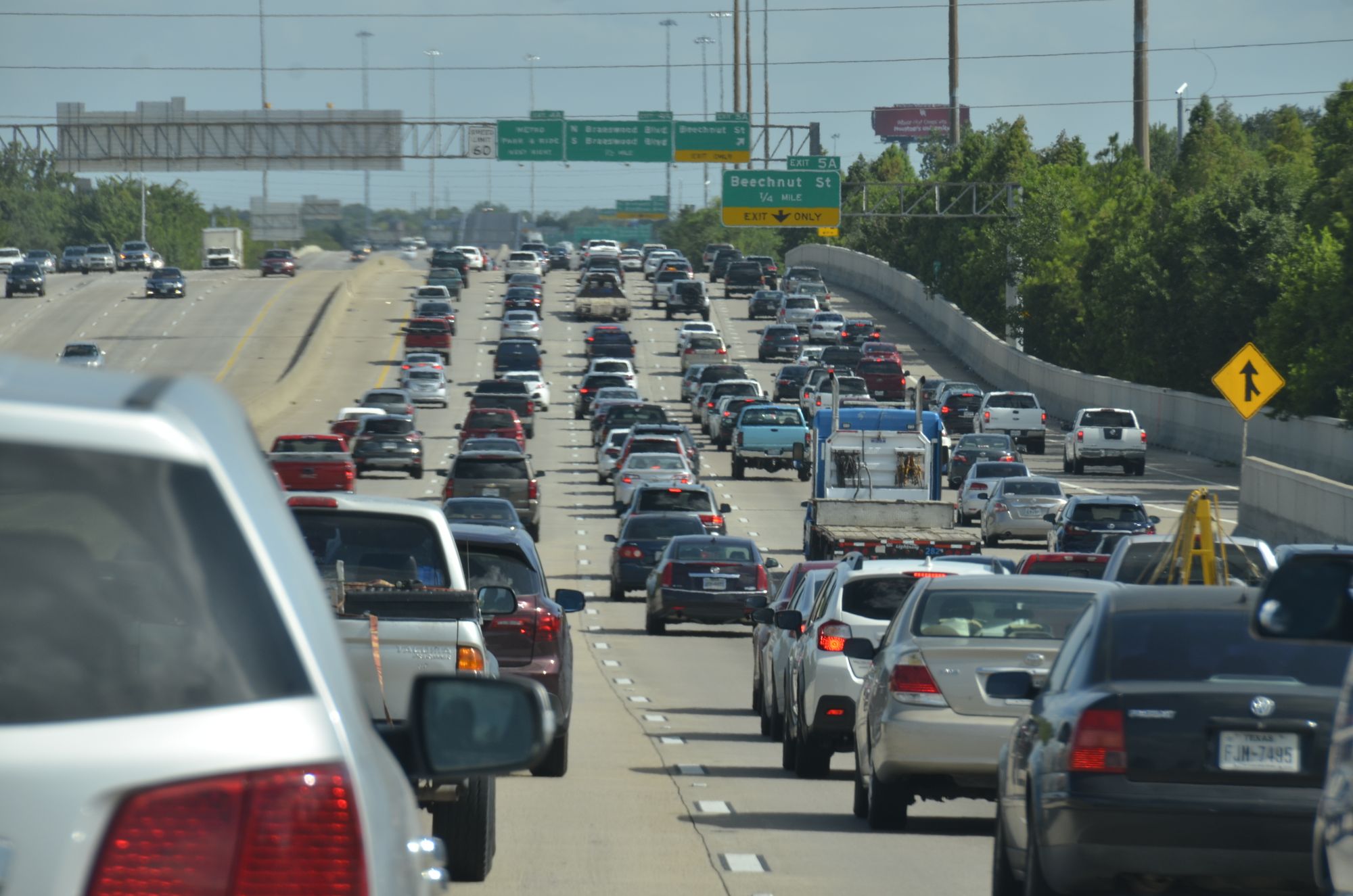
Atlanta congestion is distributed. There are many ways to get from one side of the metro to the other, and if I-285 is bad you have surface alternatives, another interstate, or MARTA. Wilmington congestion is the opposite. It is concentrated on a handful of corridors, and when one of them backs up there is often no second route.
Market Street, South College Road, Oleander Drive, Carolina Beach Road and Military Cutoff carry a large share of the city’s traffic, and the river adds a hard constraint. Traffic from Brunswick County reaches Wilmington over the Cape Fear Memorial Bridge or the long way around on the I-140 bypass, and most Leland commuters take the bridge. A disabled car on that bridge at 5 p.m. does not give you an alternative. It gives you a parking lot.
There is also no rail. Wave Transit runs buses and they work for some trips, but in practice this is a driving region, and a household moving from a MARTA-adjacent neighborhood should plan on two cars. That is a real budget line, not a lifestyle note.
Where you live here changes the answer more than the city average does
The county figure hides a wide spread. A buyer in Ogden or Mayfaire working off Military Cutoff may be at a ten-minute drive. A buyer in Hampstead working downtown is on US 17 through the Scotts Hill corridor and will feel every minute of it. A buyer in Leland is one bridge from downtown, which is fast at 10 a.m. and slow at 5 p.m.
Leland is also the place where growth is outrunning the road network fastest. The town counted 22,908 residents in the 2020 census and carried a 2024 estimate of 33,065 in the state transportation department’s municipal boundary dataset, a 44 percent increase. Nothing about the Cape Fear Memorial Bridge changed in those four years. That is the squeeze.
So we tell relocating buyers to test the drive, not the map. Drive from the neighborhood to the office at the hour you will actually do it, on a Tuesday, twice. Our Wilmington versus Leland versus Hampstead comparison walks through what each of those choices costs in time and money, and the cost of living breakdown covers the car-dependence line in a household budget.
What this does to your housing decision
In Atlanta, commute time is one of the main things people buy with their housing dollars; you move further out, you pay less, you drive more. That trade is weaker here because the distances are shorter. The three-month median sale price in New Hanover County was $464,000 against $394,000 in Brunswick County on the September 2026 data on our market updates, so crossing the river does save money, but it buys you a bridge rather than an hour.
What that means practically: the reason to live in Leland or Hampstead here is price, schools, a specific community or a bigger lot, not a dramatic commute trade. If you are coming from a metro where you accepted 50 minutes to afford the house, you can probably stop doing that. Our moving to Wilmington pages lay out the areas side by side.
Mean commute times are a blunt instrument. They cover only people who travel to work, they average a 7 a.m. nurse with a 10 a.m. remote worker driving in twice a week, and the 2024 one-year estimates carry wider margins of error than the five-year figures because the sample is smaller. They also say nothing about seasonality, and summer traffic to Wrightsville Beach and Carolina Beach is its own event that the annual average smooths away. If your job is at the hospital, the port or the airport, the only number that matters is your own drive at your own hour. And none of this captures the thing most Atlanta transplants actually tell us they notice: not that the drive is shorter, but that an unexpected delay costs you fifteen minutes here instead of an hour.
Related questions people also ask
What is the average commute time in Wilmington, NC?
The mean one-way commute for workers living in New Hanover County is 21.4 minutes, and 23.7 minutes across the wider Wilmington metro area, according to the Census Bureau’s American Community Survey 2024 one-year estimates. More than half of New Hanover County commuters, 54.0 percent, are at work in under twenty minutes. The averages mask a wide spread by neighborhood, since a drive from Ogden to Military Cutoff and a drive from Hampstead to downtown are very different trips.
Is there public transportation in Wilmington, NC?
Wave Transit operates fixed-route buses and paratransit service in Wilmington and New Hanover County. There is no commuter rail or light rail anywhere in the region, and the fixed-route network does not extend into most of Brunswick and Pender counties, where a great deal of the new housing is being built. For most households relocating here, that means planning on a car for each working adult. Riding transit to work is realistic for some in-town routes and not realistic from most suburban communities.
Will my commute get shorter if I move from Atlanta to Wilmington?
On the averages, yes, and by a meaningful margin. The Census Bureau’s 2024 American Community Survey puts the mean one-way commute at 32.4 minutes across metro Atlanta against 23.7 minutes in the Wilmington metro, and the share of commuters driving 45 minutes or more falls from 26.1 percent to 11.5 percent. The caveat is that your personal result depends on where you buy and where you work, since Wilmington’s congestion is concentrated on a few corridors with limited alternatives. Test your actual route at your actual hour before you commit to a neighborhood.
Tell us where you will be working and what hours you keep, and we will give you a short list of neighborhoods that fit the drive instead of a list that fits a map, plus the honest version of what each one costs. If you are visiting, we will build the tour around a weekday afternoon so you see the roads at their worst rather than their best. Talk it through with our team before you narrow the search.
Sources: U.S. Census Bureau, American Community Survey 2024 one-year estimates, tables B08013 and B08303, for New Hanover County NC, the Wilmington NC metro area, Fulton County GA and the Atlanta-Sandy Springs-Roswell GA metro area, read November 5 2026. NCDOT Municipal Boundary dataset, Town of Leland, read November 5 2026. Tidal Realty Partners New Hanover County and Brunswick County market updates, three months ending September 2026.