
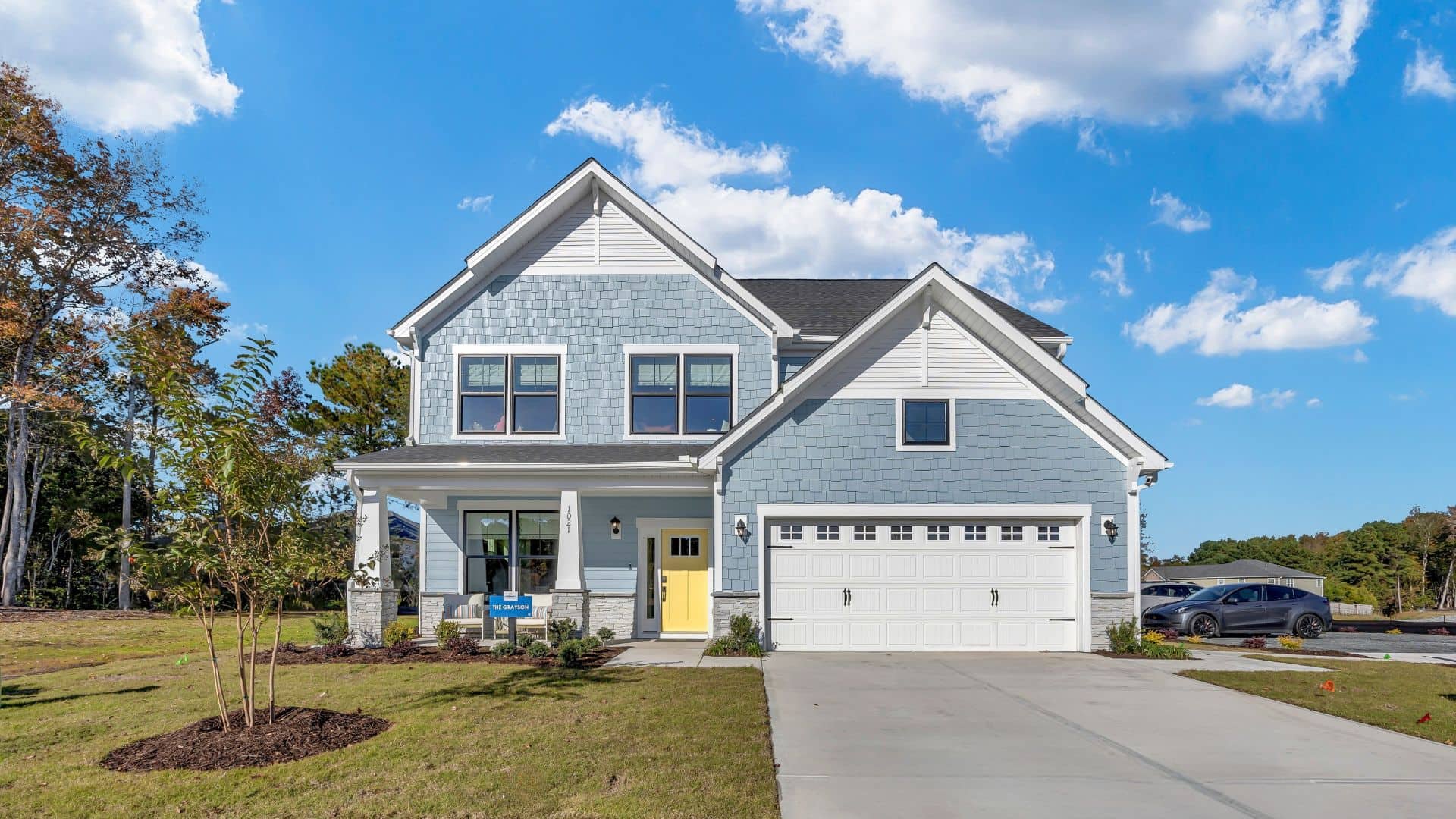
If you are buying new construction in the Wilmington area this fall, the builder’s buydown is almost always the better deal, because the builder is paying for it and you are not. If you are buying a resale and paying points out of your own pocket, they only win if you keep the loan past the break-even, which on today’s numbers lands around five years.
Rates moved enough in the last month that this question has changed shape. Freddie Mac’s Primary Mortgage Market Survey put the 30-year fixed average at 7.28% for the week ending October 1, 2026, up from 7.03% the week before and 6.34% a year earlier. Our monthly mortgage update is refreshed monthly and still carries the September reading, so treat 7.28% as the current number.
At that level, buyers start asking about anything that lowers the payment. Points and buydowns both do, but they are not the same product, they are not paid by the same person, and they fail in different ways.
What does a discount point actually buy?
A discount point costs 1% of the loan amount, paid at closing, in exchange for a permanently lower note rate. How much lower is set by your lender on the day you lock, and it moves. Anyone who tells you a point always buys a quarter point of rate is guessing.
Here is the math that matters, using round numbers on a $400,000 loan, principal and interest only, 30-year fixed. At 7.28% the payment is about $2,737. Buy the rate down half a point to 6.78% and it is about $2,602, a saving of roughly $134 a month. If the lender charges two points, or $8,000, to get there, you need about 59 months, right at five years, before you are ahead. Sell or refinance before then and you donated the money.
- 30-year fixed average 7.28%, up from 7.03% the prior week and 6.34% a year earlier Freddie Mac Primary Mortgage Market Survey, week ending October 1, 2026
- 15-year fixed average 6.60%, up from 6.42% the prior week Freddie Mac Primary Mortgage Market Survey, week ending October 1, 2026
- Mungo Homes: 3.25% in year one, 4.25% in year two, 5.25% for years three through thirty, 6.025% APR, through Silverton Mortgage on eligible homes, contracts written on or after September 14, 2026 and closing before January 12, 2027 Mungo Homes terms via our New Construction pages, September 28, 2026
- Logan Homes: 2.99% in year one, 3.99% in year two, 4.99% thereafter, or up to $20,000 use as you choose, through Alpha Mortgage Logan Homes terms via our New Construction pages, September 28, 2026
- HHHunt Homes: 4.99% fixed and locked on select move-in-ready townhomes at McQuillan Pines with the builder’s preferred lender HHHunt Homes terms via our New Construction pages, September 28, 2026
Why the builder deals look so much better right now
Because somebody else is paying. On the same $400,000 loan, a locked 4.99% runs about $2,145 a month against $2,737 at the survey average. That is roughly $592 a month, and you did not write a check at closing to get it. No resale seller in New Hanover County is handing out a concession that size.
That is the real reason new construction is taking share in Leland, Hampstead and the Carolina Beach Road corridor this year. The builders are buying the rate the open market will not offer. You can see the current terms on our pages for Logan Homes, Mungo Homes and HHHunt Homes.
Two cautions that come with the money. A 2/1 buydown is temporary. Mungo’s 3.25% is a first-year payment, and from year three you are living with 5.25% for the rest of the loan. You should qualify, and budget, at the final rate rather than the teaser. And every one of these incentives is tied to the builder’s lender, which means the rate is cheap but the lender fees and the price of the house may not be. We get our buyers one competing quote on every builder deal so the comparison is real. We wrote about that in more detail in our post on whether to use the builder’s preferred lender.
So which one fits you?
Four situations cover most of our buyers. If you are buying new construction, take the builder’s money and verify it against an outside quote. If you are buying a resale, plan to stay seven years or more, and have cash beyond your reserves and your closing costs, points can be worth running. If you expect to move or refinance inside five years, skip them. And if you are negotiating a seller concession on a resale, ask your lender whether a permanent rate buydown is a better use of that money than a credit toward closing costs, because the same dollars spent on rate usually do more for your monthly payment.
One local note on that last point. Price reductions before contract in New Hanover County were up 23% in August 2026, and the typical home took 58 days to go under contract against 37 a year ago. Sellers here are already conceding. The question is what you ask them to concede toward.
Nobody knows where rates go, and that is the whole risk. Buy points, and if rates fall far enough to refinance you paid in advance for a rate you abandoned. Take a temporary buydown, and you are exposed at the note rate from year three whether the market cooperated or not. Taxes add another wrinkle: the IRS says points paid on a loan to buy your main home may be deductible in the year paid if a specific list of conditions is met, and that points a seller pays on your loan are treated as paid by you but must be subtracted from your basis in the home, per IRS Topic No. 504, reviewed September 24, 2026. We are a real estate team, not a lender and not a tax adviser. Run the break-even with your loan officer and the deduction question with your CPA before either one changes your decision.
Related questions people also ask
How much does one discount point lower my mortgage rate?
There is no fixed answer, because lenders price points daily against the bond market. A point costs 1% of your loan amount, but what it buys in rate can differ between two lenders quoting you on the same afternoon. Ask each lender for a quote at par and a quote with points so you can see the actual cost per increment of rate. Then divide the cost by the monthly saving to get your own break-even in months.
Does a builder’s 2/1 buydown last for the whole loan?
No, a 2/1 buydown is temporary by design. It lowers your payment in the first year and by a smaller amount in the second year, and from the third year forward you pay the loan’s actual note rate for the remaining term. Some builders also offer a permanent buydown that lasts the full thirty years, which is a different and usually more valuable offer. Read which one you are being given, and qualify yourself at the final rate rather than the first-year rate.
Can a seller pay for a rate buydown in North Carolina?
Yes, within limits. Seller-paid concessions can generally be applied toward a rate buydown instead of, or alongside, closing costs, but each loan program caps how much a seller may contribute and your lender has to approve how the money is applied. The cap depends on the loan type and your down payment, so the number is specific to your file. Ask your loan officer what your program allows before you write the concession into an offer.
Get two written quotes on the same house and the same day, one from the builder’s lender or your bank and one from an outside lender, and ask both to show the payment at par and with points. If you want us to sit with those two sheets and tell you which offer is actually cheaper over the years you plan to own the home, talk it through with our team.
Sources: Freddie Mac Primary Mortgage Market Survey, week ending October 1, 2026. Builder incentive terms for Logan Homes, Mungo Homes and HHHunt Homes as published on our New Construction pages, terms as of September 28, 2026. Redfin, New Hanover County days on market, August 2026, and Realtor.com via FRED, price-reduced listings, August 2026, via our New Hanover County market update. IRS Topic No. 504, Home Mortgage Points, last reviewed September 24, 2026. Payment figures are principal and interest only on a 30-year fixed loan of $400,000, exclude taxes, insurance and HOA dues, are our own calculation, and are illustrative rather than a loan offer. Tidal Realty Partners is not a lender.



