
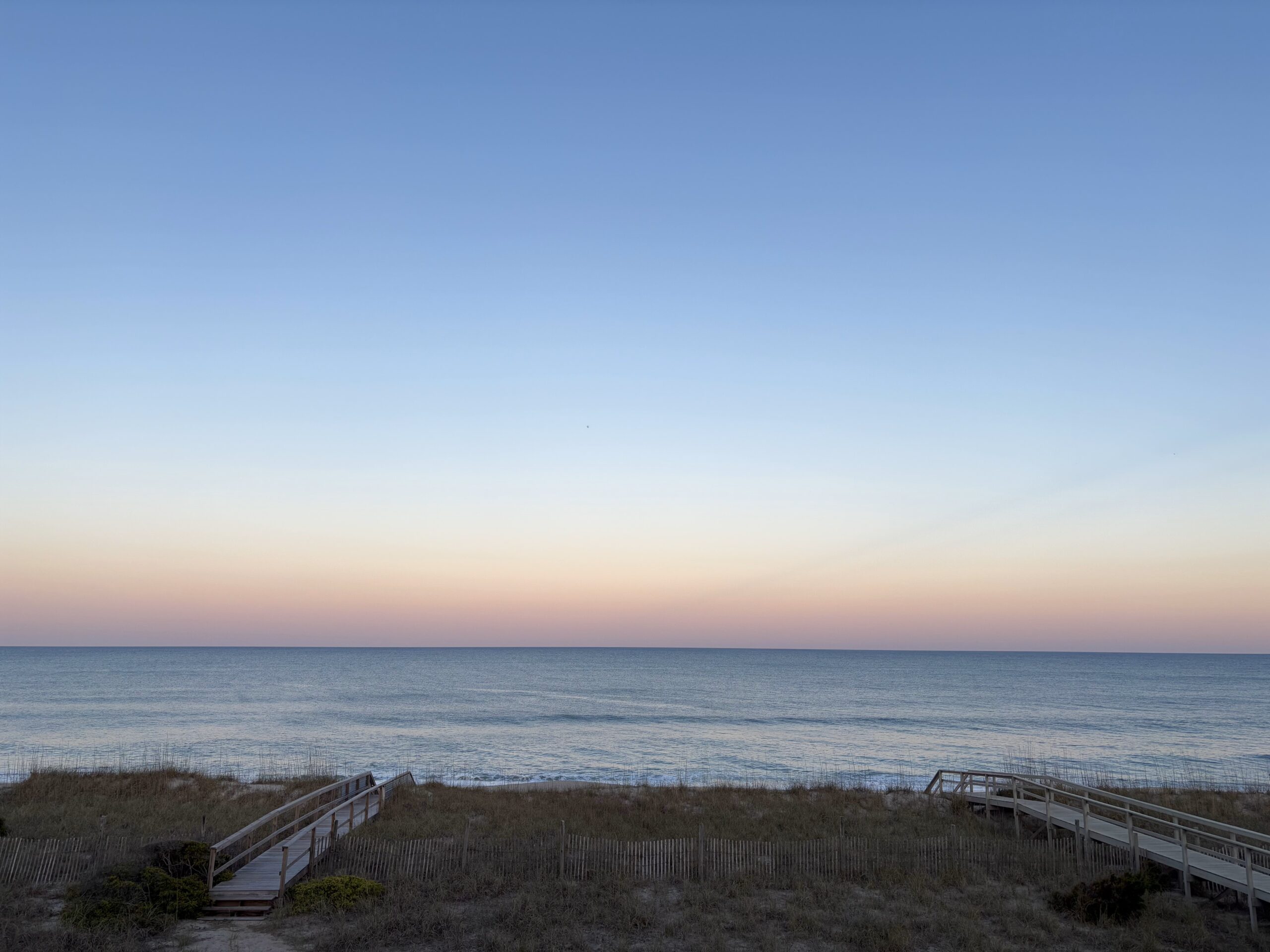
Today, every Oak Island property owner pays, through three cents of the town’s twenty-cent tax rate, topped up with accommodations tax, state grants and Army Corps of Engineers sand. The town created four Beach Benefit Zones in 2021 that would let it assess oceanfront owners directly instead, but it has never levied them.
This question comes to us from two kinds of buyer. The first is looking oceanfront on West Beach Drive or East Beach Drive and has heard stories about special assessments running into five figures. The second is looking at a canal house or a second row home and wants to know whether a beach project they will never walk to is going to land on their tax bill. Both deserve a straight answer, because the Oak Island assessment fight of 2021 still colors how people talk about this.
Here is what actually happened. In April 2021 the town council approved four Beach Benefit Zones, previously called service districts, meant to spread nourishment assessments according to how much a property benefits, so that a beachfront home would carry more than an inland one. Days later, on April 23, 2021, the council agreed to hold off on assessing residents at all while it looked for other money. Other money is what it found.
What does the town charge today?
The Town of Oak Island’s 2026 property tax rate is 20 cents per $100 of value, split as 10 cents to the general fund, 7 cents to the fire tax, and 3 cents to what the town calls the Sand Fund. Brunswick County levies its own rate on top of that. The county commissioners adopted a $437 million budget on June 15, 2026, holding the county rate at 34 cents per $100.
- Oak Island town rate 20 cents per $100: 10 cents general fund, 7 cents fire tax, 3 cents Sand Fund Town of Oak Island, Property Tax Information, 2026 rate, read October 3, 2026
- Brunswick County rate held at 34 cents per $100 in a $437 million budget adopted June 15, 2026 Brunswick Beacon, July 2, 2026
- Town budget of $73.4 million for fiscal 2026-27, down about $40 million from the prior year after the nourishment project finished Port City Daily, May 14, 2026
- The 2025-26 nourishment project cost $33 million to $40 million and was completed January 31, 2026 Port City Daily, May 14, 2026
- $3 million Coastal Storm Damage Mitigation Grant approved December 15, 2025, and $20 million in state matched funds announced November 16, 2021 Town of Oak Island, Beach Nourishment and Preservation page, read October 3, 2026
Put that on a house. At a $600,000 assessed value, the town bill is $1,200 and the county bill is $2,040, for $3,240 a year before any fire district or municipal service charges specific to your parcel. The nourishment share inside that is the 3 cent Sand Fund, or $180 a year. The town’s property tax page also shows a separate $600 sewer district fee applied on behalf of the town, which is not a beach charge and catches buyers off guard more often than the sand money does.
Where does the rest of the money come from?
The council adopted its funding approach, labeled Option 1, on April 12, 2022: no bonds, no borrowing, no increase in the sand tax rate, with three-quarters of the budgeted accommodations tax from the town’s two tourism funds, a transfer from the general fund, and a dedicated sand tax that started at 5 cents in fiscal 2022-23 and ran near 6 cents after the county revaluation. The 2026 rate sheet now shows 3 cents going to the Sand Fund, which is what a revaluation does to a penny: the value base grows, so fewer cents raise the same money. Watch the dollars in the fund, not the rate.
The federal and state pieces are large. For the 2025-26 work the Army Corps of Engineers provided 100,000 cubic yards through the Lockwoods Folly Inlet project and 800,000 cubic yards through the Wilmington Harbor project, with the town contributing toward the additional placement, while the town separately contracted the 1,055,000 cubic yard OS-OKI project. Add the $3 million state storm damage grant approved in December 2025. That is the arithmetic that let the town avoid assessing anyone.
Could you still get assessed later?
Yes, and nobody should tell you otherwise. The four Beach Benefit Zones still exist on paper. They were created for exactly this purpose and have never been repealed, which means a future council facing a storm, a failed grant cycle or a thinner accommodations tax could reach for them. Nothing in the adopted fiscal 2026-27 budget levies an assessment, and Oak Island runs a major nourishment roughly every five to six years, so the next large funding decision is a few years out rather than next spring.
For a buyer, that converts into three concrete steps. Ask the closing attorney for the actual tax card and any pending assessments on the parcel, not the Zillow estimate. Ask the town directly whether the property sits in a benefit zone. And read the HOA or condo documents separately, because a building’s own reserve assessment for dune work or walkovers is a different animal from a town assessment. Our Oak Island neighborhood guide and our Brunswick County market update are the places to start on price and inventory.
None of this transfers to the next island. Every Brunswick beach town funds sand differently, and a figure you read about Ocean Isle Beach or Holden Beach tells you nothing about Oak Island. Beyond that, the bigger coastal cost for most buyers is not the Sand Fund at all. It is insurance. A wind and hail policy, a flood policy and a named storm deductible will outweigh $180 a year by a wide margin, and those are the numbers to get quoted during due diligence rather than after. Our guides to flood zones and flood insurance and coastal homeowners insurance walk through both.
Related questions people also ask
Do oceanfront owners on Oak Island pay more for beach nourishment than inland owners?
Not at present. The nourishment share of the tax bill is the Sand Fund portion of the town rate, which applies to every taxable property in the town at the same rate per $100 of value. An oceanfront home pays more in dollars only because it is assessed higher. The town created four Beach Benefit Zones in April 2021, according to its own beach nourishment page, specifically so that oceanfront owners could be charged more than inland owners, but it has funded its projects without ever levying those assessments.
When is the next Oak Island beach nourishment project?
No date has been set publicly. Port City Daily reported in May 2026 that the last major project finished on January 31, 2026, and that Oak Island hosts a major nourishment every five to six years, which points to the early 2030s for the next one of that size. Smaller placements can happen sooner when the Army Corps dredges nearby inlets and navigation channels and the sand has somewhere to go. Watch the town council agendas if the timing matters to your purchase.
What is the Sand Fund on my Oak Island tax bill?
It is the portion of the town’s property tax rate set aside for beach nourishment, listed by the Town of Oak Island as 3 cents of the 20 cent 2026 town rate. It is not a separate line you can opt out of, and it is not the same thing as the $600 sewer district fee the town shows on the same page. The fund pays the town’s share of nourishment work, alongside accommodations tax revenue, state grants and sand provided through Army Corps projects.
Before you go under contract on Oak Island, get the parcel’s tax card, the current year bill and an insurance quote in the same week, so you are looking at the whole annual cost rather than the mortgage payment alone. If you want help reading a specific parcel, or a straight answer on whether an oceanfront buy still pencils out, talk it through with our team.
Sources: Town of Oak Island, Property Tax Information page, 2026 rate and sewer district fee, read October 3, 2026. Town of Oak Island, Beach Nourishment and Preservation page, Option 1 funding model adopted April 12, 2022, Beach Benefit Zones established April 13, 2021, state matched funds announced November 16, 2021, $3 million Coastal Storm Damage Mitigation Grant approved December 15, 2025, and 2025-26 sand volumes, read October 3, 2026. WECT, “Oak Island agrees to hold off on assessing residents fees for beach nourishment,” April 23, 2021. Port City Daily, “OKI avoids tax rate increase even as costs rise,” May 14, 2026. Brunswick Beacon, “Brunswick County approves FY 26-27 budget,” July 2, 2026. Tax figures are our own arithmetic on an illustrative assessed value and are not a valuation of any specific property.



