
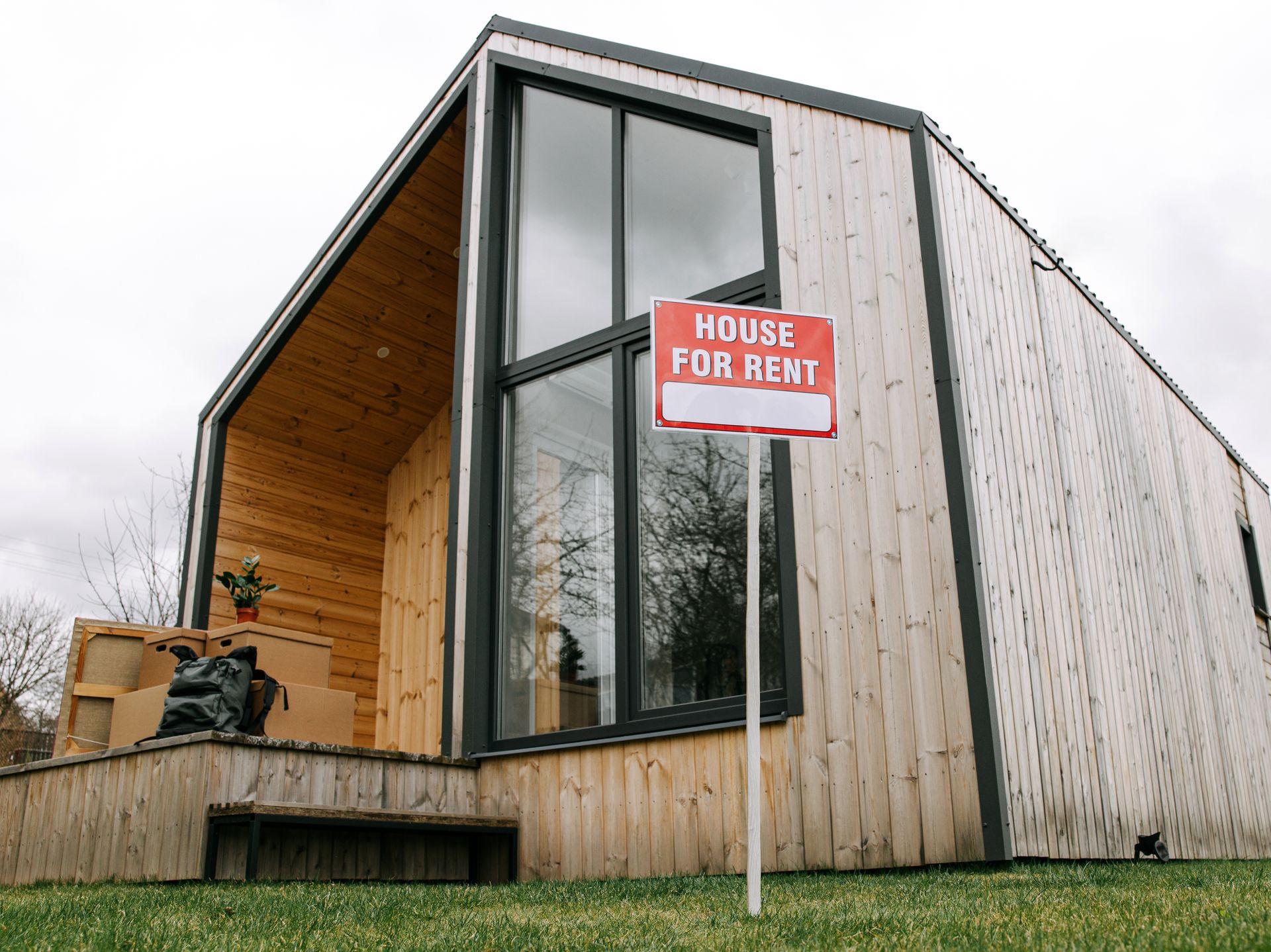
Yes, you can sell a Wilmington house with a tenant still living in it, and nothing about the sale ends their lease. The lease goes with the house, which means your real decision is not whether you are allowed to sell but which buyers will still want the house once they understand that.
We hear this most from two kinds of owners. The first bought a rental in Ogden or Leland years ago and is ready to be done with it. The second moved out of their own home, rented it to cover the mortgage, and now wants to cash out. The legal answer is the same for both, and so is the hard part: a tenant in place shrinks your buyer pool at a moment when New Hanover County sellers already have more competition than they have had in years.
What happens to the lease when the house sells?
The lease survives. A sale does not terminate a tenancy, and NC REALTORS puts it plainly in its own guidance: the standard offer conveys the property “subject to existing leases and/or rights of tenants,” and because the tenant is in actual possession the lease will remain in effect unless someone has a contractual right to end it, both sides agree to end it, or one side terminates for the other’s material breach. Your buyer becomes the tenant’s landlord at closing, on the terms you signed.
Three mechanics follow from that, and they are the ones we walk sellers through before the listing goes live.
First, the security deposit is not yours to keep. Under Section 42-54 of the North Carolina Tenant Security Deposit Act, when a landlord’s interest in the property ends by sale, the deposit has to go to the new owner or back to the tenant, and the tenant has to be told who holds it. In practice the remaining deposit transfers to the buyer at settlement and the closing statement reflects it. Plan for that in your net sheet rather than discovering it at the attorney’s office.
Second, recording matters on long leases. NC REALTORS notes that a lease longer than three years has to be recorded to be valid against a purchaser, while a lease of three years or less does not need recording if the buyer has actual knowledge of it or the tenant is in possession. If you handed someone a five-year lease and never recorded it, that is a conversation to have with a real estate attorney before you list.
Third, notice periods are short but specific. Under G.S. 42-14, ending a month-to-month tenancy takes seven days notice, a week-to-week tenancy takes two days, and a year-to-year tenancy takes one month or more before the end of the current year of the tenancy. Seven days sounds fast until you realize a year lease signed in March cannot be shortened by notice at all.
What does a tenant in place do to your buyer pool?
This is the part that costs money. A buyer who wants to live in the house needs possession, and a buyer using financing written for a primary residence has an occupancy requirement their lender will enforce. If your tenant has eight months left, that buyer cannot buy your house, no matter how much they like it. What remains is investors and second-home buyers, and in October 2026 that is a smaller and more price-sensitive group than it was three years ago.
- New Hanover County median sale price $448,000, down 3.5 percent year over year Tidal Realty Partners New Hanover County market update, three months ending August 2026
- 58 days on market, against 37 days a year earlier Tidal Realty Partners New Hanover County market update, August 2026
- 1,249 active listings, up 10.2 percent year over year, with price reductions before contract up 23 percent Tidal Realty Partners New Hanover County market update, August 2026
Read those three numbers together. You are competing with about 1,249 other listings, the typical home takes 58 days, and one third of your competition has already cut its price. Then add a showing schedule that depends on a tenant’s cooperation. North Carolina’s Residential Rental Agreements Act, in Chapter 42, Article 5 of the General Statutes, sets out a landlord’s duties and does not set a notice period for entry, so your access for showings comes from whatever the lease says and from the tenant’s goodwill. A tenant with no reason to help you can keep a house effectively off the market without ever breaking a rule.
There is an exception worth naming. If the tenant is paying strong rent on a lease an investor would want to inherit, the tenancy is an asset, not a problem. We have listed Wilmington duplexes where the existing lease was the headline feature. That works when the rent is at or above market, the tenant pays on time, and you can hand a buyer a clean ledger. It does not work when the rent is $400 under market because you never raised it on a good tenant.
What if the house is a short-term rental?
Different rules, and they are stricter. Under G.S. 42A-19, part of North Carolina’s Vacation Rental Act, a buyer takes title subject to a vacation rental agreement if that rental ends no later than 180 days after the buyer’s interest is recorded with the register of deeds. Bookings past that window are not enforceable against the buyer unless the buyer agrees in writing to honor them, though the guest is entitled to a refund of what they paid. The statute also requires you to disclose the booked time periods to the buyer before you enter into a contract of sale, and to provide each tenant’s name and address plus a copy of each agreement within ten days after transfer.
If you are selling a Carolina Beach or Wrightsville Beach rental with a season of bookings on the calendar, the paperwork is handled by the NC REALTORS Vacation Rental Addendum, Form 2A13-T. NC REALTORS changed that form for 2026: sellers now provide the rental agreements to the buyer within seven days of the effective date rather than within ten days after closing, buyers agree to keep the information confidential, and paragraph 3 clarifies how security deposits are disbursed. Paragraph 3 also carries a checkbox where you commit in writing not to sign new leases after the contract goes into effect, which is the provision that protects a buyer from inheriting a booking calendar you filled after they went under contract.
You have four real options and none of them is free. You can wait for the lease to end, which is cheapest but costs you the fall selling window. You can offer the tenant money to leave early, which often works and usually costs a month or two of rent plus moving expenses, documented in a signed agreement rather than a handshake. You can sell as-is with the tenancy in place and accept an investor price, which in this market usually means a discount off what an owner-occupant would have paid. Or you can wait out a month-to-month tenant with seven days notice under G.S. 42-14, which is fast on paper. What is not an option is planning around an eviction. Summary ejectment in North Carolina runs through Chapter 42, Article 3 of the General Statutes, starting at G.S. 42-26, with a magistrate hearing, ten days for either side to appeal to District Court and then a writ of possession and a sheriff’s set-out. No listing agreement should be built on that timeline, and none of this is legal advice: if the lease is contested or the tenant is not paying, talk to a North Carolina real estate attorney before you sign anything.
Related questions people also ask
Do I have to tell the buyer there is a tenant?
Yes, and you should tell them in writing and early. The buyer is taking the property subject to the lease and the rights of the tenant, so the lease terms, the rent, the deposit held and the end date are all material to what they are buying. For a vacation rental, North Carolina’s Vacation Rental Act requires the seller to disclose the booked time periods before entering into a contract of sale. Hiding a tenancy does not make it go away, it just gives your buyer a reason to walk during due diligence.
Can I raise the rent or sign a new lease while the house is listed?
You can, but think hard before you do. A new long lease signed during the listing period narrows your buyer pool further and, in a vacation rental sale, is exactly what the NC REALTORS Vacation Rental Addendum lets a buyer prohibit by checkbox. If your plan is to sell, the useful move is usually to let the tenancy roll month to month so you keep flexibility, rather than locking in another year for the income.
Who handles the security deposit when the house sells?
You do, as the selling landlord. Section 42-54 of the North Carolina Tenant Security Deposit Act requires the landlord whose interest is ending to transfer the remaining deposit to the new owner or return it to the tenant, and to make sure the tenant knows who is holding it. Keep your deductions and your accounting clean, because a deposit dispute that surfaces after closing lands on you, not on the buyer who inherited the lease.
Pull the lease and write down three things: the end date, the rent against today’s market rent, and what the lease actually says about access for showings. Those three facts decide whether you list now to investors, wait for the lease to end, or pay the tenant to move. If you want a number before you decide, our free home value estimate is a starting point and the New Hanover County market update shows what you would be competing against. Then bring us the lease and we will tell you honestly which of the four paths nets you the most, including when the answer is to wait.
Sources: North Carolina General Statutes 42-14 (notice to quit), 42-54 (Tenant Security Deposit Act, termination of landlord’s interest), Chapter 42 Article 3 beginning at 42-26 (summary ejectment), Chapter 42 Article 5 (Residential Rental Agreements Act) and 42A-19 (Vacation Rental Act, transfer of property), ncleg.gov, read October 13, 2026; NC REALTORS, “What happens to a lease when property is sold?”, read October 13, 2026; NC REALTORS, Summary of 2026 Changes to Residential Forms, Vacation Rental Addendum Form 2A13-T; Tidal Realty Partners New Hanover County market update, three months ending August 2026.



