Trinity Park is a National Register historic district, not a local one, so you can renovate the exterior of a house there without city design review, and you may qualify for North Carolina’s 15 percent historic rehabilitation tax credit. The flip side is that your neighbors have the same freedom, and a 100-year-old house between downtown Durham and Duke’s East Campus comes with an inspection list that a 2005 house in Brier Creek does not.
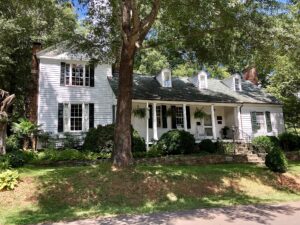
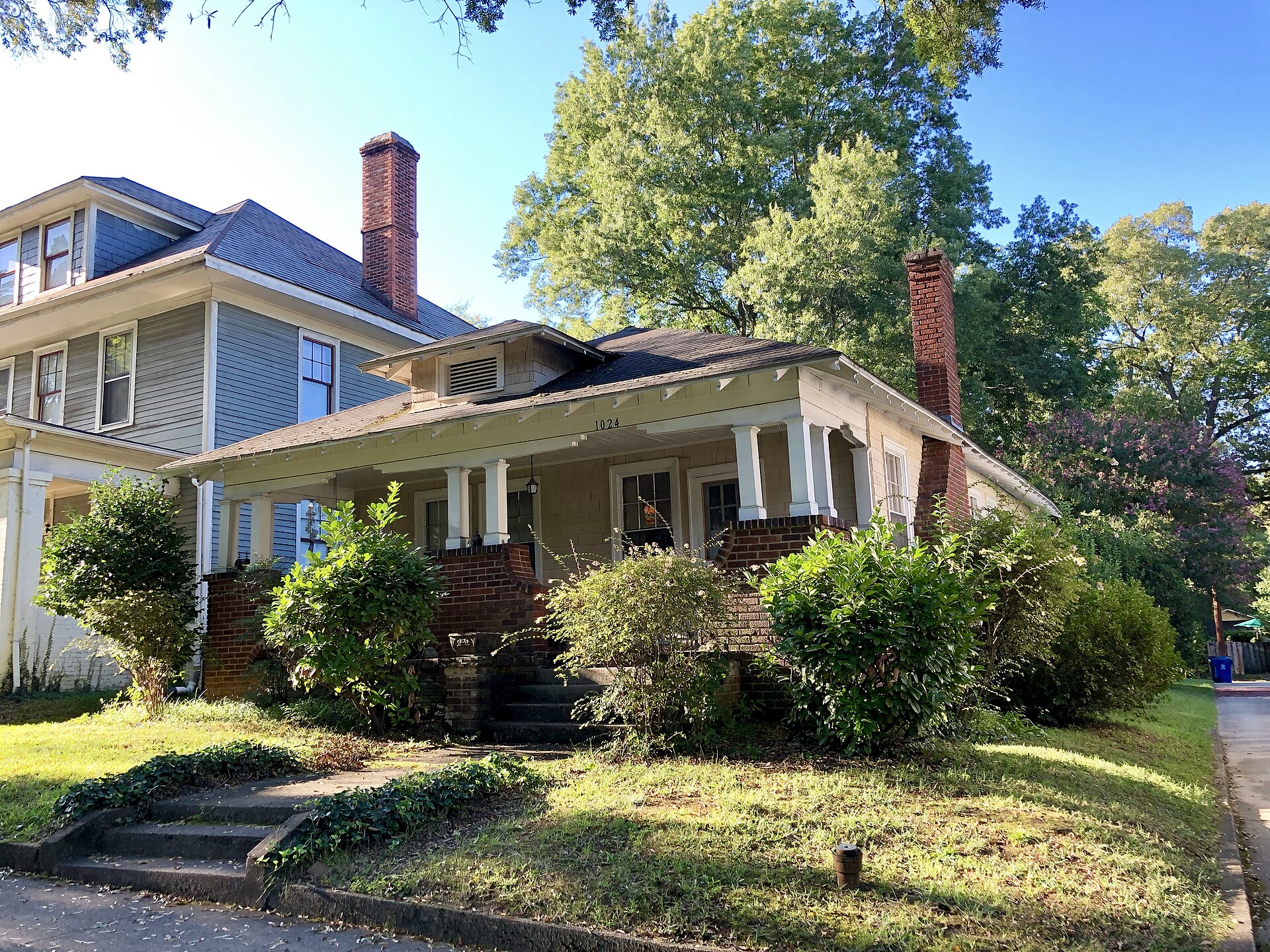
We get this question from two kinds of buyers. The first has fallen for a Queen Anne on Watts Street or a Craftsman bungalow on Trinity Avenue and wants to know what rules come with it. The second is coming from a city with strict landmark commissions and assumes Durham works the same way. It does not, and the difference changes both what you can do with the house and what you should worry about.
Trinity Park covers about 40 blocks between downtown and Duke University’s East Campus. The Trinity Historic District was listed on the National Register of Historic Places in 1986 and expanded in 2004 and 2008; it covers 281.9 acres and 751 contributing buildings built between the 1890s and 1960, according to the National Register listing summarized in our Trinity Park neighborhood guide. The houses that make it special also make it a neighborhood where due diligence earns its keep.
Is Trinity Park a local historic district, and does it matter?
No. Durham’s local historic districts are the ones where the Historic Preservation Commission must approve exterior changes through a Certificate of Appropriateness. As of the Trinity Park Neighborhood Association’s June 2022 summary, that list included Downtown Durham, Watts-Hillandale, Morehead Hill, Trinity Heights, Cleveland Street, Holloway Street, Fayetteville Street and Golden Belt, and Trinity Park was not on it. The Trinity Park Neighborhood Association held a community meeting on local designation in June 2022 and reported afterward that its board was not planning to pursue it, which remains the most recent public position we have found. Confirm the current status with Durham City-County Planning before you rely on it, but as of this writing there is no local review.
That matters in both directions. You can replace windows, add a rear addition or repaint in any color without a hearing, and a minor project does not wait two months for a commission date. But the neighborhood has no demolition delay and no design standards for the house next door, so a mismatched addition or a teardown on your block is a real possibility rather than a remote one. Buyers who want protection for the streetscape they are paying for should look at Durham’s local districts or at Historic Oakwood in Raleigh, where the rules are stricter and the trade-offs run the other way.
The one place history still protects Trinity Park is zoning. Residents won a downzoning in 1976 that stopped the conversion of big houses into apartment buildings, and the owner-occupied blocks you see today are the result, according to the association’s history page.
Can you get a tax credit for renovating a historic house in Durham?
Often, yes, and it is more generous than most buyers expect. North Carolina offers a state income tax credit equal to 15 percent of rehabilitation expenses for an owner-occupied, non-income-producing certified historic structure, with a minimum of $10,000 in qualifying expenses and a maximum credit of $22,500 per parcel, which means up to $150,000 of eligible work, according to the NC Department of Revenue’s 2025 NC-Rehab instructions and G.S. 105-129.106. A house counts as certified if it is a contributing building in a National Register district, which most of Trinity Park’s older homes are.
The catch is process. The State Historic Preservation Office reviews a two-part application, and the work must meet the Secretary of the Interior’s Standards for Rehabilitation, which means the office approves the scope before you start. Work you have already finished does not qualify. The office says the process typically takes at least six months, and you may claim one project every five years. If you plan a kitchen, systems and envelope project in your first year, get the application in before the contractor does.
- Trinity Historic District: 281.9 acres, 751 contributing buildings, listed 1986, expanded 2004 and 2008 National Register of Historic Places via Tidal Realty Partners Trinity Park guide, November 2026
- NC historic rehabilitation credit: 15 percent of expenses, $10,000 minimum, $22,500 maximum credit NC Department of Revenue, 2025 NC-Rehab instructions; G.S. 105-129.106
- Combined Durham County and City of Durham property tax rate: $1.0163 per $100 for FY2026-27 Durham County Tax Administration, 2026 tax rates
- Median value of owner-occupied homes in ZIP 27701: $508,900 U.S. Census Bureau, ACS 2024 five-year estimates via Census Reporter
- Durham County median sale price $405,000, 49 days on market, 4.2 months of supply Triangle MLS via our Durham County market update, October 2026 closings
What should the inspection cover on a 1920s Durham house?
Start with what you cannot see from the porch. Many Trinity Park houses sit on brick piers with a crawlspace, and Durham’s clay soils and summer humidity make moisture, settlement and wood-destroying insects the first three items on our list. Ask for a licensed wood-destroying insect report and a structural look at any sagging floor, not just a general inspection.
Next are the systems. Houses from the 1900s through the 1940s may still carry knob-and-tube or cloth-wrapped wiring behind newer outlets, and some insurers price or decline a policy over it, so have the electrician trace circuits and open the panel. The sewer lateral to the street is often original clay or cast iron; a camera scope costs little compared with replacing a line under a hundred-year-old oak. Any home built before 1978 also triggers the federal lead-based paint disclosure, so expect that form from the seller and budget for lead-safe work practices if you have small children.
In North Carolina you do this work during the due diligence period, when you can walk away for any reason and lose only the due diligence fee. Negotiate enough days for specialty inspections and the preservation office’s early feedback. Our post on how much due diligence fee to offer in the Triangle covers how that fee is set.
What does a Trinity Park house cost to own?
Prices sit above most of Durham. The median value of an owner-occupied home in ZIP 27701, which includes Trinity Park together with downtown, was $508,900 in the ACS 2024 five-year estimates, against $389,400 for Durham County. In our experience the renovated houses on Watts, Gregson, Buchanan and Trinity Avenue sit in the upper part of that range, the smaller bungalows north of Urban Avenue in the middle, and condominiums at the bottom. County-wide, the October 2026 median sale price was $405,000 with 49 days on market and 4.2 months of supply, per our Durham County market update, and that update notes that downtown and the neighborhoods around it are holding value while the softness sits in the northern and eastern suburbs.
Property taxes are higher than Wake County’s. The Durham County rate for FY2026-27 is 57.92 cents per $100 after a 2.5 cent increase adopted June 8, 2026, and the City of Durham rate is 43.71 cents, a combined $1.0163, according to the Durham County Tax Administration. On a $600,000 house that is about $6,098 a year. Durham revalued every property as of January 1, 2025, and the next reappraisal is set for January 1, 2029, so the assessed value you see on the tax card is recent. Our guide to the best neighborhoods in Raleigh, Durham and Cary puts Trinity Park beside the other close-in options if you are still deciding where to look.
The tax credit sounds simple and is not. It only applies to work the preservation office approves in advance, and a kitchen gut that removes original material can fail the Standards and cost you the credit. The lack of local review protects your freedom but not your view: nothing stops a buyer two doors down from replacing a bungalow with something out of scale, and no board will slow it. The ZIP-level price figures include downtown’s condos and apartments, so treat them as context, not as a comp for a specific Watts Street house; ask us for the Triangle MLS sales inside the district boundaries. And Duke’s East Campus is both the neighborhood’s front yard and the source of student rentals on some blocks, so walk the street on a Friday night before you write an offer. If you want a historic house with less maintenance risk, a 1940s brick home in Watts-Hillandale or a renovated bungalow in Old West Durham may fit better.
Related questions people also ask
Is Trinity Park in Durham a local historic district?
No. Trinity Park is listed on the National Register of Historic Places as the Trinity Historic District, which is a federal recognition that carries tax credit eligibility but no design review. It is not one of Durham’s local historic districts, so homeowners do not need a Certificate of Appropriateness from the Historic Preservation Commission for exterior changes. The Trinity Park Neighborhood Association discussed local designation in June 2022 and reported that its board was not pursuing it.
Can I get a tax credit for renovating a house in Trinity Park?
Usually yes, if the house is a contributing building in the National Register district and you live in it. North Carolina allows a state income tax credit of 15 percent of qualifying rehabilitation expenses, with a $10,000 minimum spend and a $22,500 maximum credit, according to the NC Department of Revenue’s NC-Rehab instructions. The State Historic Preservation Office must approve the work before it starts, and the project has to follow the Secretary of the Interior’s Standards for Rehabilitation.
How much are property taxes on a $600,000 home in Durham?
About $6,098 a year inside the Durham city limits. The Durham County rate for fiscal year 2026-27 is 57.92 cents per $100 of assessed value and the City of Durham rate is 43.71 cents, a combined $1.0163 per $100, according to the Durham County Tax Administration’s 2026 tax rate sheet. Assessed values reflect the county’s January 1, 2025 reappraisal, and the next reappraisal is scheduled for January 1, 2029.
Before you tour, ask us for the Triangle MLS closed sales inside the Trinity Historic District boundaries for the past twelve months and a list of inspectors who work on pre-war Durham houses, then walk through the credit timeline with our team so your renovation plan and your offer timeline line up.
Sources: National Register of Historic Places, Trinity Historic District listing and boundary increases, via Tidal Realty Partners Trinity Park neighborhood guide, November 2026; Trinity Park Neighborhood Association, Outcomes of June 8 TPNA Meeting on Historic Designation, posted June 25, 2022, and neighborhood history page; NC Department of Revenue, 2025 NC-Rehab instructions, and N.C. General Statutes 105-129.106; NC State Historic Preservation Office, Rehabilitation Tax Credits for Non-Income-Producing Properties, read November 27, 2026; Durham County Tax Administration, 2026 tax rates and 2025 General Reappraisal pages, read November 27, 2026; Durham County Board of Commissioners, FY2026-27 budget adoption, June 8, 2026; U.S. Census Bureau, ACS 2024 five-year estimates for ZIP 27701 via Census Reporter; U.S. EPA, lead-based paint disclosure rule for housing built before 1978; Triangle MLS via Tidal Realty Partners Durham County market update, October 2026 closings.