
Trinity Park
Your complete guide to Trinity Park: Durham’s 40-block National Register neighborhood of Queen Anne houses and Craftsman bungalows between downtown and Duke’s East Campus, a short walk from Brightleaf Square, the Durham Farmers’ Market and the Durham Bulls.
Sources: median home value is the ACS 2024 5-year median value of owner-occupied homes in ZIP 27701, which covers Trinity Park together with downtown and other central Durham neighborhoods, U.S. Census Bureau via Census Reporter, read Nov. 23, 2026; no public neighborhood-level listing page answered our requests this run (Realtor.com and Coldwell Banker), so the bar shows Census and county figures rather than a live Trinity Park listing count; county median sale price and days on market are for Durham County, October 2026 closings, from our Durham County market update (Triangle MLS); tax rate is the Durham County fiscal year 2026-27 rate of $0.5792 per $100 of value plus the City of Durham rate of $0.4371, a combined $1.0163, from the Durham County Tax Administration tax rates page.
Neighborhood Overview: Trinity Park homes for sale
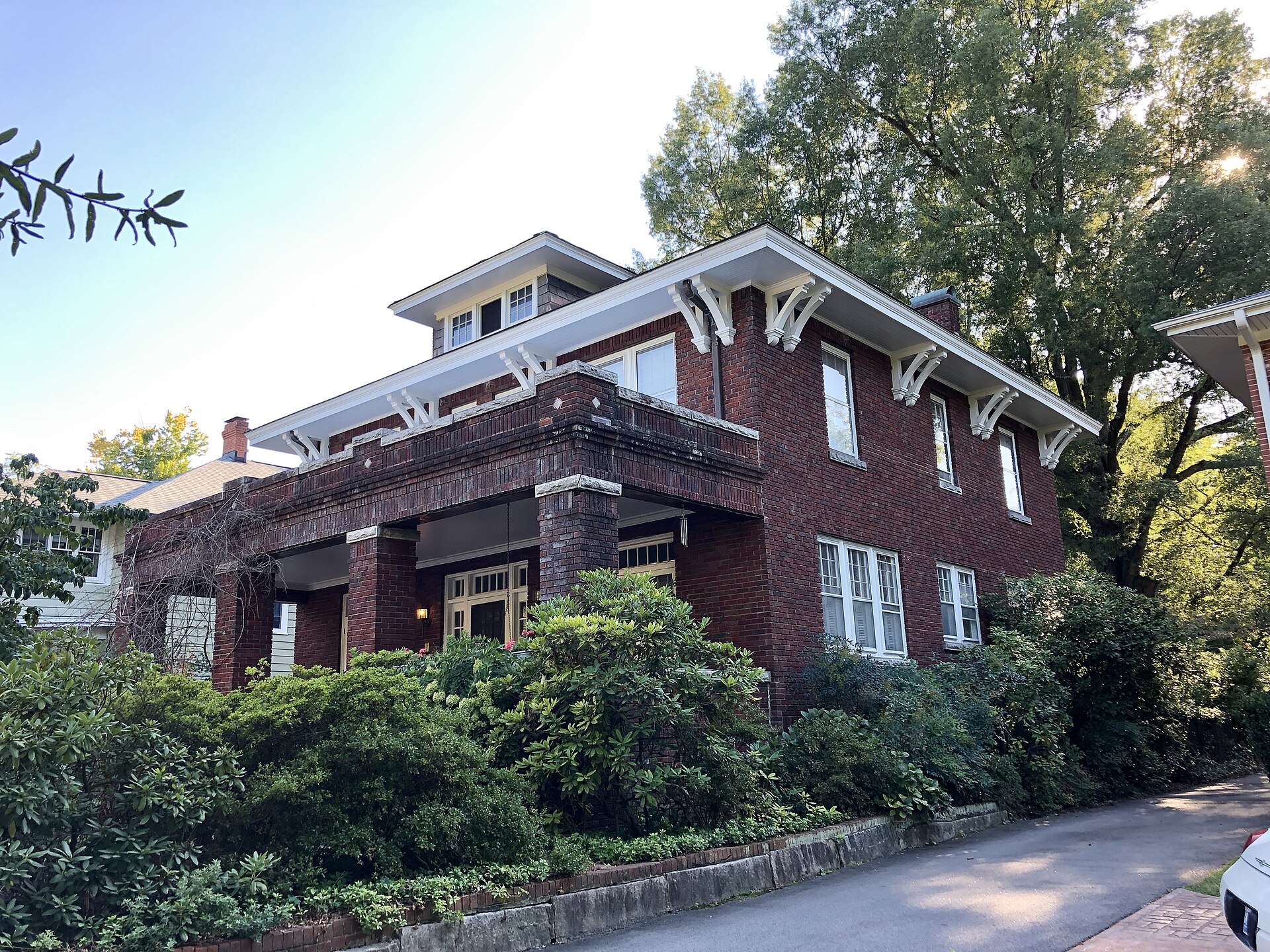
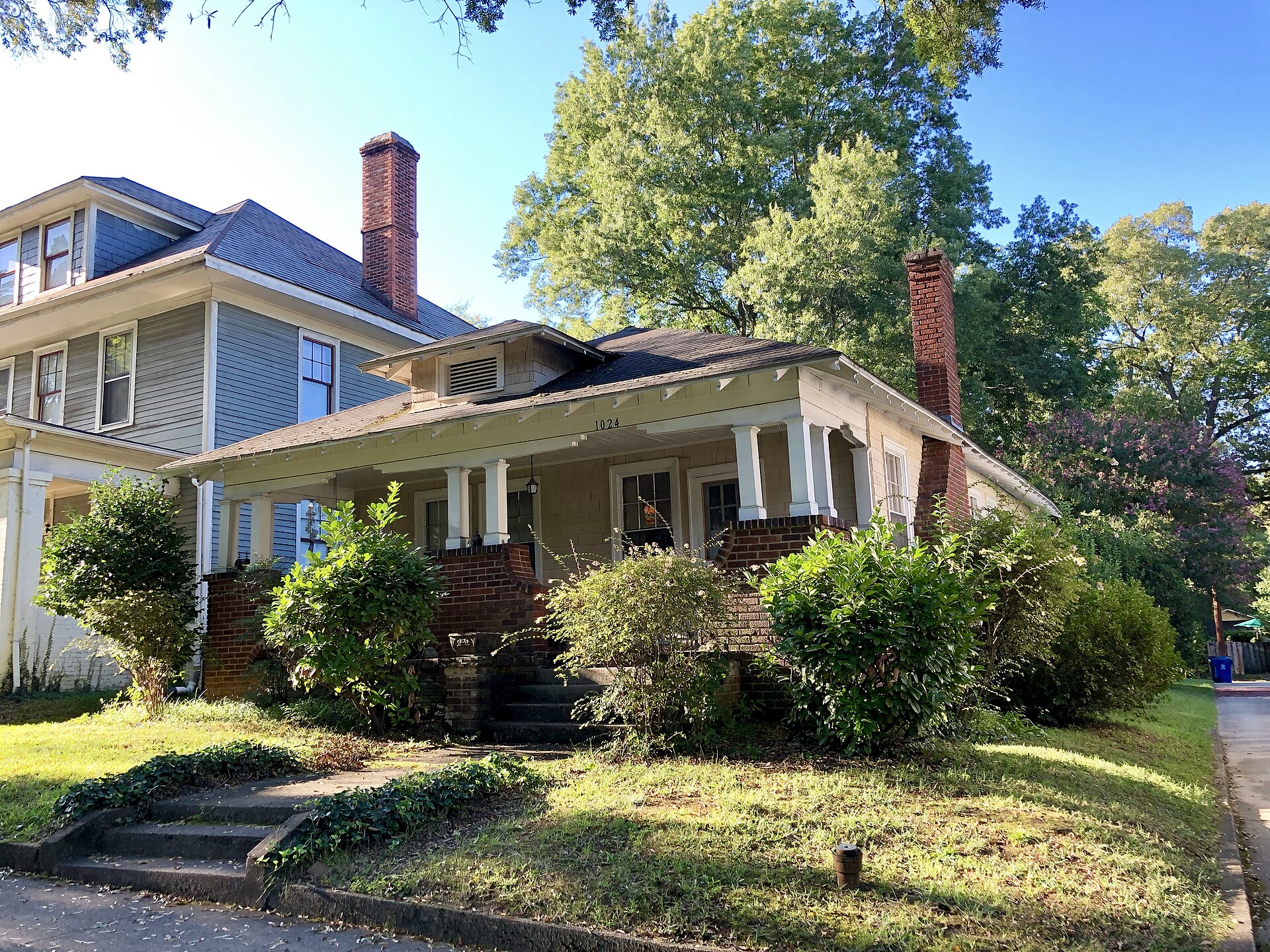
Trinity Park is about 40 square blocks of tree-lined streets between downtown Durham and Duke University’s East Campus (Trinity Park Neighborhood Association). Trinity College moved to Durham in 1891 and 1892, and the Queen Anne houses built for its professors, the Faculty Row, were among the first homes here. In 1901 Brodie L. Duke subdivided his land east of the college, and the area became one of the city’s most fashionable addresses. The neighborhood filled in north of Urban Avenue through the 1940s, and a 1930s Works Progress Administration planting gave the streets their oak canopy (TPNA history page). The Trinity Historic District was listed on the National Register of Historic Places in 1986 and expanded in 2004 and 2008; it covers 281.9 acres and 751 contributing buildings built between the 1890s and 1960, roughly bounded by Green, Duke, Morgan and West Main streets, Markham Avenue, Clarendon Street, North Buchanan Boulevard and West Club Boulevard (National Register listing).
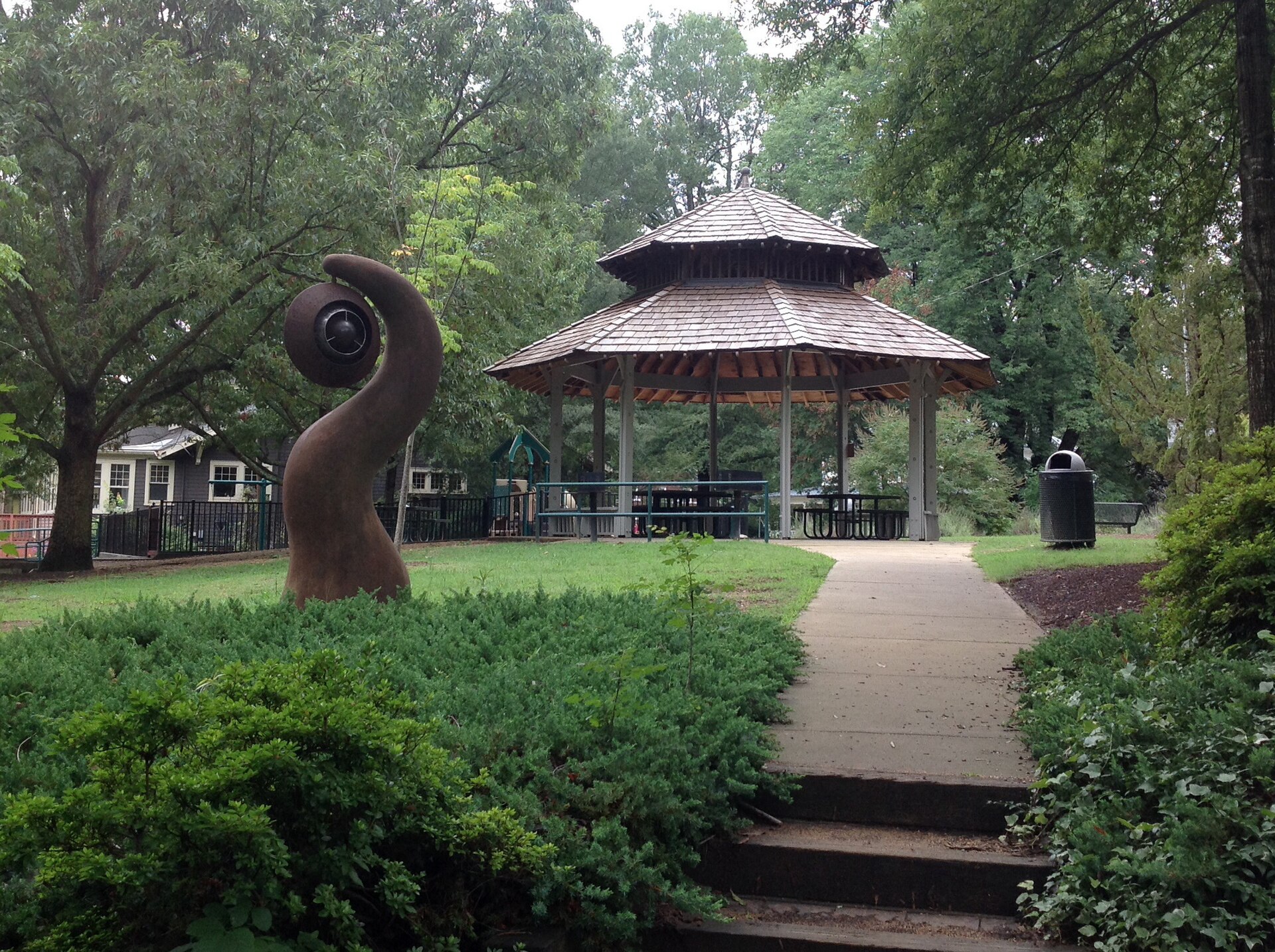
The middle chapter matters to a buyer. Families left for the suburbs in the 1950s, big houses were cut into apartments, and in 1972 the city started felling the oaks on Trinity Avenue for a four-lane crosstown road. Residents stopped the road, organized the association in 1974, won a downzoning in 1976 that halted apartment demolitions, and in 1980 bought a corner lot slated for a multifamily building and made it the neighborhood park (TPNA history page). What you are buying is a 100-year-old house a mile from downtown and across the street from a university; that is the appeal and the maintenance list. The wider ZIP, 27701, had 24,793 residents and a median household income of $69,740 in the ACS 2024 5-year estimates, and 8,352 of its 11,974 occupied homes were rented, so Trinity Park’s owner-occupied blocks sit inside a mostly renting ZIP that includes downtown’s apartment buildings (U.S. Census Bureau via Census Reporter). Our Downtown Durham guide covers the blocks south of Morgan Street, and our Durham County market update carries the monthly numbers.
Home Price Ranges
Trinity Park prices above most of Durham. The ACS 2024 5-year median value of an owner-occupied home in ZIP 27701 is $508,900, against $392,800 for the city of Durham and $389,400 for Durham County (U.S. Census Bureau via Census Reporter). The spread tells the story better than the median: of 3,622 owner-occupied homes in the ZIP, 850 are valued between $300,000 and $500,000, 981 between $500,000 and $750,000, 436 between $750,000 and $1 million, and 429 at $1 million or more (ACS 2024 5-year, table B25075). In our experience the renovated houses on Watts, Gregson, Buchanan and Trinity Avenue sit in the upper part of that distribution, the smaller bungalows north of Urban Avenue in the middle, and the condominiums at the bottom.
For context, the Durham County median sale price was $405,000 in October 2026, down 0.2 percent from a year earlier, with 49 days on market against 55 last October, 1,541 active listings, up 14.1 percent, and 4.2 months of supply (our Durham County market update, Triangle MLS). That update notes that downtown and the Ninth Street corridor are holding value while the softness sits in the northern and eastern suburbs; Trinity Park is in the first group. One caveat: no public neighborhood-level listing page answered our requests this run, so we cannot print a live listing count here. Ask us and we will pull the current Triangle MLS list for the district boundaries.
Lifestyle & Community
The neighborhood association runs a full calendar: a Home Tour and a Garden Tour, a Spring Egg Hunt, summer concerts in the park, National Night Out, Halloween and the winter Luminaria Night (Trinity Park Neighborhood Association, 2026).
- Trinity Park, the park. The corner lot residents bought in 1980 has a gazebo, a gated play area and shaded lawns, and it hosts the concerts and festivals (TPNA history page).
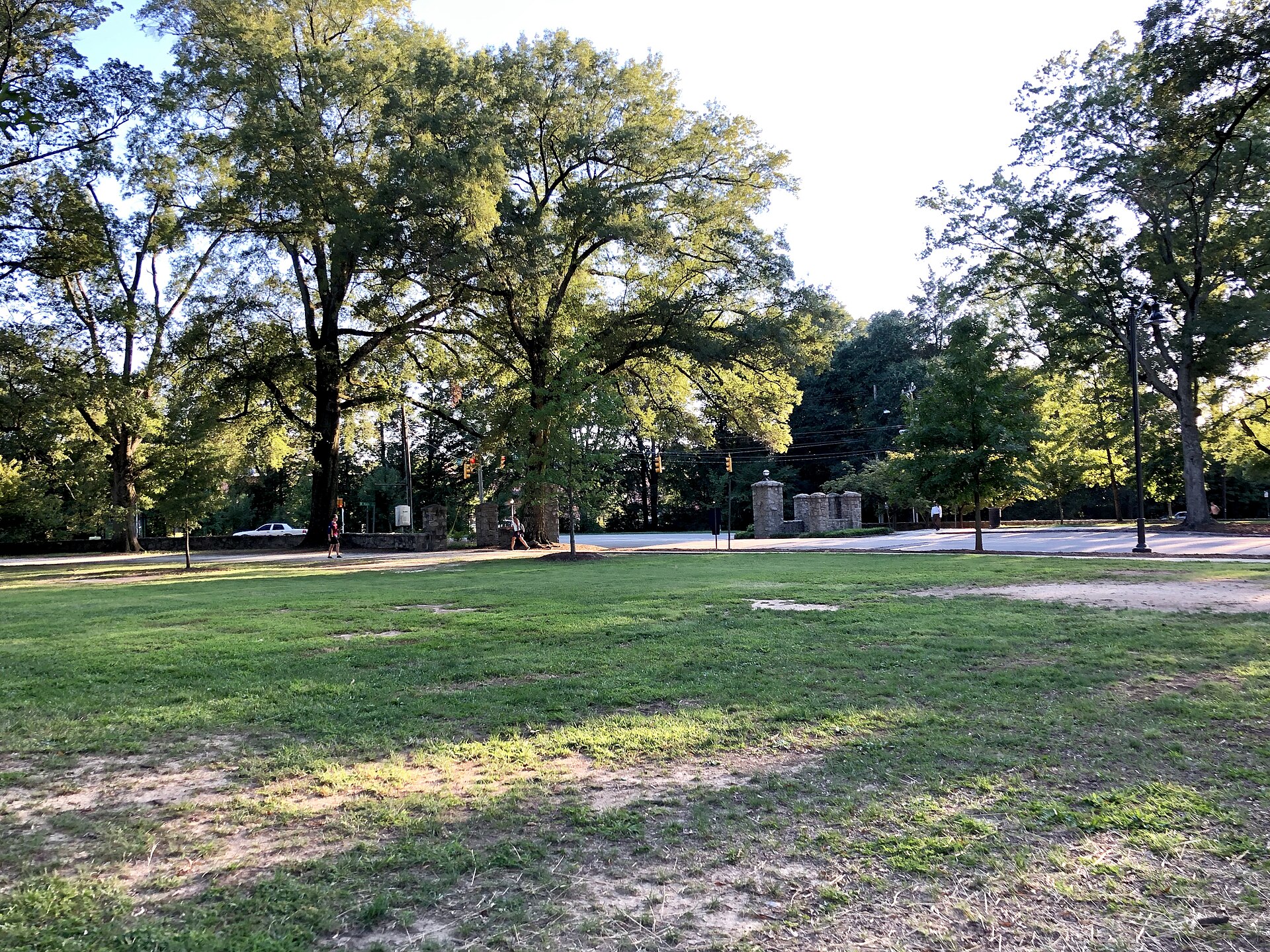
- Duke University East Campus. The Georgian campus bordering Trinity Park to the west houses all of Duke’s first-year students, and its lawns are the neighborhood’s front yard (Wikipedia, East Campus).
- Durham Central Park and the Durham Farmers’ Market. A five-acre park at 501 Foster Street hosts the Food Truck Rodeo and the PLAYlist concerts; the market runs under its pavilion Saturdays 8 a.m. to noon April through November, 9 a.m. to noon in winter, and Wednesdays 3 to 6 p.m. mid-April to mid-October (Durham Central Park; Durham Farmers’ Market).
- Brightleaf Square. The 1904 Watts and Yuille tobacco warehouses at 905 West Main Street, listed on the National Register in 1984, hold shops, restaurants and offices around a courtyard at the neighborhood’s southern edge (Wikipedia).
- Durham Bulls Athletic Park and the American Tobacco Campus. The 1995 ballpark at 409 Blackwell Street is home to the Triple-A affiliate of the Tampa Bay Rays (Durham Bulls), and Fullsteam Brewery’s public house is at 320 Blackwell Street (Fullsteam Brewery).
- Ninth Street. The shopping and restaurant district on the far side of East Campus, which the association names among the nearest retail areas (TPNA history page).
Schools & Education
Trinity Park is served by Durham Public Schools. Assignment depends on the exact address and can change from year to year, so we do not list assigned schools here. Confirm the current assignment with the district’s address lookup on the Durham Public Schools website before you write an offer. Two district schools stand inside the historic district, the 1917 George W. Watts School and the 1923 Durham High School building, now Durham School of the Arts (National Register listing). These are the public schools in and near Trinity Park from the NCES Common Core of Data directory for 2025-26, with 2024-25 enrollment:
- George Watts Elementary (PK-5), 700 Watts Street, 358 students, inside the neighborhood
- E.K. Powe Elementary (PK-5), 913 Ninth Street, 454 students, on the far side of East Campus
- Club Boulevard Elementary (K-5), 400 West Club Boulevard, 364 students, at the northern boundary
- Brogden Middle (6-8), 1001 Leon Street, 753 students, about 2 miles north
- Durham School of the Arts (6-12), 401 North Duke Street, 1,764 students, inside the neighborhood
- Riverside High (9-12), 3218 Rose of Sharon Road, 1,900 students, about 4 miles north
- City of Medicine Academy (9-12), 301 Crutchfield Street, 329 students
- Central Park School for Children, a K-8 public charter, 724 Foster Street, 585 students
Getting Around
The association describes Trinity Park as minutes from downtown with quick access to I-85 and the Durham Freeway (TPNA history page). From the center of the neighborhood near Watts Street and Trinity Avenue, downtown Durham is about 1.3 miles and 4 minutes, the Durham Freeway (NC 147) at Duke Street 0.9 mile and 3 minutes, I-85 at Gregson Street 1.2 miles and 5 minutes, and Duke University Hospital 1.9 miles and 6 minutes. Research Triangle Park is about 9.9 miles and 18 minutes down the Durham Freeway, RDU airport 15.8 miles and 25 minutes, Chapel Hill 11.4 miles and 25 minutes, and downtown Raleigh 26 miles and 39 minutes. These are light-traffic estimates from OpenStreetMap routing in November 2026; a weekday rush hour on the Durham Freeway and I-40 adds 10 to 20 minutes to the RTP, airport and Raleigh drives.
Parking is the local wrinkle. Several blocks are a Controlled Parking Residential Area, which limits parking without a permit to two hours, Monday through Friday, 8 a.m. to 5 p.m., enforced by the City by license plate. Residents register their plates with ParkDurham at no cost, and visitor and contractor passes are available (Trinity Park Neighborhood Association; ParkDurham).
What Buyers Should Know
- Historic district status. The National Register listing by itself does not restrict what a private owner does with private money. Exterior review applies to locally designated districts and landmarks through the City’s Historic Preservation Commission. We could not read the City’s preservation pages this run, so confirm with the Durham City-County Planning Department whether a house carries local designation before planning exterior work.
- Property taxes and the 2025 revaluation. For fiscal year 2026-27 the Durham County rate is $0.5792 per $100 of value and the City of Durham rate is $0.4371, a combined $1.0163 (Durham County Tax Administration). On the $508,900 ACS median value that is about $5,172 a year. Durham County reappraised every parcel effective January 1, 2025; the combined rate fell from $1.3949 in fiscal year 2024-25 to $0.9913 in 2025-26 as values rose, then climbed to $1.0163 this year, so a renovated house’s bill moved with its new value (Durham County Tax Administration reappraisal page).
- Old houses. In ZIP 27701, 2,884 of 14,073 housing units were built in 1939 or earlier and another 1,275 in the 1940s (ACS 2024 5-year, table B25034). Our Durham County market update tells buyers to get a sewer scope on anything built before 1985; here we also budget for the roof, electrical panel, plumbing, lead paint and crawlspace, and we hire inspectors who know pre-war houses.
- Rentals, Duke and short-term rentals. The ZIP is 70 percent renter-occupied, and the neighborhood spent the 1950s and 1960s as cut-up apartments before the 1976 downzoning (TPNA history page). Student rentals remain on some blocks. There is no mandatory homeowners association; the neighborhood association is voluntary. The City’s short-term rental page did not load for us this run, so confirm current rules with the Planning Department before buying for rental income.
- Zoning is changing. The association’s news page carries posts on the City’s proposed new Unified Development Ordinance, which it says would rezone all neighborhoods (Trinity Park Neighborhood Association news, 2026). Ask what the draft allows on the lot next door.
- Trees and cankerworms. The willow oaks are the signature and the chore. The association organizes residents to band their trees each late fall against cankerworms (TPNA cankerworm page). Budget for arborist work.
- Flood. We pull the FEMA Flood Map Service Center panel for every address before the due diligence period ends.
Frequently Asked Questions
Photos: Warren LeMay (CC0), Warren LeMay (CC0), Econterms (CC BY-SA 3.0), Warren LeMay (CC0) via Wikimedia Commons