Check four things before you go under contract: whether your deed gives you a recorded legal right of access, whether a written road maintenance agreement exists and what it obligates you to pay, whether your lender will accept the road, and who plows, patches and paves it when it fails. A private road is not a dealbreaker here, but it is the one item that can kill a loan three days before closing.
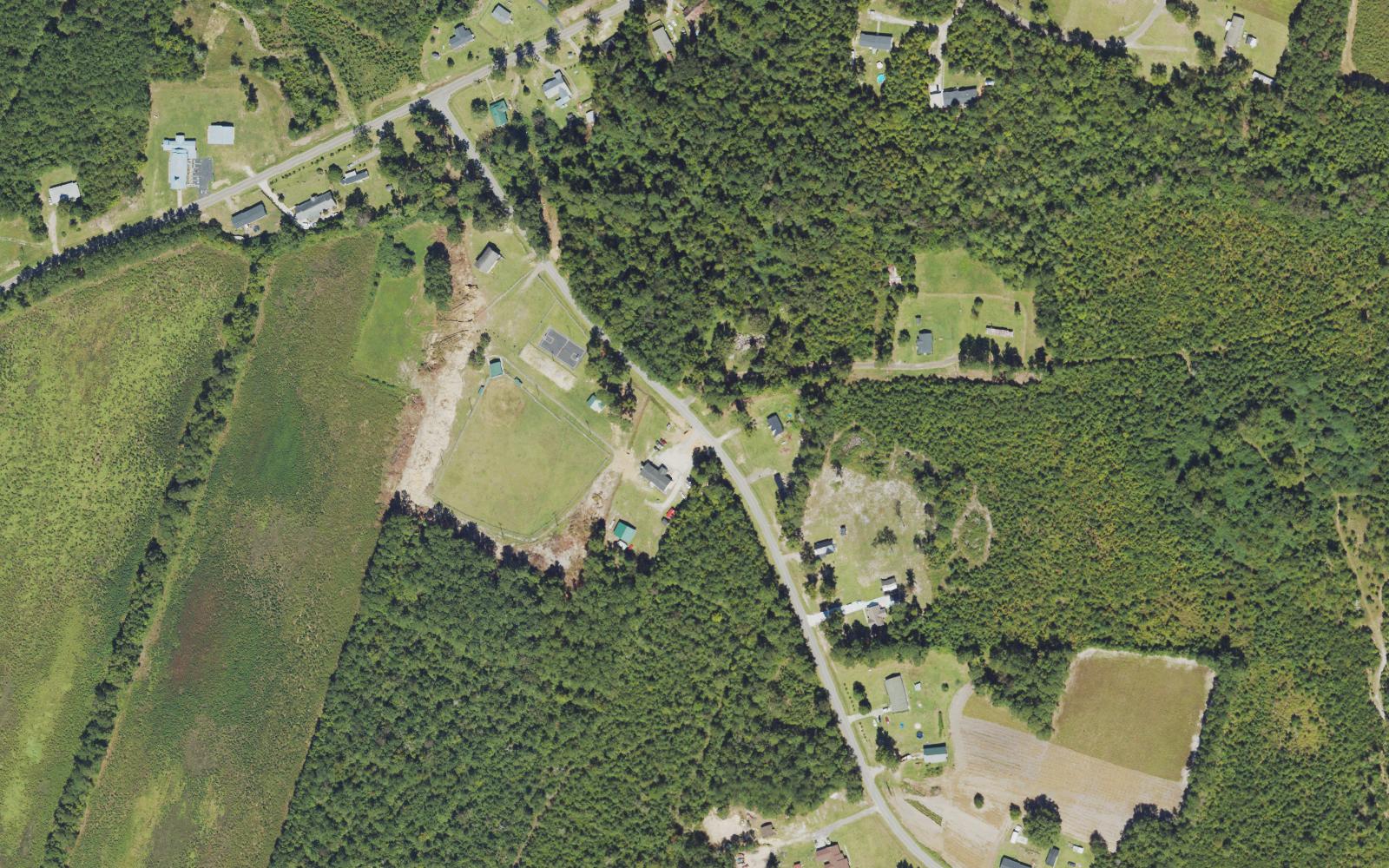
Drive ten minutes inland in any direction from Wilmington and the private roads start. Castle Hayne, Rocky Point, Burgaw, the lanes off Scotts Hill Loop Road, the older waterfront strips in Hampstead and much of rural Brunswick County are full of them. Some are beautifully maintained gravel with eight families on them. Some are a rutted easement across a neighbor’s land that nobody has repaired since 2009.
Buyers love these properties for the obvious reason. More land, more privacy, a lower price per acre. Our Pender County market update describes inland Pender as the region’s most affordable land with the longest commutes, larger lots, septic and well as the norm, and days on market well above the county median. That is exactly the negotiating room some buyers want. The road is the part they have not priced.
Does the seller have to tell you it is a private road?
In a subdivision, yes. G.S. 136-102.6(f) requires that before any agreement or conveyance, the developer and seller prepare and sign, and the buyer receive and sign an acknowledgment of, a separate subdivision streets disclosure statement. It must fully and completely disclose whether the street is public or private.
If the street is designated private, the statute requires the disclosure to explain the consequences and responsibility as to maintenance, to disclose exactly who is responsible for construction and maintenance of the street, and to state that the street will not be constructed to minimum standards sufficient to allow it on the State highway system for maintenance. A signed acknowledgment is conclusive proof of delivery, and a willful violation is a Class 1 misdemeanor.
That is a strong protection and it has a real limit. It is aimed at subdivision developers and sellers of subdivided lots. A great many private roads in Pender and Brunswick counties predate modern subdivision recording or were never platted as a subdivision at all, and a resale between two homeowners on an old family lane may not produce that document. Ask for it. If it does not exist, treat the absence as information and do the work yourself.
The four checks, in order
1. Legal access, in the deed. The first question is not condition, it is whether you have a recorded right to use the road at all. You want an easement appurtenant, recorded, running with the land, described well enough that a surveyor can find it. “Everyone has always driven down it” is not an easement, it is a claim, and resolving it later means a lawsuit.
This is the single best reason to have a North Carolina real estate attorney involved from the start rather than at the closing table. Our post on whether you need a real estate attorney to buy in NC explains how that works here. Have the attorney read the easement, not just confirm one exists.
2. The maintenance agreement, and what it costs you. Ask for the written road maintenance agreement before due diligence ends. A good one is recorded in the county land records, assigns each owner’s share of repair costs, states what happens when somebody does not pay, and runs in perpetuity. Those four elements are close to what Fannie Mae describes as an adequate, legally enforceable agreement or covenant for maintenance in its Selling Guide section B4-1.3-04 on the site section of the appraisal report, dated June 4, 2025.
Then ask the harder question, which is what it actually costs. Six houses splitting a gravel lane might spend a few hundred dollars each a year on grading and stone. The same six houses facing a washed-out culvert or a repaving bill can be looking at several thousand dollars apiece, and in a dispute there is no HOA to bill it and no town to call. Ask the neighbors what they have spent in the past five years. They will tell you.
3. Your lender. This is the one that surprises people. Fannie Mae’s general property eligibility topic, B2-3-01 dated September 3, 2025, requires that the property be readily accessible by roads that meet local standards, and lists properties that are not as ineligible. Section B4-1.3-04 then addresses private streets and the maintenance agreement.
That section also says that where a state has statutory provisions defining the responsibilities of property owners for maintaining a private street, a separate agreement is not required, and that in a state without such provisions a lender may still deliver the loan while indemnifying Fannie Mae. The practical translation for a buyer is simple. Do not assume. Send your loan officer the recorded easement and any maintenance agreement in the first week of due diligence and get an answer in writing. FHA, VA and USDA each apply their own access requirements, and a portfolio lender may take a road that a conventional underwriter will not.
4. Who actually shows up. Private means private. NCDOT does not patch it, the county does not clear it, and after the hurricanes of recent years we have watched private lanes stay blocked for days after the state roads were open. Confirm, by asking the specific providers rather than the seller: whether the school bus comes down the road or stops at the hardtop, whether trash is collected at the house or at the end of the lane, whether the fire department has rated access, and whether the US Postal Service delivers to the door or to a cluster box.
Fire access deserves particular attention, because it can show up in your insurance quote. A long, narrow, unimproved lane with no turnaround can change the response rating that an insurer uses, and on this coast your premium is already the line item moving fastest.
- Any subdivision recorded on or after October 1, 1975 must be built to NCDOT standards to be eligible for addition to the state system N.C. Gen. Stat. 136-102.6, read October 29, 2026
- Once the Department finds the streets meet its standards, the Board of Transportation must act on a road addition petition within 90 days N.C. Gen. Stat. 136-102.6, read October 29, 2026
- Adding a road to the state system starts with NCDOT Form SR-1, Petition for Road Addition, filed with the District Engineer NCDOT Form SR-1, Petition for Road Addition
- Pender County active listings: 430, down from 439, with median days on market at 83 Redfin county housing-market pages, read October 17, 2026, three months ending September 2026
Can you get the road taken over by the state later?
Sometimes, and it is slower and more expensive than buyers hope. The route is NCDOT Form SR-1, a petition for road addition filed with the District Engineer, and the road has to meet NCDOT’s construction standards before the Board of Transportation will accept it. For a road recorded as a subdivision street on or after October 1, 1975, G.S. 136-102.6 requires it to have been built to those standards in the first place to be eligible.
An old gravel lane almost never meets them as it sits. Bringing it up to standard means right of way, grading, drainage, base and paving, paid for by the owners, and any maintenance defects have to be repaired before the road is accepted. We have clients who have done it. We have more clients who looked at the engineering estimate and decided to keep grading it themselves.
Price the road as it is today, not as you hope it will be. If you want to see what the rest of inland Pender looks like before you commit, our Castle Hayne and Burgaw guides cover two of the areas where this comes up most, and our Pender County market update has the current numbers.
Private road properties are often also well and septic properties, and the two sets of due diligence stack. If you are looking at one, read our post on getting a mortgage on a home with a well and septic alongside this one, and build a longer due diligence period into the offer than you would in town. We will also say plainly that some of these roads are not worth buying on. A lane with no recorded easement, no written maintenance agreement, six owners who do not speak to each other and a culvert about to fail is a problem you are buying, not a discount you are getting. We have told clients to walk away from otherwise lovely houses for that reason, and we would tell you the same.
Related questions people also ask
Will a private road make the house harder to sell later?
It narrows your buyer pool, which usually shows up as more days on market rather than a lower price. The buyers it removes are the ones whose financing will not accommodate the road and the ones who simply do not want the responsibility. A recorded easement and a clean, funded maintenance agreement remove most of that friction, which is a good argument for getting both in order while you own the place rather than during a sale.
Who is responsible if a neighbor refuses to pay their share?
It depends entirely on what the maintenance agreement says, which is why the default remedies clause matters more than people think. A well-drafted agreement states each owner’s share and what the others can do when someone does not pay, typically a lien or a civil claim. Without a written agreement, recovering money from an unwilling neighbor usually means a lawsuit and an uncertain outcome, so read that clause before you rely on it.
Does a private road affect my homeowners insurance?
It can, mostly through fire protection. Insurers price partly on distance to a responding fire station and on whether apparatus can reach and turn around at the property, so a long, narrow, unimproved lane can land you in a worse rating class than a house a mile away on a state road. Get an actual written quote on the specific address during due diligence rather than an estimate, because on the southeastern North Carolina coast this is the cost that has moved the most.
Ask the listing agent for three documents in writing before your due diligence period starts: the recorded easement, the road maintenance agreement, and the subdivision streets disclosure statement if the lot sits in a recorded subdivision. Send all three to your lender and your attorney the same day. If you want a second read on what comes back, send them to us as well and we will tell you honestly whether the road is a manageable detail or the reason to keep looking. Schedule a consultation and we will go through it together.
Sources: N.C. Gen. Stat. 136-102.6, including subsection (f), subdivision streets disclosure statement, read October 29, 2026; NCDOT Form SR-1, Petition for Road Addition; Fannie Mae Selling Guide B2-3-01, General Property Eligibility, dated September 3, 2025; Fannie Mae Selling Guide B4-1.3-04, Site Section of the Appraisal Report, dated June 4, 2025; Redfin county housing-market pages, read October 17, 2026, via our Pender County market update, three months ending September 2026.