Yes. FHA, VA and conventional loans all finance homes on a private well and septic system in New Hanover, Brunswick and Pender counties, and we close them regularly. What changes is the paperwork: a water test collected by somebody other than you, a septic system the appraiser can see is working, and minimum separation distances between the well and the drain field that the appraiser is expected to know.
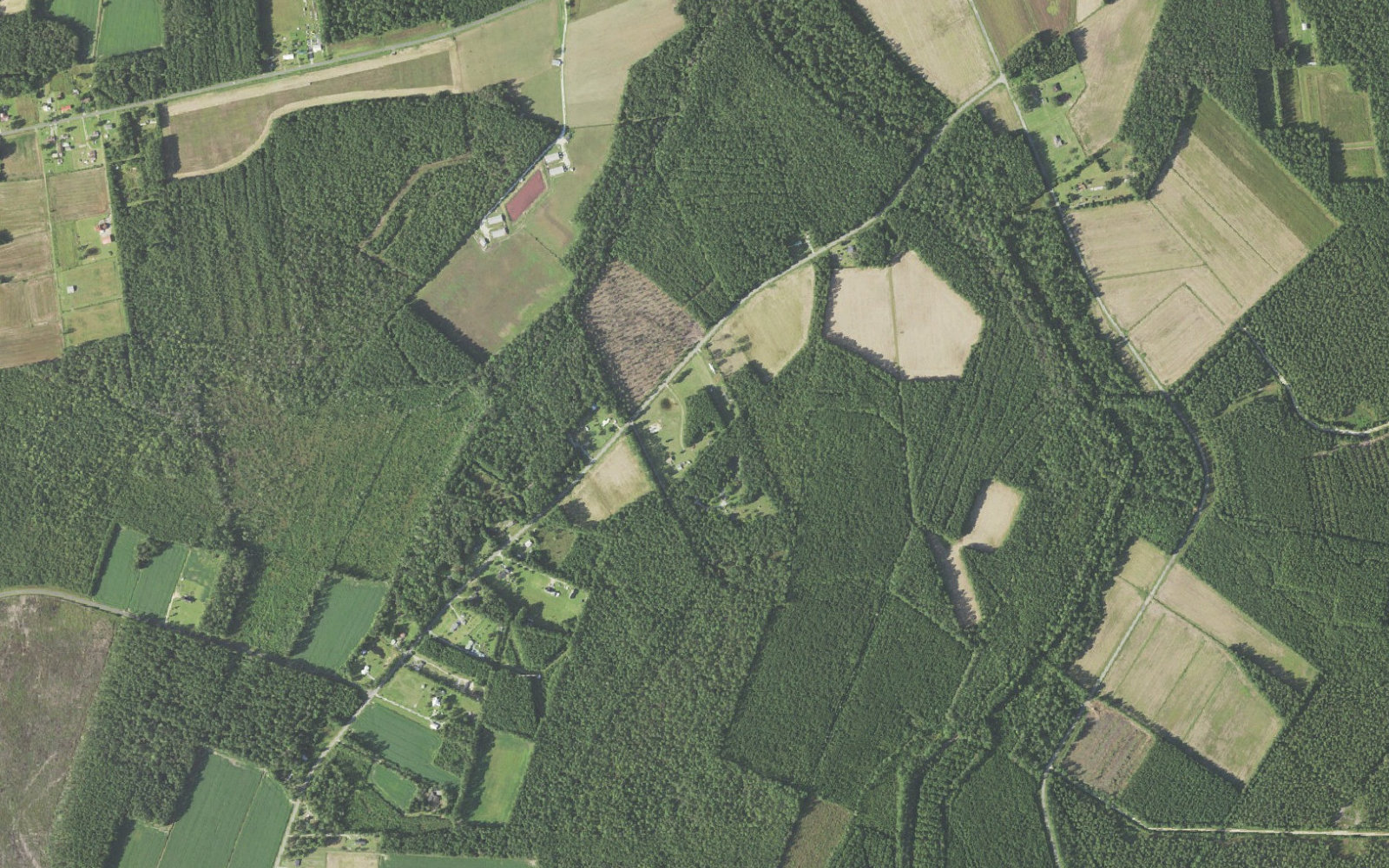
This question almost always comes from a buyer who found more land for the money outside the city. That instinct is right. Inland Pender, Castle Hayne, Rocky Point and much of western Brunswick County are where the acre lots are, and our Pender County market update says plainly that in Burgaw, Rocky Point and inland Pender, larger lots with septic and well are the norm.
Then a lender or a relative says something vague about wells being hard to finance, and the buyer starts to wonder whether they are about to waste a month. Here is what the actual rulebooks say, with the citations, so you can tell the difference between a real problem and a rumor.
What each loan program requires
FHA. HUD Handbook 4000.1 requires the lender to make sure the water quality meets the standards of the health authority with jurisdiction, and where there is no local or state standard, the EPA’s National Primary Drinking Water regulations at 40 CFR 141 and 142 apply. A well water test is required in several situations, including new construction, any time the appraiser reports a deficiency with the well or the water, any time water is reported or known to be unsafe, proximity to dumps, landfills, industrial sites or farms, and where the distance between the well and the septic system is less than 100 feet. The handbook is strict about who handles the sample: testing must be done by a disinterested third party, and at no time may the borrower, the owner or any interested party collect or transport it.
FHA also publishes the distances, drawn from 24 CFR 200.926d(f)(3). For existing construction the minimums are 10 feet from the property line, 50 feet from the septic tank and 100 feet from the drain field, with the drain field distance reducible to 75 feet if the local authority allows it. Local requirements prevail wherever they are stricter. An existing well must deliver three to five gallons per minute; a new well must deliver five gallons per minute over at least a four-hour period with lead-free piping, and public water must be connected whenever that is feasible.
VA. The VA’s minimum property requirements in Chapter 12 of VA Pamphlet 26-7, in the version effective after May 1, 2026, track FHA closely on water quality: the local health authority’s requirements govern, and EPA guidelines apply where the local authority has none. Same rule on the sample, which a disinterested third party must collect and test, never the veteran. One detail specific to VA is worth knowing: results are valid for 90 days from the date the local health authority certifies them, so a test done too early in a long escrow can expire. VA also requires a written acknowledgment from the veteran for certain water sources, including dug wells, cisterns, springs, rainwater catchment and mechanical chlorinators, and for any filtration system the veteran has to acknowledge in writing that it will be treated and maintained.
Conventional. The standard here is the simplest to state and the easiest to misjudge. The property has to have a safe, year-round supply of water and a sewage disposal method that is acceptable to the local health authority. In practice your appraiser and underwriter will want the same things FHA asks for whenever anything looks off, and most lenders will order a water test on a purchase with a private well as a matter of policy.
On the septic side, every program leans on the appraiser. HUD requires the appraiser to visually inspect the system and the ground around it, to look for signs of failure or surface evidence of malfunction, and to require an inspection or repair when there are readily observable deficiencies. That is the sentence that generates most of the surprise repair requests we see.
- FHA minimum separations for existing construction: 10 feet to the property line, 50 feet to the septic tank, 100 feet to the drain field, reducible to 75 feet only if the local authority allows HUD Handbook 4000.1, last revised August 14, 2019, citing 24 CFR 200.926d(f)(3)
- An FHA well water test is mandatory where the well sits less than 100 feet from the septic system HUD Handbook 4000.1
- Existing wells must produce three to five gallons per minute; new wells five gallons per minute over four hours HUD Handbook 4000.1
- VA water test results are valid 90 days from the date the local health authority certifies them VA Pamphlet 26-7, Chapter 12, version effective after May 1, 2026
- New Hanover County fees: septic improvement permit $400, construction authorization $200, well permit including site evaluation and bacteriological analysis $400, bacteriological water sample $140 with a $70 resample New Hanover County fee schedule FY2026-27, effective July 1, 2026
- A New Hanover County improvement permit and construction authorization expire five years from the date of issue New Hanover County Environmental Health, On-Site Water Protection
- 30-year fixed average 7.32 percent Freddie Mac Primary Mortgage Market Survey, week ending October 22, 2026
What we pull during due diligence on a well and septic house
Four documents, and we start them on day one because the county controls the clock, not the lender.
First, the septic permit file. New Hanover County Environmental Health keeps the improvement permit, construction authorization and any repair permits for the parcel, and the fastest route is a records request by email to the department rather than a phone call. That file tells you how many bedrooms the system was permitted for, which matters enormously if the house has since been expanded. A four-bedroom house on a three-bedroom system is a problem you want to find in week one.
Second, the well record and a water test, ordered through a lab or the county rather than the seller. New Hanover charges $400 for a well permit including the site evaluation and bacteriological analysis, and $140 for a bacteriological sample on its own under the fee schedule effective July 1, 2026. Pay for the inorganic panel too if the house sits near farmland.
Third, a septic inspection with the tank pumped and the lid open, by an installer or inspector who will put the condition of the drain field in writing. An appraiser’s visual look is not an inspection.
Fourth, if the well serves more than one house, the agreement. FHA defines a shared well as one serving two to four homes under a binding shared well agreement, and the appraiser has to obtain that agreement and include it in the report so the lender can judge eligibility. VA goes further and wants a permanent easement and a recorded well-sharing agreement that addresses repair costs. A handshake between neighbors will not finance.
Two situations genuinely stop a loan, and neither is the well itself. The first is a failing or undersized system: if the drain field is wet at the surface or the permit covers fewer bedrooms than the house has, the lender will want it repaired or re-permitted before closing, and a county repair permit takes as long as the county takes. On a short due diligence period that is how buyers lose their fee. The second is distance. If the well is closer to the drain field than the minimums allow and the local authority will not grant the reduction, there is no appraisal language that fixes it. We also tell buyers the honest version of the long-term math: a well and septic house has no monthly water and sewer bill, which is real savings, against a pump, a tank and a drain field you now own. Our post on septic versus city sewer in Wilmington works through that trade. And if the parcel has no system yet, that is a different question with a different timeline, because you are buying a soil evaluation rather than a house.
Related questions people also ask
Does FHA require a well water test in North Carolina?
Not on every loan, but on more of them than buyers expect. HUD Handbook 4000.1 lists the triggers, which include newly constructed homes, any deficiency the appraiser reports with the well or the water, water reported or known to be unsafe, proximity to landfills, industrial sites or farms, and any case where the well sits less than 100 feet from the septic system. Separately, the lender must confirm the water meets whatever the local health authority requires, and local health departments in our area commonly require a bacteriological sample on a transfer. Whoever orders it, the handbook forbids the buyer or the seller from collecting or transporting the sample.
Who pays for the water test and septic inspection?
In our market this is negotiable and usually lands on the buyer, because it is part of due diligence rather than a seller obligation under the standard North Carolina contract. Sellers sometimes agree to pay when the system is older and they want the question settled before it scares off a second buyer. If a lender requires a test and the result comes back bad, the cost of the retest and any treatment is a negotiation, not a rule. Put whichever arrangement you reach in the contract rather than leaving it to custom.
Can you get a USDA loan on a well and septic home here?
Often yes, since USDA’s eligible areas cover a lot of inland Pender and Brunswick County where wells and septic systems are common, and USDA uses the same approach of deferring to the local health authority on water quality. We are not going to quote you a current income limit or draw the eligible-area boundary, because USDA’s own sites have not been reachable for us to verify either one, and a zero-down program with the wrong income cap attached is worse than no answer. Ask a lender who closes USDA loans in this county to confirm both for your address and household size.
If you are looking at a well and septic house, send us the address before you write the offer. We will pull the county permit file for the parcel, check the bedroom count the system was approved for, and build a due diligence period long enough to get a water test and a real septic inspection back without rushing. That one step prevents most of the problems in this article, and we are glad to walk through what we find with you.
Sources: HUD Handbook 4000.1, Single Family Housing Policy Handbook, effective September 14, 2015 and last revised August 14, 2019, including 24 CFR 200.926d(f)(3); VA Pamphlet 26-7, Chapter 12, Minimum Property Requirement Overview, version effective after May 1, 2026; New Hanover County fee schedule FY2026-27, effective July 1, 2026; New Hanover County Environmental Health, On-Site Water Protection; our Pender County market update, three months ending September 2026; Freddie Mac Primary Mortgage Market Survey, week ending October 22, 2026.