Usually not as something you advertise, and often yes as something you hold back for the negotiation. North Carolina’s standard contract already gives you three ways to handle a home warranty in paragraph 8(o), so you do not have to decide before you list, and in a market where the median New Hanover home takes 61 days and two in five listings have already cut their price, the same $600 buys you more as a credit at the right moment than as a line in the listing.
This question usually arrives from sellers with an aging heat pump and a worry: if something breaks after closing, will the buyer come after me? A one-year warranty feels like the cheap answer to that. Sometimes it is. More often it is money spent on the wrong worry.
Here is the useful way to think about it. A home warranty is a negotiating chip, not a marketing feature. Buyers in this market are not choosing between two houses on the strength of a warranty. They are choosing on price, condition and what the inspection turned up.
What the North Carolina contract actually says
Paragraph 8(o) of the Offer to Purchase and Contract, Standard Form 2-T, revised 7/2024 and jointly approved by the North Carolina Bar Association’s Real Property Section and the North Carolina Association of REALTORS, gives the parties three choices. One: “No home warranty is to be provided by Seller.” Two: the buyer may obtain a one-year home warranty at a cost not to exceed a dollar figure the parties write in, including sales tax, which the seller agrees to pay at settlement. Three: the seller has already obtained a one-year warranty from a named company at a stated cost and will pay for it at settlement.
The middle option is the one we use most, and the reason is the blank. You are not agreeing to buy a particular plan from a particular company. You are agreeing to a ceiling. The buyer picks the plan, you pay up to the cap, and if the plan they want costs more than the cap, the difference is theirs. That structure is why a warranty works better inside a negotiation than outside one.
The form also carries its own warning, in the note immediately below the clause: home warranties typically have limitations on and conditions to coverage, and specific questions belong with the warranty company. We would go further. Read the exclusions before you agree to any figure, because the gap between what a seller thinks a warranty covers and what it covers is where the bad feeling after closing comes from.
The coastal exclusion nobody mentions
This matters more here than it would inland. Under North Carolina General Statute 58-1-20, the kind of home warranty sold on a resale is specifically not a contract of insurance, and the statute defines it as covering repair or replacement for defective parts, mechanical failure and ordinary wear and tear while “excluding from its coverage damage from recognizable perils, such as fire, flood, and wind.”
Read that last clause again if you own a house within sight of the water. A home warranty does not touch hurricane damage, wind damage or flood damage. Those belong to your homeowners policy, your windstorm coverage and your flood policy, and on this coast those are the policies that decide whether a claim is paid. Our guide to coastal homeowners insurance, wind, hail and hurricane deductibles covers the coverage that actually carries storm risk. If a buyer’s real worry is a storm, a warranty is the wrong answer and offering one can make you look like you are papering over something.
The same statute requires anyone issuing this kind of warranty to post a surety bond of at least $100,000 with the Secretary of State, and lets a warranty holder sue both the warrantor and the bond for a breach. That is worth knowing, and it is also worth noticing how small $100,000 is against a company’s national book of business. Ask who the warrantor is, not just who is selling the plan.
- New Hanover County median sale price $464,000, down 1.3 percent year over year, 61 days on market against 34 a year earlier, 1,251 active listings with two in five already price cut Our New Hanover County market update, three months ending September 2026
- Brunswick County 93 days on market and 2,334 active listings, about 38 percent of them price cut; Pender County 83 days Our county market updates, three months ending September 2026
- Home warranty plan pricing, one national provider: $540 to $660 a year for the basic plan, $660 to $840 mid tier, $840 to $1,080 for the top tier, with a $100 or $125 service fee per claim NerdWallet review of Old Republic Home Protection, quotes collected December 2025, article dated May 29, 2026; not North Carolina specific
- 30-year fixed mortgage rate 7.40 percent, up from 6.27 percent a year earlier Freddie Mac Primary Mortgage Market Survey, as of October 15, 2026
We will not quote you a single Wilmington price for a warranty, because no provider publishes one. Plans are priced by ZIP code, plan tier and the service fee you choose, and the only honest number is the quote on your address. The ranges above are what a national review found in December 2025, and they tell you the order of magnitude: this is a several-hundred-dollar decision, not a several-thousand-dollar one.
When we do suggest one, and when we do not
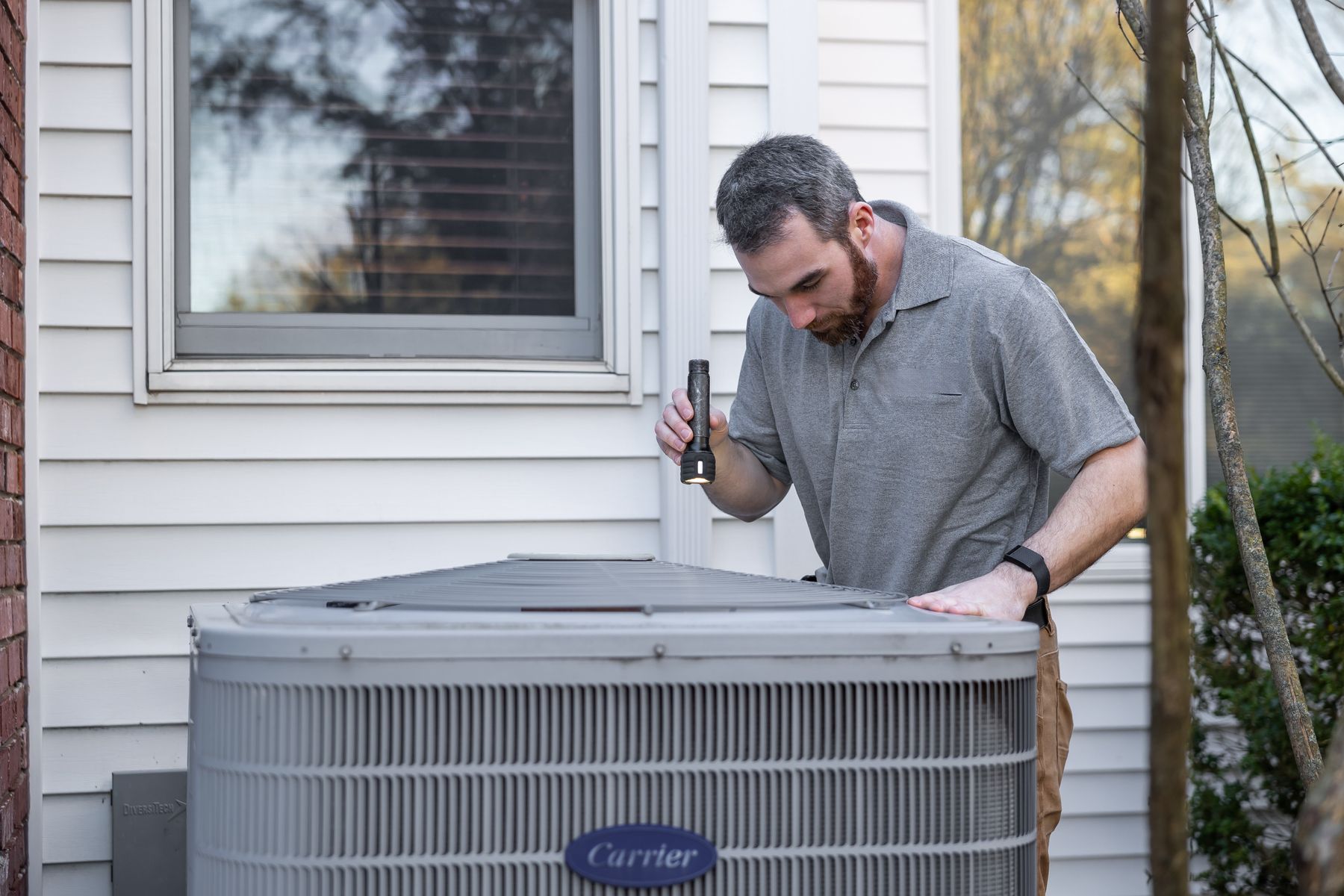
We suggest a warranty in three situations. The first is an older mechanical system you have decided not to replace, typically a heat pump past twelve years, where the buyer’s inspector will flag remaining life and the buyer will ask for something. The second is a house whose history you cannot speak to, an inherited property or a long-held rental, where a warranty buys the buyer a year of comfort you cannot give them from your own knowledge. The third is the gap at the end of due diligence, when a buyer has come back asking for a replacement you do not want to fund and a capped warranty plus a smaller credit closes the distance.
We advise against it in two. If the house is recent construction with builder or manufacturer coverage still running, a warranty duplicates what is already there. And if the buyer has told you what they want, give them that instead. A buyer financing at 7.40 percent, the Freddie Mac 30-year average as of October 15, 2026, will nearly always take $600 toward closing costs or a rate buydown over a warranty, because that money changes their payment and the warranty does not.
One thing a warranty will not do is reduce inspection requests. North Carolina gives the buyer a Due Diligence Period in which they can investigate the property and walk away, and nothing about offering a warranty shortens that period or softens what the inspector writes. Sellers who buy a warranty hoping to head off the repair conversation generally have the repair conversation anyway, and have spent the money first. Our listing services page sets out how we sequence pre-list repairs, pricing and concessions instead.
A warranty is not disclosure, and it does not transfer your obligations. You still complete the Residential Property and Owners’ Association Disclosure Statement, and a known defect you fail to disclose is not cured by handing the buyer a service contract. Coverage also has caps and conditions that are often well below replacement cost, so a buyer who reads the plan after closing can feel misled by a warranty you paid for in good faith. And there is one case where we tell sellers to skip the whole discussion: if the house needs a system replaced and you know it, replacing it or pricing for it is cleaner and sells better than a warranty that may deny the claim. If your plan is to sell as-is and move quickly, a cash offer may suit you better than any concession strategy, and we will tell you if that is the case.
Related questions people also ask
Does a home warranty cover hurricane or flood damage in North Carolina?
No. North Carolina law defines this kind of home warranty as covering defective parts, mechanical failure and ordinary wear and tear, and it specifically excludes damage from recognizable perils such as fire, flood and wind. Storm damage is the job of your homeowners policy, any separate windstorm coverage and a flood policy where one applies. On the coast that distinction matters a great deal, because the losses people actually worry about here are wind and water losses, and no service contract will pay them.
Who pays for the home warranty in a North Carolina home sale?
Whoever the parties agree will pay, and the standard state contract gives them three ways to write it down. The seller can provide no warranty at all, the seller can agree to pay for a one-year warranty the buyer selects up to a dollar cap written into the contract, or the seller can obtain a named plan and pay for it at settlement. In practice the capped option is the most common, because it limits the seller’s exposure while letting the buyer choose the coverage. Either way it is negotiated like any other term, not required by law.
Is a home warranty worth it for a buyer?
It depends almost entirely on the age of the systems and how much a surprise repair would hurt. For a buyer stretching to afford a house with a heat pump near the end of its life, a year of coverage can be worth more than its cost, and the service fee per claim is small next to a compressor. For a buyer purchasing recent construction, or one with enough cash reserves to handle a repair without stress, it is usually money better kept. Read the exclusions and the per-item caps before deciding, because the plan documents, not the brochure, determine what gets paid.
Before you spend anything on a warranty, get the age and condition of your heat pump, water heater and electrical panel written down, and get a realistic price on the house. Those two pieces decide whether a warranty is a smart chip or a wasted few hundred dollars, and they take one visit. Ask us to walk the house with you and we will tell you plainly which repairs are worth doing, which to disclose and price for, and whether a capped warranty belongs in your strategy at all.
Sources: Offer to Purchase and Contract, Standard Form 2-T, revised 7/2024, paragraphs 8(o) and 9(a), jointly approved by the North Carolina Bar Association’s Real Property Section and the North Carolina Association of REALTORS, read October 20, 2026. North Carolina General Statute 58-1-20, Real property warranties, read at ncleg.gov, October 20, 2026. NerdWallet review of Old Republic Home Protection, plan quotes collected December 2025, article dated May 29, 2026. Our New Hanover County, Brunswick County and Pender County market updates, three months ending September 2026. Freddie Mac Primary Mortgage Market Survey, as of October 15, 2026.