For most Raleigh sellers with a home built before about 2000, yes, a pre-listing inspection is worth a few hundred dollars because it lets you fix or price around problems before a buyer uses them against you. The trade-off is real: anything it finds becomes a material fact you and your agent must disclose, so do it only if you are prepared to act on the answer.
The question comes up more now than it did two years ago, and the market is the reason. Wake County homes took a median 53 days to go under contract in October 2026, three more than a year earlier, with 5,476 active listings and 3.9 months of supply (Triangle MLS via our Wake County market update, October 2026 closings). Buyers have choices again. When a buyer has choices, the inspection report is where deals get renegotiated or lost, and the seller who already knows what the report will say is the one who keeps control of that conversation.
What does a pre-listing inspection cost in Raleigh?
About the same as a buyer’s inspection, because it is the same inspection. The National Association of Realtors puts a qualified inspector who carries errors-and-omissions insurance at $350 to $500 (REALTOR Magazine, January 5, 2018). One Triangle inspection franchise published a rate sheet running from $435 for a home under 1,000 square feet to $545 for 2,500 to 2,999 square feet (Triangle HomeTeam Inspection Service price list, January 2023). Nationally, a standard inspection runs about $343, with most between $296 and $424 (Rocket Mortgage, 2026). Add-ons such as a radon test, a termite report or a sewer camera are extra, and on an older Raleigh house the sewer scope is often the one that earns its fee.
Set that against what is at stake. The median Wake County sale in October 2026 was $467,500 (Triangle MLS via our Wake County market update). A single surprise in a buyer’s inspection, a wet crawl space, a failed heat pump, a roof at the end of its life, routinely turns into a repair request or a price concession worth many times the cost of the inspection. The inspection does not make that problem go away. It lets you decide how to handle it on your schedule instead of the buyer’s.
When is a pre-listing inspection worth it?
We push for one in four situations. First, the house is older, roughly pre-2000, and has a crawl space, which describes a large share of the homes inside the Beltline, in North Raleigh and in Garner. Crawl space moisture, old ductwork and original plumbing are the things buyers’ inspectors find and sellers did not know about. Second, you have not lived in the house recently: an estate sale, a long-term rental, a relocation where you left a year ago. You cannot disclose what you do not know, and a buyer’s inspector will find it either way. Third, you plan to sell as-is or want to avoid repair negotiations entirely; a report you can hand over with the price supports that position. Fourth, you are competing with new construction. Buyers touring a 2026 build in Holly Springs with a builder warranty, then your 1998 resale, will ask harder questions, and an inspection with the fixes already done is your answer.
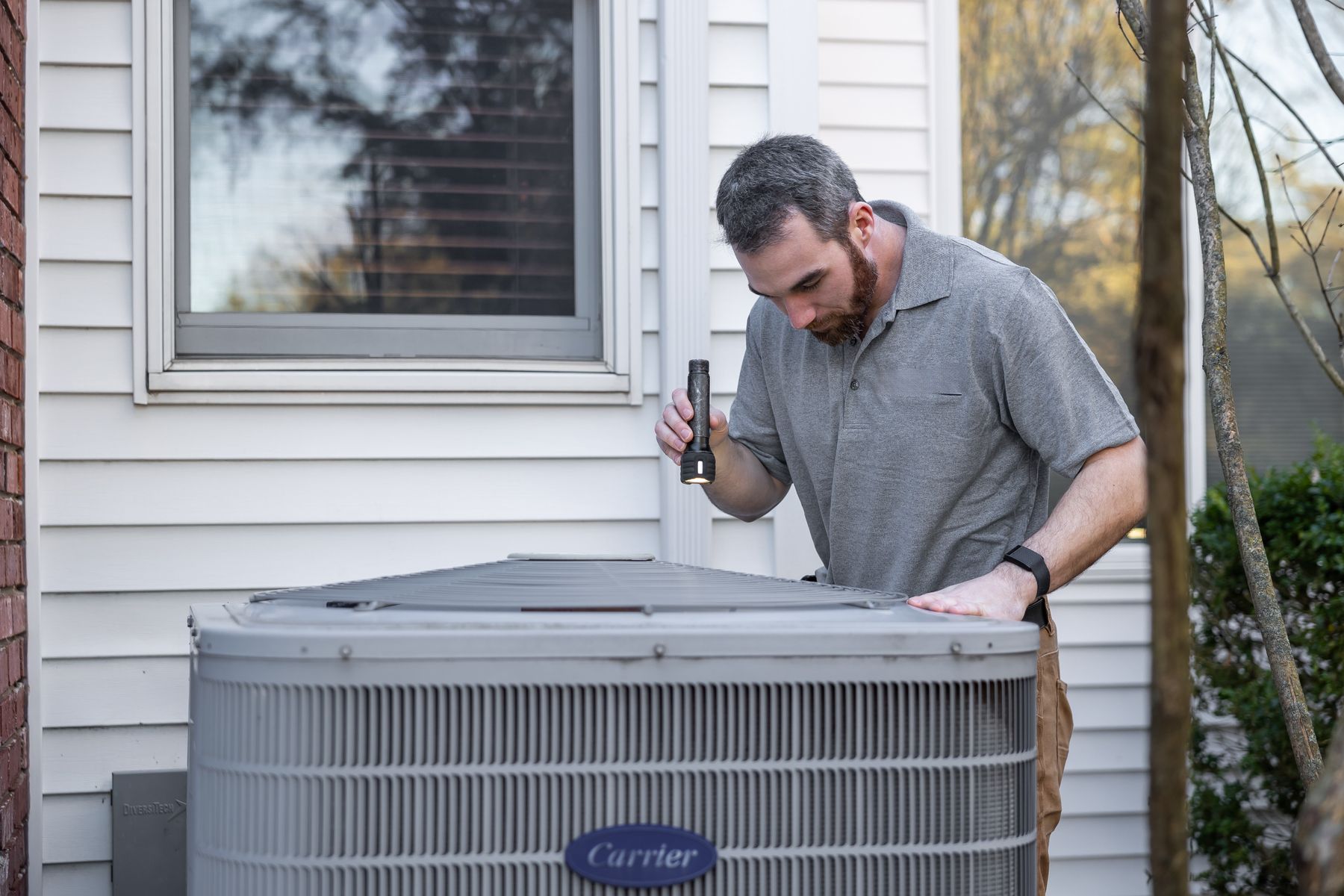
We skip it in the opposite cases. A home built in the last ten years that you have lived in and maintained does not usually need one. Neither does a home where you already know the issues and plan to disclose them; paying someone to confirm the roof is old does not change your listing strategy. And if you cannot fund the repairs the inspection will likely surface, you are buying a disclosure obligation without the ability to act on it. In those cases we do a thorough walk-through ourselves and order targeted checks instead: an HVAC service visit, a roofer’s look, a termite report, which North Carolina treats as a separate document from the home inspection anyway.
- Wake County median sale price $467,500; 53 days on market, up from 50 a year ago Triangle MLS via Tidal Realty Partners Wake County market update, October 2026 closings
- 5,476 active listings in Wake County, up 7.5 percent; 3.9 months of supply Triangle MLS via Tidal Realty Partners Wake County market update, October 2026
- Typical inspection fee $350 to $500 for an insured inspector REALTOR Magazine, January 5, 2018
- One Triangle inspection franchise: $435 under 1,000 square feet to $545 for 2,500 to 2,999 square feet Triangle HomeTeam Inspection Service price list, January 2023
What happens to what the inspection finds?
This is the part sellers underestimate, and it is the reason the decision is not automatic. North Carolina’s Residential Property Disclosure Act requires most sellers of one-to-four-unit homes to give buyers the Residential Property and Owners’ Association Disclosure Statement, on which you answer each item Yes, No or No Representation (N.C. General Statutes Chapter 47E). In May 2024 the Real Estate Commission added a statement to that form spelling out the consequences of failing to disclose known material defects. The Commission says the revision did not create new obligations; it emphasized the existing one, which North Carolina courts have enforced when a seller had actual knowledge of a hidden defect and intentionally failed to disclose it (NC Real Estate Commission bulletin on latent defects, March 2025, citing Everts v. Parkinson, 2001, and Cummings v. Carroll, 2021).
Once you have an inspection report, you have actual knowledge. Marking No Representation on the form does not undo that, and it does not bind your agent at all. A listing agent who receives an inspection report must review it and disclose the material facts in it, though not the report itself (NC Real Estate Commission case study on material facts; NC REALTORS legal Q&A, November 24, 2015). Some defects must be disclosed even after you repair them, because the buyer deserves the chance to verify the fix: structural defects, high radon, current or prior synthetic stucco, and bacteria or toxins in well water are the Commission’s examples (NC Real Estate Commission bulletin, February 2016). We walked through the repair side of this in our post on inspection repairs.
None of that is a reason to avoid the inspection. It is a reason to understand that the inspection converts unknowns into disclosures, and disclosures handled early read as honesty, while disclosures the buyer discovers read as concealment. The buyer will still hire their own inspector; the Commission tells buyers not to rely on an owner’s inspection (NC Real Estate Commission bulletin, February 2016). The goal is no surprises in that second report.
What should you fix, and what should you just disclose?
Fix the things that stop a deal or spook a lender: active leaks, a dead HVAC component, electrical hazards, standing water in the crawl space, a roof that will not pass a buyer’s insurance underwriting. Disclose and price the things that are cosmetic or truly at the end of a normal life, such as a 20-year-old water heater that still works. The middle ground is where we earn our fee: a cracked driveway is rarely worth fixing, while a moisture barrier in a Raleigh crawl space often is, because that is the item that generates the biggest repair request. We ranked those choices in our post on which repairs are worth making, and the full cost picture, including commission, attorney and transfer tax, is in our guide to the cost of selling in Raleigh.
One more practical point. Under the standard North Carolina contract the buyer’s due diligence fee is not refundable even if their inspection finds defects, and you are not obligated to make any repair you did not agree to (NC Real Estate Commission bulletin, February 2022). That protects you from frivolous walk-aways. It does not stop a buyer who finds a $15,000 problem from asking for $15,000, or from walking and leaving you with a report you now have to disclose to the next buyer. Finding it first is cheaper.
A pre-listing inspection can backfire in two ways. It can scare you into over-fixing, spending thousands on items a buyer would have accepted or never noticed, which is why we read the report with you before anyone calls a contractor. And it can trap a seller who was planning to mark No Representation down the whole form: once you know, the honest answers are Yes and No, and overusing No Representation after an inspection can push buyers into ordering more inspections, not fewer. If your home is nearly new, if you cannot fund repairs, or if you are selling to a cash buyer who has agreed to as-is, the inspection’s value drops and a targeted check or a cash offer may be the better path. We will tell you which one fits before you spend the money.
Related questions people also ask
Do I have to give the buyer my pre-listing inspection report?
Not the document itself, but the material facts inside it must be disclosed, and your listing agent is required to disclose them whether you want to or not. In practice we usually share the report, because a buyer who learns a report exists and was withheld assumes the worst. Sharing it with the repair receipts attached is the stronger position.
Can a seller mark No Representation after getting an inspection?
The form allows it, but it does not erase what you now know, and North Carolina courts have held sellers liable for intentionally failing to disclose known hidden defects. Your agent must still disclose the material facts from the report. We advise sellers to answer the items the inspection covered honestly and reserve No Representation for things they genuinely do not know.
Will a pre-listing inspection make my Raleigh home sell faster?
It removes the most common reason a Raleigh contract falls apart, which is a surprise in the buyer’s inspection, and it lets you price with confidence instead of padding for unknowns. Whether that translates into fewer days on market depends on your price and your competition. What it reliably does is shrink the renegotiation after you go under contract.
Before you order anything, let us walk the house with you and tell you whether your home is a full-inspection case or a targeted-check case, and what we would fix versus disclose. Bring your questions and we will talk it through together.
Sources: Triangle MLS via Tidal Realty Partners Wake County market update, October 2026 closings; REALTOR Magazine, National Association of Realtors, January 5, 2018; Triangle HomeTeam Inspection Service price list, January 2023; Rocket Mortgage home inspection cost guide, 2026; N.C. General Statutes Chapter 47E, Residential Property Disclosure Act; NC Real Estate Commission bulletin, Sellers’ Obligation to Disclose Latent Defects, March 2025; NC Real Estate Commission case study on material facts and prior inspection reports; NC REALTORS legal Q&A, Is an inspection report a material fact, November 24, 2015; NC Real Estate Commission bulletin, Handling Inspections: Guidelines for Brokers, February 2016; NC Real Estate Commission bulletin, When Should Due Diligence Fees be Refunded, February 2022.