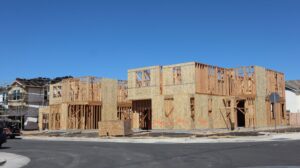
RiverLights is assigned to Mary C. Williams Elementary, Myrtle Grove Middle and New Hanover High, according to the school locator map New Hanover County Schools publishes itself, read November 2, 2026. The honest reading of the state’s own 2025-26 numbers is mixed: the middle school tests above the district average, the elementary tests below it, and two of the three schools did not meet growth last year.
This question comes up on almost every RiverLights showing, and it is usually asked by a family moving here from somewhere the school boundaries were simple. We want to deal with one thing first, because it trips up more buyers than anything else about this neighborhood. Builder pages and listing sites disagree about which high school RiverLights feeds. Some of them show Eugene Ashley High, which is a reasonable guess, since Ashley sits closer to the neighborhood than the alternative does.
The district’s own attendance zone map does not say Ashley. It puts the RiverLights area in two study areas, 292 and 293, and both are assigned to New Hanover High School, which is downtown on Market Street, roughly ten miles north of the neighborhood. If you are buying in RiverLights because you think your child will walk into Ashley, check the address yourself before you go under contract. Everything below assumes the district map is right, because it is the district’s map.
Which schools does RiverLights actually feed?
New Hanover County Schools runs its school locator through an interactive attendance zone map. Querying the RiverLights area on that map returns the same three schools for both study areas that cover the community: Williams Elementary for kindergarten through fifth grade, Myrtle Grove Middle for sixth through eighth, and New Hanover High for ninth through twelfth.
Two of those three are close by. Williams Elementary is on Silver Lake Road, a few minutes from the River Road entrance, and Myrtle Grove Middle is a short drive east. New Hanover High is the outlier. It sits downtown on Market Street, which means a daily drive up River Road or a bus ride that is longer than most RiverLights buyers expect when they tour a model home ten minutes from Carolina Beach.
Attendance zones are not permanent. The district reviews them, and the map layers behind the locator carry year stamps, which is a reminder that the version you see today is a version and not a promise. We tell buyers with young children to treat an assignment as current, not as something they bought with the house.
What do the state’s numbers say about those three schools?
North Carolina publishes school-level results every year through the Department of Public Instruction’s Office of Accountability. The most recent workbook covers 2025-26 and was released September 2, 2026. It gives two different things, and the difference matters more than most parents are told.
The first is proficiency: the share of students scoring at or above grade level, which the state labels grade level proficiency. The second is growth, which measures how much progress students made during the year compared with what was expected of them. Proficiency tells you a lot about who walks in the door. Growth tells you more about what the school did with them.
- Mary C. Williams Elementary, all students, all subjects: 53.5 percent at or above grade level, 31.7 percent college and career ready NCDPI Office of Accountability, 2025-26 North Carolina School Assessments and Other Indicators Workbook, September 2026
- Myrtle Grove Middle: 63.3 percent at or above grade level, 43.9 percent college and career ready NCDPI Office of Accountability, 2025-26 Workbook, September 2026
- New Hanover High: 43.6 percent at or above grade level, 23.3 percent college and career ready NCDPI Office of Accountability, 2025-26 Workbook, September 2026
- New Hanover County Schools, district wide: 62.9 percent at or above grade level NCDPI Office of Accountability, 2025-26 Workbook, September 2026
- State of North Carolina: 59.2 percent at or above grade level NCDPI Office of Accountability, 2025-26 Workbook, September 2026
Read against those two benchmarks, Myrtle Grove Middle is the strongest of the three on proficiency, ahead of both the district and the state. Williams Elementary is below both. New Hanover High is well below both, at 43.6 percent against a district figure of 62.9 percent.
What does the growth data add?
Growth is reported as an index score and a status. The state’s own cutoffs put a score of 2.00 or higher at Exceeded, anything from 1.99 down to negative 2.00 at Met, and anything below negative 2.00 at Not Met. For all students, overall, in 2025-26:
- Mary C. Williams Elementary: Met expected growth, index score of negative 0.03. Reading growth was Met at positive 0.70, mathematics Met at negative 0.16 NCDPI Office of Accountability, 2025-26 Workbook, September 2026
- Myrtle Grove Middle: Did not meet expected growth, index score of negative 5.12, with reading at negative 3.08 and mathematics at negative 3.73 NCDPI Office of Accountability, 2025-26 Workbook, September 2026
- New Hanover High: Did not meet expected growth, index score of negative 5.23 NCDPI Office of Accountability, 2025-26 Workbook, September 2026
That flips part of the picture. The elementary school with the lower proficiency figure held its students to expected progress. The middle school with the best proficiency figure did not, and by a wide margin. If you are buying for a rising sixth grader, the second number is the one we would want to ask the principal about.
None of this makes RiverLights a bad place to raise a family. It does mean the school story here is not the simple one the amenity center tour implies. Families who care intensely about a single data point should look at both numbers for the specific grade band their child is entering, not at an average across all three schools.
How should this change what you do?
Three practical steps, in the order we give them to our own clients.
First, run your exact address through the district’s school locator before the end of your due diligence period, not after. The zone boundary does not follow the neighborhood entrance, and a large community can sit near a line. Second, call the schools. Report card numbers are a year old by the time you read them, and a principal can tell you what changed. Third, ask the district about choice and magnet options, which exist in New Hanover County but are applications rather than entitlements.
For the housing side of the decision, our RiverLights community guide covers the layout, the price range and the sections of the neighborhood, and our post on what RiverLights HOA dues cover handles the monthly cost question, which varies a great deal by which part of the community you buy in. If you are still comparing neighborhoods, our guide to the best neighborhoods in Wilmington sets RiverLights beside the alternatives, and the New Hanover County market update gives you the current price and timing picture for the county as a whole.
Attendance zones change, and nothing about an assignment transfers with the deed. The district reviews boundaries, and a new school or a capacity problem can move a neighborhood. There is a second complication specific to RiverLights: the community is large and still building, so the zone that applies to a finished section today is not guaranteed to apply to a section that has not been platted. If school assignment is the deciding factor in your purchase, a neighborhood with one long settled zone carries less risk than a community in the middle of its build out, and we will say so even when it points you away from a listing we would like to sell.
Related questions people also ask
Is RiverLights zoned for Ashley High School?
No. New Hanover County Schools’ own attendance zone map assigns the RiverLights area to New Hanover High School, not Eugene Ashley High, even though Ashley is physically closer to the neighborhood. Several builder and listing websites show Ashley, which is where the confusion comes from. Run your specific address through the district’s school locator and confirm it with the student enrollment office before you rely on either answer.
What is the difference between a school’s proficiency score and its growth score?
Proficiency is the share of students who scored at or above grade level on state tests, so it reflects both the school and the students who enrolled there. Growth measures how much progress those students made during the year against what the state expected of them, which isolates the school’s contribution more cleanly. A school can post strong proficiency and weak growth, or the reverse, and in New Hanover County both patterns appear. Looking at only one of the two gives you half the story.
Can I apply to a different New Hanover County school than the one assigned to my address?
New Hanover County Schools runs choice and magnet programs that families can apply to, so your assigned school is a starting point rather than the only option. Applications have deadlines and seats are limited, so an application is not the same as a guaranteed place. If a particular program is central to your plan, contact the district’s student enrollment office before you commit to a house, because the answer can depend on grade level and the year you apply.
Before you write an offer in RiverLights, put your exact address into the district’s school locator and call the two schools your child would actually attend. Then bring what you heard back to us, and we will talk through how much weight the assignment should carry against price, flood exposure and the rest of the decision.
Sources: New Hanover County Schools school locator attendance zone map, read November 2, 2026; NCDPI Office of Accountability, 2025-26 North Carolina School Assessments and Other Indicators Workbook, released September 2, 2026; Tidal Realty Partners RiverLights community guide, 2026; Redfin New Hanover County housing market, three months ending September 2026; Realtor.com via FRED, active listing count, September 2026.