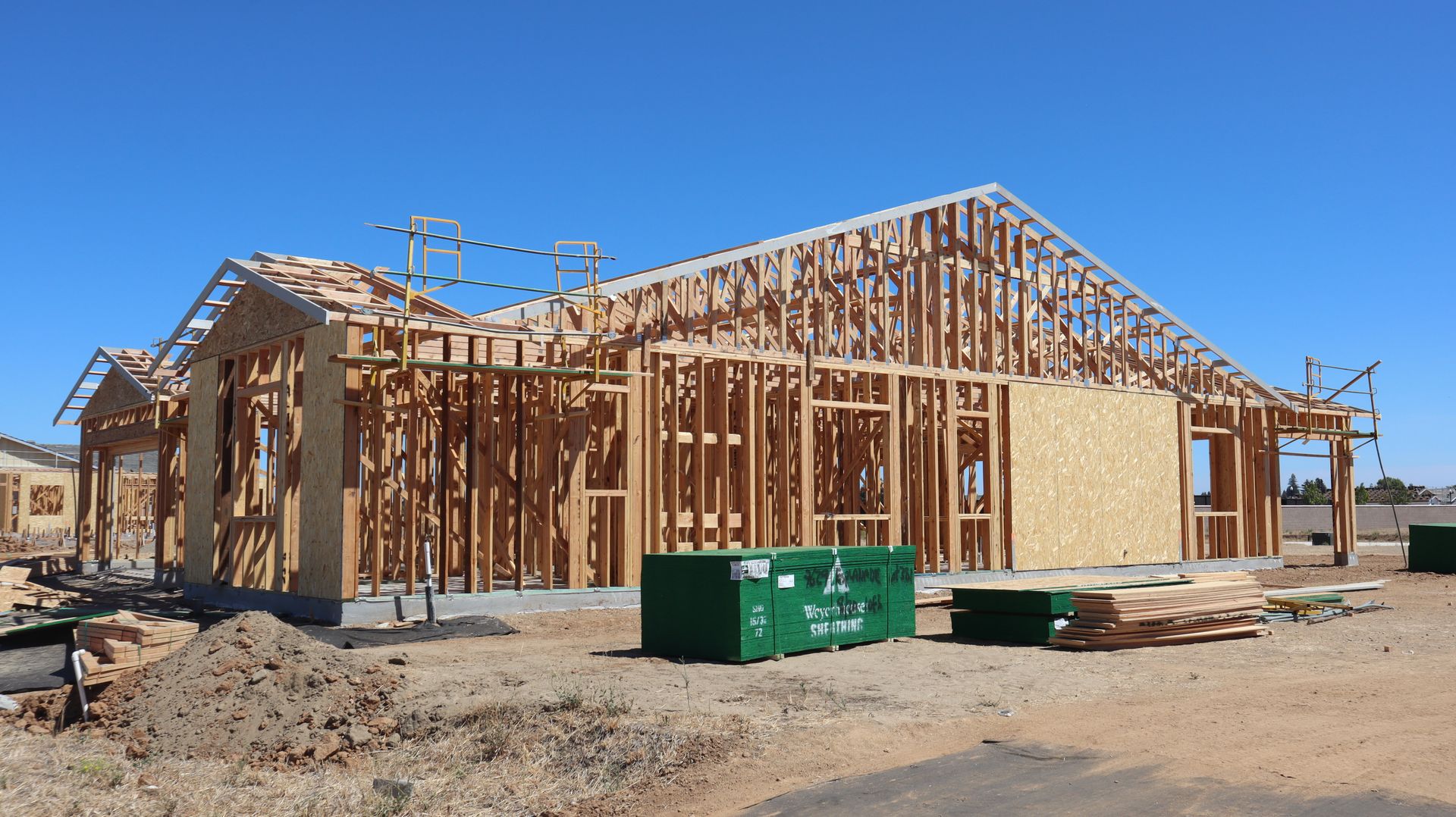
Yes. A VA loan works on a new construction home in the Triangle the same way it works on a resale, with zero down, no mortgage insurance and a one-year builder warranty or ten-year protection plan standing in for the VA’s own inspections. The catch is that most of the rate incentives builders are advertising this season are FHA or adjustable-rate products through the builder’s lender, so a VA buyer has to ask a sharper question than “what is the promo rate.”
We get this question from buyers stationed at Fort Bragg and Seymour Johnson, from veterans relocating to RTP, and from reservists who did not realize they were eligible. The Department of Veterans Affairs stopped requiring builders to register for a VA builder identification number on March 31, 2025, and it stopped doing its own construction compliance inspections back in February 2006, relying instead on local building inspections and a one- or ten-year construction warranty (VA Circular 26-25-1, March 31, 2025). Any licensed Triangle builder can sell you a home on a VA loan, and the big ones do it every week.
What does the VA require on a new home?
Four things. The home needs a VA appraisal, which produces a Notice of Value and confirms the home meets the VA’s Minimum Property Requirements, rarely a problem on a new build. The home has to be finished: if you contract on a house still under construction, your loan cannot fund until it is complete and passes the final VA appraisal (Veterans United, May 5, 2026). The builder has to provide a warranty, either the one-year VA builder’s warranty on VA Form 26-1859 or enrollment in a HUD-accepted ten-year insured protection plan (VA Lender’s Handbook, Chapter 10; VA Circular 26-25-1). And the contract must contain the VA escape clause, which lets you walk away with your deposit if the Notice of Value comes in under the purchase price and you choose not to make up the difference (VA Lender’s Handbook).
What the VA no longer does is referee builder disputes. Under the 2025 circular, a veteran with a construction complaint is pointed to the local building department, the state licensing board or an attorney rather than to the VA (VA Circular 26-25-1). Your protection is the warranty and the punch list, which is why we still recommend a private inspection on a brand-new house. Our post on new construction warranties walks through what the one-year, two-year and ten-year coverage actually means.
What does a VA loan cost on a new build?
The VA funding fee is the main cost, and it depends on your down payment and whether you have used the benefit before. With less than 5 percent down it is 2.15 percent of the loan on first use and 3.3 percent on later uses; with 5 percent down it drops to 1.5 percent, and with 10 percent down to 1.25 percent (U.S. Department of Veterans Affairs, funding fee table effective April 7, 2023). Veterans receiving compensation for a service-connected disability, certain surviving spouses and Purple Heart recipients on active duty are exempt (VA). On a $450,000 zero-down first-use loan the fee is $9,675, and most buyers roll it into the loan.
There is no VA loan limit for a borrower with full entitlement, as long as the appraisal supports the price and you qualify for the payment (VA loan limits page, updated August 12, 2025). Borrowers with partial entitlement, usually because they still hold a VA loan elsewhere, are tied to the county loan limit, which for Wake and the surrounding counties follows the 2026 conforming baseline of $832,750 (Federal Housing Finance Agency, November 25, 2025). That covers almost every new home in the Triangle; Toll Brothers’ Cary estates past $1.7 million are the exception, not the rule.
- VA funding fee: 2.15 percent first use with less than 5 percent down; 3.3 percent on later use; 1.5 percent with 5 percent down; 1.25 percent with 10 percent down U.S. Department of Veterans Affairs, effective April 7, 2023
- Seller and builder concessions capped at 4 percent of the home’s reasonable value; closing cost credits are not capped U.S. Department of Veterans Affairs funding fee and closing costs page
- 2026 conforming loan limit, Wake and surrounding counties: $832,750 Federal Housing Finance Agency, November 25, 2025
- 30-year fixed average 7.28 percent Freddie Mac Primary Mortgage Market Survey, November 19, 2026
Do builder incentives work with a VA loan?
Some do, some do not, and the fine print decides. This month Triangle builders are funding rate offers from 4.625 percent to 5.49 percent and five-figure closing credits instead of cutting prices, with every offer tied to the builder’s own lender (our Triangle new construction page, November 2026). Look at the loan types. Lennar’s Raleigh Black Friday offer, for contracts signed November 23 through 29, 2026, is a 3.990 percent FHA 5/1 adjustable rate plus up to $5,000 toward closing costs through Lennar Mortgage; the page names only FHA (Lennar Raleigh promotion page, read November 25, 2026). Mattamy’s headline offer is a 4.75 percent FHA 5/1 ARM. M/I Homes is offering a 4.875 percent seven-year ARM plus up to 2 percent in closing costs through M/I Financial for contracts signed on or after November 9 and closing by December 18, 2026. Pulte’s 4.99 percent offer is a seven-year ARM through Pulte Mortgage. Toll Brothers has the one 30-year fixed on the list, 5.49 percent on select quick move-in homes closing by January 8 (our builder incentive roundup, November 22, 2026, and builder pages).
A VA buyer can often get the same lender to apply its incentive budget to a VA 30-year fixed instead, but you have to ask, and the resulting rate will not be the one on the billboard. That is why we price every builder offer against an outside VA quote before our buyers sign; the builder’s lender is sometimes the better deal and never automatically the better deal. Our post on builder lenders covers how to run that comparison.
Two VA rules shape the negotiation. Builder-paid closing costs are not capped, but seller concessions, which include paying your funding fee, paying off your debts, prepaying your insurance and funding a temporary rate buydown, are capped at 4 percent of the home’s reasonable value on the Notice of Value (U.S. Department of Veterans Affairs). A large buydown plus a funding fee credit can bump against that ceiling, and the lender will have to restructure the package. Separately, the hero credits are not VA programs: Pulte’s $2,000 Hometown Heroes credit for active and retired military applies to design-center options on 2026 contracts, and Mattamy’s $2,000 for active-duty and veterans runs through December 31, 2027 (builder pages via our November 22, 2026 roundup). Those stack on top of a VA loan.
Where do military buyers actually buy in the Triangle?
South Wake and Johnston, mostly, because that is where the base commutes and the new construction overlap. Off-peak routing puts Fort Bragg about 37.5 miles and 62 minutes from downtown Fuquay-Varina, 51.9 miles and 83 minutes from Garner, and 54 miles and 87 minutes from downtown Raleigh. Seymour Johnson Air Force Base in Goldsboro is about 56.4 miles and 79 minutes from Garner and 61 miles and 86 minutes from downtown Raleigh (OpenStreetMap routing estimates, November 25, 2026). Those are long daily drives, and most active-duty buyers we work with are buying ahead of a retirement date or for a spouse’s job in Raleigh or RTP. Veterans working at the Durham VA Medical Center have an easier map; downtown Raleigh is about 38 minutes from the hospital on the same routing.
The communities that fit are the ones with inventory. Mattamy builds in Garner, Fuquay-Varina, Clayton, Wendell and Benson from $236,900, and Pulte runs from Knightdale to Fuquay-Varina from $279,990 (our Triangle new construction page, November 2026). Wake County’s resale median was $467,500 in October 2026 with 3.9 months of supply, and Johnston’s was $358,000 with 4.7 months and 68 days on market (Triangle MLS via our Wake County and Johnston County market updates, October 2026). Johnston’s extra supply is mostly new construction competing on incentives, which favors a VA buyer with time to negotiate.
A VA loan is not always the right loan on a new build. If you have the cash for 20 percent down and a strong credit profile, a conventional loan avoids the funding fee entirely, and the fee on a repeat VA use at 3.3 percent is real money. If the home is months from completion, you are exposed to rate movement unless the lender offers an extended lock, and some locks carry fees that eat the incentive. And a VA appraisal in a brand-new community with few closed resales can come in under the contract price; the escape clause protects your deposit, but builders rarely cut price to match a low Notice of Value, so be ready to walk. We would rather tell you that before you pick cabinets than after.
Related questions people also ask
Does the builder have to be VA approved to accept a VA loan?
No. The Department of Veterans Affairs eliminated the builder identification number requirement in 2025, so a builder no longer registers with the VA to sell to a VA borrower. The builder still has to hold the state and local licenses any builder needs, and it still has to provide the one-year builder warranty or a ten-year insured protection plan that the VA requires on newly completed homes.
Can I use a VA loan to build a custom home on my own lot in the Triangle?
The VA allows construction loans, but very few lenders offer a true VA construction-to-permanent loan, so most veterans who build on a lot in Chatham or Johnston County use a short-term construction loan and refinance into a VA loan once the home is finished. The VA appraisal, warranty and property requirements apply at that point. Ask a lender who actually closes VA construction loans before you buy the lot.
Can the builder pay my VA funding fee?
Yes, a builder can pay the funding fee as a seller concession, but concessions are capped at four percent of the home’s appraised reasonable value under VA rules, and that cap also covers temporary rate buydowns, debt payoffs and prepaid insurance the builder pays for. Ordinary closing cost credits do not count against the cap. Your lender has to structure the builder’s package so it fits.
Get your Certificate of Eligibility and one outside VA quote, then send us the community or quick move-in home you have your eye on. We will register with the builder on your behalf, pull the current incentive terms and show you the builder-lender package next to the outside VA quote so you can see which one actually costs less. Bring your questions and we will talk it through together.
Sources: U.S. Department of Veterans Affairs, Circular 26-25-1, March 31, 2025; U.S. Department of Veterans Affairs, VA funding fee and loan closing costs page, fee table effective April 7, 2023; U.S. Department of Veterans Affairs, VA home loan limits page, updated August 12, 2025; VA Lender’s Handbook, Pamphlet 26-7, Chapter 10; VA Form 26-1859, Warranty of Completion of Construction, revised February 2020; Veterans United, Using a VA Loan to Buy a Newly Built Home, May 5, 2026; Federal Housing Finance Agency, 2026 conforming loan limits, November 25, 2025; Freddie Mac Primary Mortgage Market Survey, November 19, 2026; Lennar Raleigh Black Friday promotion page, read November 25, 2026; Tidal Realty Partners Triangle new construction page and builder incentive roundup, November 2026; OpenStreetMap routing estimates, November 25, 2026; Triangle MLS via Tidal Realty Partners Wake County and Johnston County market updates, October 2026 closings.