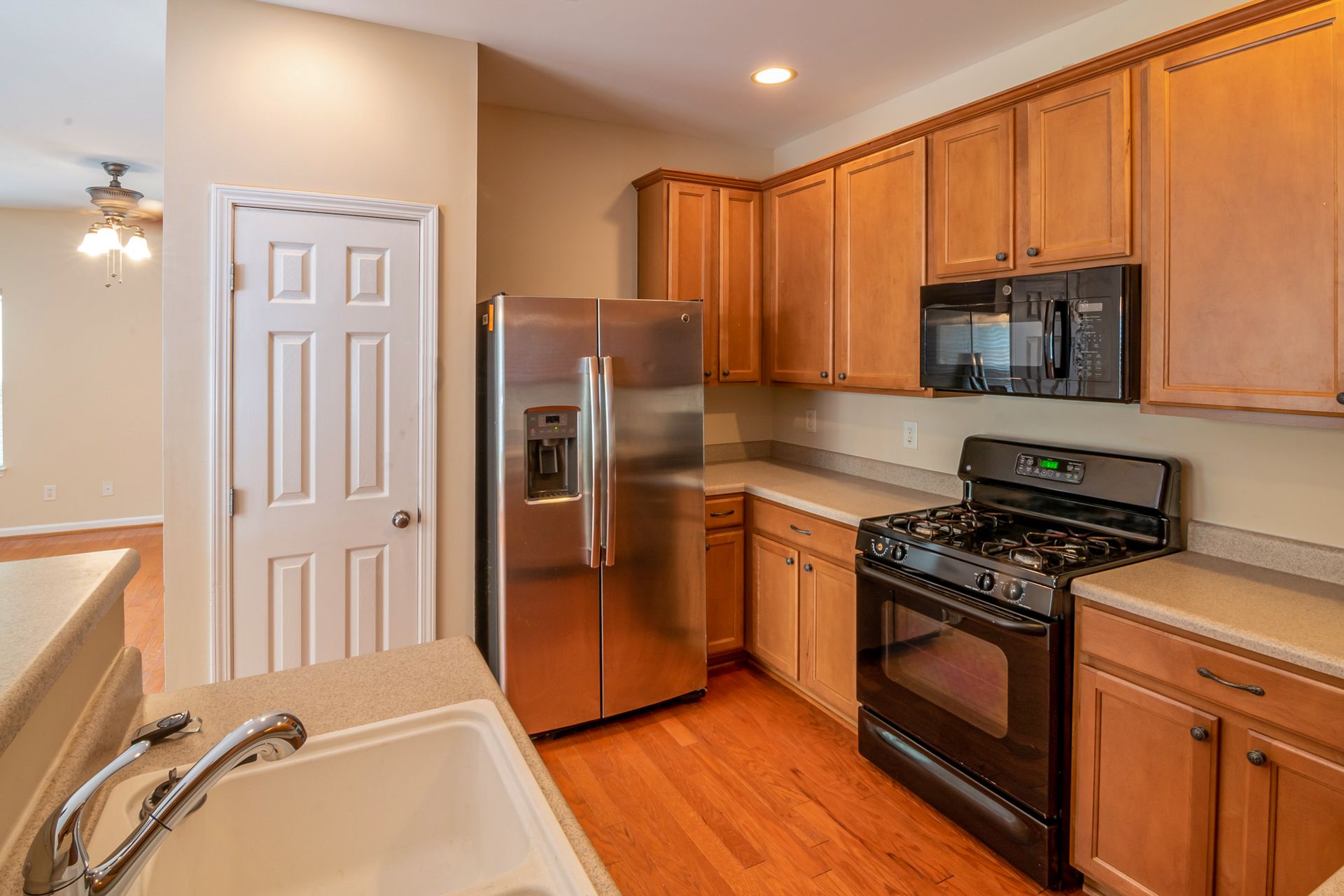
Usually not, unless you write them out of the contract before you sign it. The North Carolina standard contract lists all stoves, ranges and ovens as fixtures that convey with the house, so even a free-standing range you bought yourself is included unless you exclude it in writing.
This comes up most often with sellers who are moving into something smaller and want to take the refrigerator they bought last year, or the second freezer in the garage, or the range their mother gave them. It is a reasonable thing to want. It is also one of the easiest ways we see a smooth closing turn into an argument at the final walk-through.
The rule in North Carolina is not really about whether an appliance is plugged in or bolted down. It is about what the contract says, and the contract is more specific than most sellers expect.
What the contract already includes
Nearly every resale in Wilmington, Leland and Hampstead is written on the Offer to Purchase and Contract, Standard Form 2-T, jointly approved by the North Carolina Bar Association’s Real Property Section and NC REALTORS. The current version is revised 7/2025.
Paragraph 2(a) states that all existing fixtures are included in the sale as part of the purchase price, free of liens, unless excluded. Then paragraph 2(b) does something more useful: it lists specific items that convey if they are present on the property on the date of the offer. That list is long, and this line is the one that catches sellers out.
- Paragraph 2(b) of Form 2-T includes “All stoves/ranges/ovens; built-in appliances; attached microwave oven; vent hood” NC Offer to Purchase and Contract, Standard Form 2-T, revised 7/2025
- The same list covers ceiling and wall-attached fans, light fixtures including existing bulbs, garage door openers, thermostats, storage sheds and utility buildings, permanently wired generators, and window blinds and shades NC Offer to Purchase and Contract, Standard Form 2-T, paragraph 2(b), revised 7/2025
- Paragraph 2 opens by warning that the parties “should not assume that an item will or will not be included in the sale based on a statement or advertisement outside this Contract” NC Offer to Purchase and Contract, Standard Form 2-T, revised 7/2025
- A seller “must repair any damage caused by removal of any items excluded” in a good and workmanlike manner NC Offer to Purchase and Contract, Standard Form 2-T, paragraph 2(e), revised 7/2025
Read that first line again. All stoves, ranges and ovens. Not built-in ranges. All of them. If a free-standing range is sitting in the kitchen on the day the buyer writes the offer, the form says it conveys, and the fact that you could pull it out with two hands does not change the answer.
What does not convey automatically
Your refrigerator is the common exception. A free-standing refrigerator is not on the fixtures list, so it is personal property, and personal property only transfers if someone writes it into paragraph 3. That cuts both ways. If you want to take it, you can. If the buyer wants it, it needs to be named in the contract, not promised in a text message.
Washers and dryers work the same way in most cases, and so does the garage freezer, the wine refrigerator and the mounted television itself, although the surface-mounting bracket for the television is on the fixtures list and stays behind.
There are two places on the form to handle exclusions, and they do different jobs. Paragraph 2(d) is for items that are leased or not owned by you, such as a leased alarm system or a rented water treatment unit, and those do not convey. Paragraph 2(e) is for items you own and simply want to keep. If the range your mother gave you is going with you, 2(e) is where that gets written down, before the offer is accepted.
How to do this without blowing up the closing
The clean sequence is boring and it works. Decide what you are taking before the house goes on the market. Remove it before the first showing if you can, or if you cannot, say so in the listing remarks and then say so again in the contract. Buyers are not upset by a seller keeping a refrigerator. They are upset when the kitchen they toured is not the kitchen they close on.
We have had to manage both outcomes. We have also seen the quiet version of this problem, where a seller swaps a good appliance for a worse one between contract and closing. The contract expects the property to be in substantially the same condition at closing, and a final walk-through exists partly to catch exactly this. Our post on what happens at the final walk-through in North Carolina covers how that inspection usually goes, and what happens if the sellers leave their stuff behind covers the opposite problem.
If you are still deciding what to do before listing, our listing services page explains how we prepare a house, and a home value estimate will tell you what the house is worth with the appliances in it. For what buyers are paying right now, see our New Hanover County market update.
Sometimes the honest advice is to leave the appliance. A matching set in a kitchen is worth more to a buyer than a used range is worth to you on the open market, and a seller who excludes three appliances on a house that is already slow can read as difficult without gaining much. Removal is also not free. Paragraph 2(e) obliges you to repair the damage caused by taking an excluded item, and pulling a gas range or a hardwired cooktop can mean a capped line, a patched counter or an electrician. There is also the version of this that goes wrong for the buyer: an appliance you own outright is simple, but one still under a fixture loan or a lease has to be handled in paragraph 2(d) or in an attorney-drafted addendum, because the lender has an interest in it. If you are not certain which category an item falls into, ask before the offer rather than after.
Related questions people also ask
Does the refrigerator convey with a house in North Carolina?
Not automatically. A free-standing refrigerator is personal property rather than a fixture under the standard contract, so it transfers only if it is specifically written into the personal property paragraph. A built-in or panel-ready refrigerator integrated into the cabinetry is a different question and is likely to be treated as a built-in appliance that conveys. When in doubt, name the item in the contract either way.
Can a seller swap out appliances before closing?
Not without agreement. The buyer contracted for the property as it was, and substituting a cheaper appliance for the one that was there is the kind of change that gets caught at the final walk-through and delays closing. If an appliance genuinely fails between contract and closing, tell the buyer’s agent immediately and handle it in writing. Quiet substitutions damage trust at the worst possible moment.
What happens if the contract says nothing about an appliance?
Then the fixtures list decides it. Anything on the list in the standard form conveys if it was present when the offer was made, and anything that is not on the list and is not attached is personal property that stays with the seller. Listing photos, marketing remarks and verbal promises do not override the contract. The contract says so directly.
Before your home goes live, make a written list of every item you intend to take with you and hand it to your agent, so the exclusions land in the contract rather than in a conversation. It takes ten minutes and it prevents the single most avoidable argument in a closing. If you are thinking about selling in New Hanover, Brunswick or Pender County, talk it through with our team and we will build that list with you.
Sources: North Carolina Offer to Purchase and Contract, Standard Form 2-T, revised 7/2025, jointly approved by the North Carolina Bar Association Real Property Section and NC REALTORS, read November 20, 2026. Tidal Realty Partners New Hanover County market update, Redfin county data, three months ending September 2026.