In September 2026 the median sold price was $425,000 in Raleigh, $420,000 in Durham and $665,000 in Chapel Hill, with Cary and Apex in between at $593,750 and $559,599. Chapel Hill’s combined property tax rate is about 30% higher than Raleigh’s, Durham’s sits between the two, and the school district, commute anchor and housing stock are different in each. Pick the side by where you work and what you want to drive to, then let price sort the neighborhood.
The three sides, in numbers
The Triangle is three cities, three counties and three school systems that share one airport and one research park. People relocating here usually start by asking which city, and the honest answer is that the differences are real but smaller than the differences between neighborhoods within each city. Start with the numbers, then read the character sections below.
| Town | Sept 2026 median sold | 12-month median | Sept avg DOM | County | Combined tax rate (per $100) |
|---|---|---|---|---|---|
| Raleigh | $425,000 | $447,725 | 52 | Wake | $0.9091 |
| Cary | $593,750 | $611,875 | 37 | Wake | $0.9046 |
| Apex | $559,599 | $617,074 | 40 | Wake | $0.9106 |
| Durham | $420,000 | $409,995 | 52 | Durham | $1.0163 |
| Chapel Hill | $665,000 | $641,975 | 56 | Orange | $1.1805 plus school district tax |
Price and tax data are from Triangle MLS (September 2026 closings and the twelve months ending September 2026) and the FY2026-27 adopted budgets of each county and municipality. Tax rates are county plus city; Chapel Hill parcels also pay a Chapel Hill-Carrboro City Schools district levy on top, discussed below. The 12-month median is the median of the twelve monthly medians and is the steadier number for comparing towns.
Raleigh and the Wake County suburbs
Raleigh is the state capital and the largest of the three cities. Its housing stock is the most varied: 1920s and 1930s bungalows and foursquares inside the Beltline in Five Points, Oakwood and Boylan Heights; 1950s to 1970s ranches and split-levels in a wide ring from North Hills to the Village District to the southeast; and large tracts of 1990s-to-present subdivisions in north and northeast Raleigh. The September median of $425,000 covers everything from small condos to inside-the-Beltline rebuilds priced at several times the median, so the citywide number means less in Raleigh than anywhere else in the region.
The Wake County suburbs west of Raleigh are a different market. Cary (12-month median $611,875) and Apex ($617,074) are dominated by 1990s-to-present single-family subdivisions with HOAs, pools and planned greenways, built for the RTP and Cary tech workforce. Lot sizes are modest, the housing is newer and more uniform, and the schools draw heavily. Both towns sell faster than anywhere else in the Triangle: Cary averaged 37 days on market in September and Apex 40, against 52 in Raleigh.
What Raleigh offers that the suburbs do not is walkable older neighborhoods, a real downtown with its own job base (state government, law firms, Red Hat and a growing roster of tech employers), and a wider range of price points. What the suburbs offer is newer housing, consistent school assignment within a shorter list of schools, and the shortest drive to RTP. See our guides to Five Points, North Hills, Cary and Apex for the neighborhood-level picture.
Durham
Durham is the second-largest city and the one that has changed most in the last fifteen years. Its downtown was a tobacco and textile center that emptied out in the 1980s and has been rebuilt around the American Tobacco Campus, the Durham Performing Arts Center, the Durham Bulls Athletic Park and a dense restaurant scene. Housing near downtown is a mix of 1910s-to-1940s mill houses and bungalows in Old North Durham, Trinity Park, Watts-Hillandale and Old West Durham. Further out, Durham has large areas of 1960s-to-1980s ranches and split-levels, and the south and southeast of the county, toward RTP and Brier Creek, have the bulk of the new subdivision construction.
On price, Durham’s 12-month median of $409,995 is about $38,000 under Raleigh’s and roughly $200,000 to $230,000 under Cary’s, Apex’s and Chapel Hill’s. That gap narrowed in September, when Durham ($420,000) closed within $5,000 of Raleigh ($425,000). Durham has been the firmer of the two cities through the summer, selling in under 46 days on average from April through August before converging with Raleigh at 52 days in September.
Durham’s job base is anchored by Duke University and Duke Health, by the Durham side of Research Triangle Park, and by a downtown that has attracted a meaningful cluster of software and life-science companies. Its tax rate is higher than Raleigh’s (see below) and its public school district, Durham Public Schools, is smaller and more varied in outcomes than Wake’s, which pushes some families toward charter and magnet options. Our downtown Durham guide covers the in-town neighborhoods in detail.
Chapel Hill and Orange County
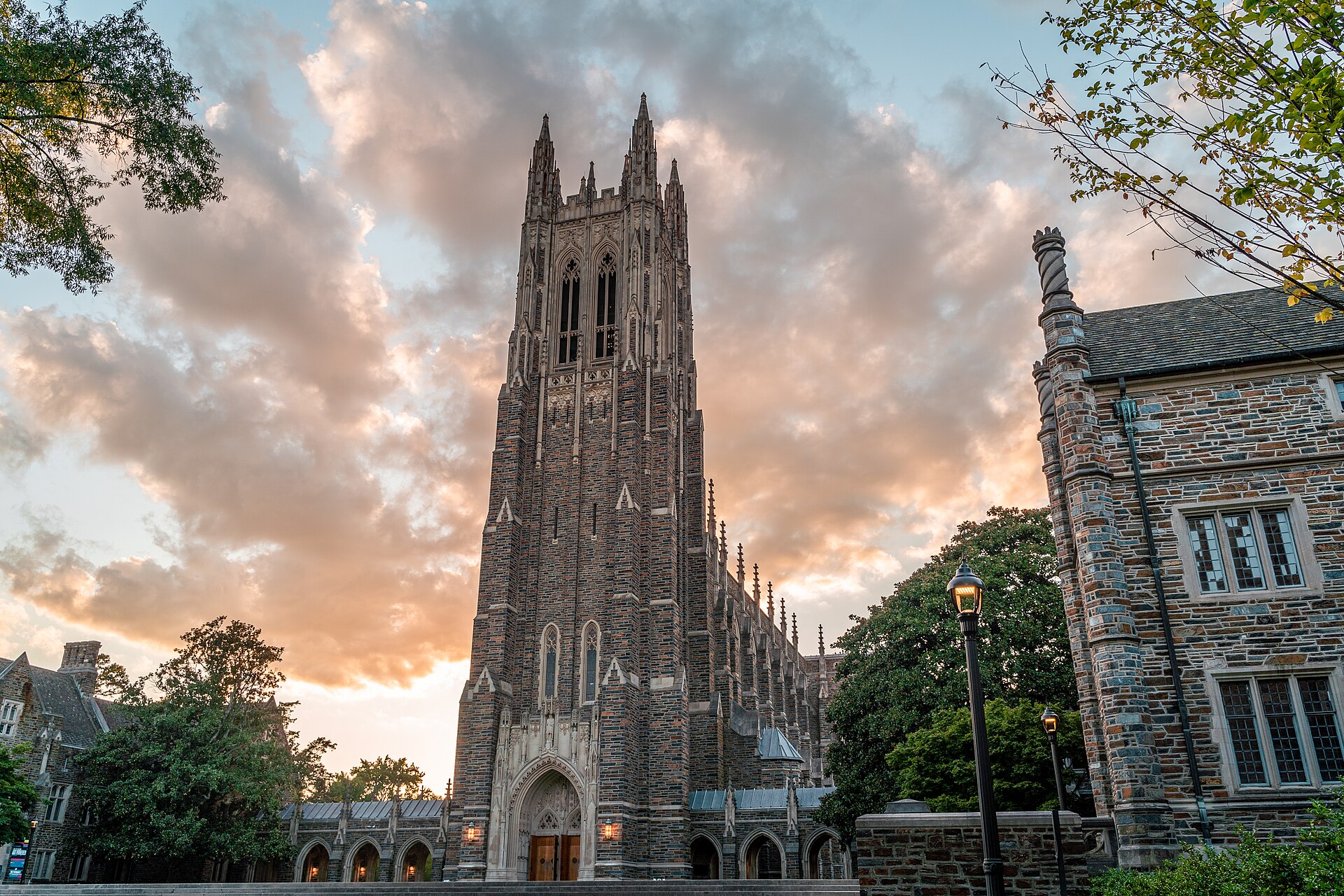
Chapel Hill is the smallest of the three and the most expensive. It is a university town first: the University of North Carolina at Chapel Hill and UNC Health are the dominant employers and set the tone. Housing stock runs from 1920s-to-1950s homes in the historic districts near campus, through 1960s-to-1980s wooded neighborhoods on larger lots, to newer subdivisions along the 15-501 corridor toward Durham and in southern Orange and northern Chatham counties. Carrboro, immediately west, is a smaller, denser and somewhat less expensive version of the same market with its own town government and the same school district.
The September 2026 median sold price in Chapel Hill was $665,000, with a 12-month median of $641,975 and a range over the year from $572,500 to $715,000. Days on market averaged 56 in September, up sharply from 32 in August; Chapel Hill is a small enough market that a few slow closings move the average, and its 12-month DOM average of 46 is a fairer read.
Chapel Hill also carries the highest tax burden in the Triangle. Orange County’s general rate is $0.6805 per $100 and Chapel Hill’s municipal rate is $0.50, for a combined $1.1805 before the Chapel Hill-Carrboro City Schools district tax, which is levied on top for parcels inside that district. Buyers who want a Chapel Hill address at a lower tax rate often look at the Chatham County side of town, where several new communities sit; the tax jurisdiction and school assignment on those lots must be confirmed parcel by parcel. See our Chapel Hill and Carrboro guides.
Property taxes: what the rates actually cost
North Carolina property tax is assessed by the county, and each municipality adds its own rate. All three counties adopted FY2026-27 budgets in June 2026, and all three raised their rates; the City of Durham and the Town of Chapel Hill held their municipal rates flat.
Wake County’s general rate is $0.5371 per $100 of assessed value, up 2 cents from the prior year. The City of Raleigh adds $0.3720, for a combined $0.9091. Cary’s municipal rate is $0.3675 (combined $0.9046) and Apex’s is $0.3735 (combined $0.9106). Durham County’s rate is $0.5792, up 2.5 cents, and the City of Durham held its rate flat at $0.4371, for a combined $1.0163. Orange County’s rate is $0.6805, up 4.22 cents, and Chapel Hill’s is $0.50, unchanged, for a combined $1.1805 before the school district levy.
Run those against a $500,000 assessed value: about $4,546 a year in Raleigh, $5,082 in Durham and $5,903 in Chapel Hill before the school district tax. The Raleigh-to-Chapel Hill difference is roughly $1,350 a year on that home, or about $113 a month. That is a real number but it is smaller than the price gap between the two cities, and it rarely decides the question on its own. Note also that each county revalues on its own schedule, so the assessed value the rate is applied to may differ from the current market value.
- Raleigh median sold price $425,000; Durham $420,000; Chapel Hill $665,000 Triangle MLS, Sept 2026 closings, pulled Oct 28, 2026
- Wake County tax rate $0.5371 + Raleigh $0.3720 = $0.9091 per $100 Wake County FY2027 adopted budget, June 1, 2026
- Durham County $0.5792 + City of Durham $0.4371 = $1.0163 per $100 Durham County, June 8, 2026; City of Durham, June 15, 2026
- Orange County $0.6805 + Chapel Hill $0.50 = $1.1805 per $100, plus CHCCS district tax Orange County, June 16, 2026; Town of Chapel Hill FY2026-27 budget
- Fastest-selling of the five: Cary, 37 days on market in Sept 2026 Triangle MLS
Schools: WCPSS, DPS and CHCCS
Wake County Public School System (WCPSS) covers all of Wake County, including Raleigh, Cary, Apex, Holly Springs, Wake Forest and the rest. It is the largest district in North Carolina. Its size brings a wide range of magnet, year-round and traditional-calendar options, and also a student assignment system that does not guarantee a given address will feed the closest school or stay assigned to the same school over time. For buyers, the practical rule is to verify the current assignment and the calendar type for any specific address through WCPSS before writing, and to understand that assignment can change, especially in fast-growing areas where new schools open.
Durham Public Schools (DPS) covers Durham County. It is a much smaller district than Wake, with a wider spread between its strongest and weakest schools and a large magnet program. Many Durham families also use the county’s charter schools, which are numerous. Buyers in Durham tend to shop school by school rather than by district.
Chapel Hill-Carrboro City Schools (CHCCS) covers Chapel Hill and Carrboro. It is a small district that has long had a strong reputation and is funded in part by a supplemental district property tax that other Triangle homeowners do not pay. The rest of Orange County, including Hillsborough, is served by Orange County Schools, a separate district. A Chapel Hill mailing address does not guarantee a CHCCS assignment; parcels on the Chatham County side of town are in Chatham County Schools. Confirm the district on the parcel, not the address.
Commutes: RTP, downtowns, the universities and RDU
Research Triangle Park sits between the three cities, mostly in Durham County with a portion in Wake. It is closest to Morrisville, Cary, Brier Creek and south Durham, and it is a reasonable drive from Apex, west Raleigh and Chapel Hill via I-40 or 15-501. Raleigh-Durham International Airport (RDU) is adjacent to RTP on the Wake side, which is why frequent travelers cluster in Morrisville, Brier Creek and west Cary.
Downtown Raleigh is the anchor for state government, the legal and professional services sector and a growing tech cluster. It is best served from inside the Beltline, north Raleigh via Capital Boulevard or Glenwood, and from Cary and Apex via US-1 and I-40. Duke University and Duke Health anchor west-central Durham and are easiest to reach from Durham’s in-town neighborhoods and from Chapel Hill via 15-501. UNC and UNC Health anchor Chapel Hill and draw commuters from Carrboro, Hillsborough and south Durham.
Cross-Triangle commutes (Chapel Hill to downtown Raleigh, or north Raleigh to UNC) run the full length of I-40 or US-70 at peak, and most people who try them do not keep them for long.
We sell on all three sides and we do not have a favorite. The city-level medians above hide more than they show: a $425,000 Raleigh median covers both small condos and inside-the-Beltline rebuilds priced at several times that figure, and Chapel Hill’s $665,000 includes both townhomes and estate homes. The right comparison is neighborhood to neighborhood at your price point, not city to city. If you tell us your budget, your employer and whether schools matter, we can usually narrow it to three or four neighborhoods across the Triangle before you ever visit.
Who tends to choose each side
Raleigh draws buyers who want a mix of urban and suburban, who work downtown or in north Raleigh, who value older housing with character, and who want the widest range of price points. The Wake suburbs (Cary, Apex, Holly Springs, Morrisville) draw families relocating for RTP or tech employers who prioritize newer homes, planned amenities, short RTP commutes and the predictability of a smaller set of schools, and who are willing to pay roughly $160,000 to $170,000 more than the Raleigh median for it in Cary, Apex and Holly Springs.
Durham draws buyers who want a walkable, culturally active downtown at a lower price than Raleigh or Chapel Hill, who work at Duke or RTP, and who are comfortable researching schools individually. It also draws the largest share of buyers who have been priced out of Wake County and want a single-family home under $450,000 within 20 minutes of RTP.
Chapel Hill and Carrboro draw university and medical employees, buyers for whom the CHCCS school district is the deciding factor, and people who want wooded lots and a small-town center and are willing to pay the region’s highest prices and highest tax rate for them. Hillsborough, north of Chapel Hill, is the value play in Orange County for buyers who want the county without the Chapel Hill premium.
None of these is better. They are different, and the differences are visible in the data: Chapel Hill is $240,000 above Raleigh on median price, Cary and Apex sell two weeks faster than either city, and the tax rate spread between Raleigh and Chapel Hill is about 30%. Start with where you will drive every day, then let the budget narrow the rest.
Tell us where you will work, your price range and whether schools are a factor. We will send a short list of neighborhoods across all three sides of the Triangle, with current Triangle MLS pricing and the exact tax rate and school assignment for each, before you book a trip.
Sources: Triangle MLS (Doorify MLS) residential market statistics, monthly median sold price and average days on market by town, October 2025 through September 2026, pulled October 28, 2026. Wake County Fiscal Year 2027 Adopted Budget (wake.gov), 53.71 cents per $100, adopted June 1, 2026; Wake County Tax Administration rate schedule, FY2026-27 municipal rates for Raleigh, Cary and Apex. Durham County news release, “Durham Commissioners Approve $1.05 Billion Budget” (dconc.gov), 57.92 cents, June 8, 2026. City of Durham FY2026-27 adopted budget, 43.71 cents, June 15, 2026, as reported by Hey Durham, June 16, 2026. Orange County news release, “Board of Commissioners Approves FY2026-27 Budget” (orangecountync.gov), 68.05 cents, June 16, 2026. Town of Chapel Hill FY2026-27 Budget (engage.chapelhillnc.gov), 50.0 cents, no rate increase. Tax illustrations calculated by Tidal Realty Partners on a $500,000 assessed value; they exclude school district, fire district and solid waste fees.