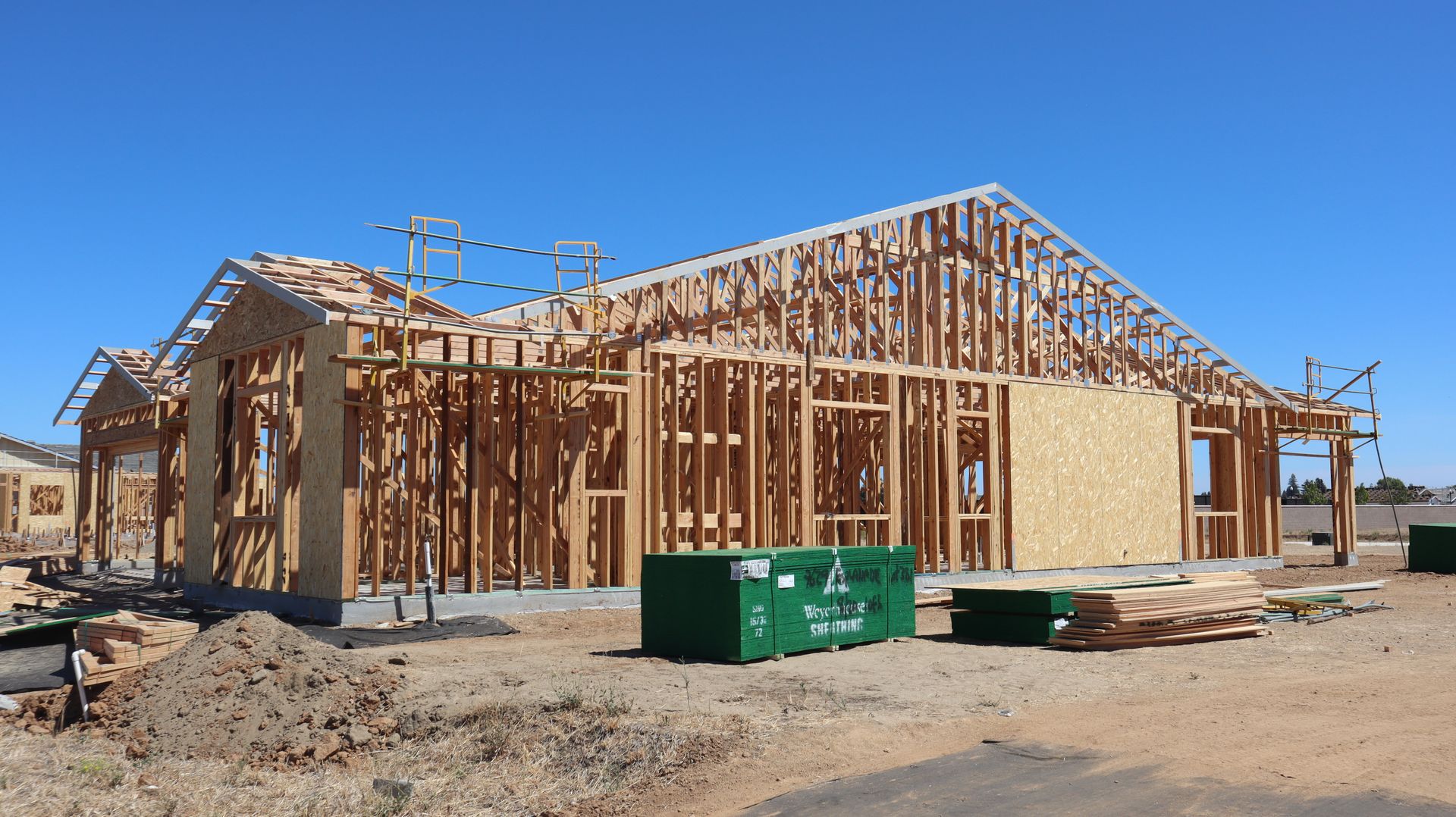
Most new builds in this market do appraise at contract price, but the risk is real on a home you signed for many months ago, because the appraisal happens near delivery while your price was fixed before the builder started discounting. If it comes in short, the gap is usually your cash, because the standard North Carolina contract says there is no appraisal contingency and most builder contracts do not add one.
This is the question buyers ask us in month eight of a build, usually after they drive past the model and notice the sales office has started advertising incentives that did not exist when they signed. The worry is well placed. A to-be-built home is the one purchase where you agree to a price a year before anyone values the house.
Here is how the risk actually works in New Hanover, Brunswick and Pender counties this fall, and what you can do about it before closing week.
Why does the timing create the problem?
Because the two numbers are set almost a year apart. You lock a purchase price when you sign the builder’s contract. The lender orders the appraisal weeks before closing, and the appraiser values the finished house against the homes that have actually sold and are actually listed in that community at that moment.
If the builder has cut prices or stacked incentives in the intervening months, the appraiser is looking at a different market than the one you bought in. That is not hypothetical here right now. On November 20, 2026 the Del Webb Wilmington at Mallory Creek page in Leland listed homes from $379,990 to $598,990, and all eight finished homes on the page were discounted: one from $463,910 to $378,815, another from $653,685 to $564,710. Those are the sales and listings an appraiser uses for a home three doors down.
The exposure window is also longer than most buyers expect. In Grayson Park, also in Leland, ten of the thirteen pending homes we matched in a Coldwell Banker search on November 6, 2026 were new construction, at a median 145 days on market. That is roughly five months between contract and closing on homes that were already standing, before you add the months it takes to build one.
- New Hanover County median sale price: $464,000, down 1.3 percent year over year, 61 days on market against 34 a year ago Tidal Realty Partners New Hanover County market update, three months ending September 2026
- Brunswick County: 2,334 active listings and 93 days on market, with about 38 percent of active listings already price cut Tidal Realty Partners Brunswick County market update, three months ending September 2026
- Del Webb at Mallory Creek, Leland: all eight finished homes discounted, the deepest from $653,685 to $564,710 Del Webb community listings, read November 20, 2026
- Current builder incentives across the builders we work with: roughly $20,000 on select homes this month Tidal Realty Partners new construction pages, November 2026
Read those first two lines together. A market where values are flat to slightly down and the typical home needs two to three months to sell is exactly the market in which an appraisal written today can land under a price agreed last winter. It is also, for what it is worth, a market where appraisers have plenty of recent comparable sales to work from, which cuts both ways.
What does the contract say if it comes in low?
For a resale, the answer is blunt. The Offer to Purchase and Contract, Standard Form 2-T, revised 7/2025, states in paragraph 4(a) that “there is no loan or appraisal contingency in this Contract.” A low appraisal after your due diligence period has closed is your problem.
New construction is different in one important way: most production builders here do not use Form 2-T at all. They use their own contract, drafted by their own counsel, and the appraisal provision in it is whatever they wrote. Some address a low appraisal. Many do not. A few give the builder the right to cancel and keep part of your deposit if financing fails, which is the opposite of protection.
That is the single most valuable thing an agent does on a new build, and it costs you nothing: read the builder’s contract against the standard North Carolina contract and tell you which protections are missing before you sign.
There is one meaningful exception. If you finance with FHA or VA, the federal amendatory clause and the VA notice to buyer apply. In North Carolina those come through the FHA/VA Financing Addendum, Standard Form 2A4-T, revised 7/2025, which provides that the purchaser “shall not be obligated to complete the purchase of the property described herein or to incur any penalty for forfeiture of earnest money deposits or otherwise” without a written statement of appraised value of not less than a stated amount. Ask your lender in writing whether the builder’s own paperwork carries equivalent language, because the protection only helps if it is in the file.
What raises or lowers your odds?
How the builder structures its incentive matters more than the size of it. A builder that cuts base price lowers the recorded sale prices in the community, which pulls future appraisals down. A builder that holds base price and spends the same money on a rate buydown, closing costs or an upgrade package keeps the recorded price high. That is why builders in this market generally defend base price and fund buydowns instead, and it is good for your appraisal even though the two feel identical at the closing table.
A quick-move-in or spec home carries less appraisal risk than a build-to-order, simply because there is less time between the price and the valuation. Lot premiums are the other common gap: an appraiser may not give full credit for a pond or wooded premium you paid for, so if the premium is large, ask what recent sales in that community support it.
An appraisal is one licensed opinion formed on one day, and you have limited ability to change it. You can ask your lender for a reconsideration of value and supply better comparable sales, but the lender controls that process and the appraiser is not obliged to agree. If the number stands, your realistic options are to bring the difference in cash, restructure the loan so the smaller appraised value still supports it, ask the builder to reduce the price, or walk away. Builders rarely take the third option. They more often offer additional incentives, which feels like movement but does not fix a loan-to-value problem, because the lender lends against the appraised value regardless of what credits are attached. The money at stake is also bigger than on a resale: builder deposits here are frequently well above the earnest money and due diligence fee on a resale contract, and upgrade deposits are often non-refundable on their own terms. Honest balance on the other side: for most buyers in most Wilmington-area communities the appraisal comes in at or above contract price and none of this ever comes up.
Related questions people also ask
Who pays for the appraisal on a new construction home?
The buyer does, as part of the loan costs, and it is ordered by the lender rather than by you or the builder. You will see the charge disclosed on your Loan Estimate and again on your Closing Disclosure. Because the lender orders it, the appraisal belongs to the loan file, not to the builder, and the builder has no standing to influence the result. Ask your lender when in the build the appraisal will be ordered, because on a to-be-built home it is often done from plans early and then updated when the house is finished.
What happens if my new build appraises below the contract price?
Your lender will lend against the appraised value rather than the contract price, which leaves a cash gap you have to cover unless something in the contract lets you out. The standard North Carolina resale contract, Form 2-T revised 7/2025, states that there is no appraisal contingency, and builder contracts vary, so the answer depends entirely on the paperwork you signed. On an FHA or VA loan the federal amendatory clause and VA notice give you the right not to complete the purchase without forfeiting earnest money when the appraised value comes in below a stated amount. Have your agent or attorney read the specific appraisal and financing language before you sign.
Do builder incentives lower the appraised value of my home?
It depends on whether the builder cuts price or pays costs. Incentives that leave the contract price intact, such as a rate buydown, a closing cost credit or included upgrades, do not reduce the recorded sale prices an appraiser studies. Outright base price reductions do, because they show up in the community’s closed sales and become the comparables for everyone who signed earlier. This is one reason to ask a sales office directly how an advertised incentive will appear on the settlement statement.
Before you sign a builder contract, get the appraisal, financing and deposit provisions read side by side against the standard North Carolina contract, and ask the sales office in writing how current incentives will be recorded. We do that read for our buyers at no cost to you, and we register you with the builder first so you keep your representation. Send us the community and the contract and we will mark up what is missing.
Sources: Offer to Purchase and Contract, Standard Form 2-T, revised 7/2025, paragraph 4(a); FHA/VA Financing Addendum, Standard Form 2A4-T, revised 7/2025; Tidal Realty Partners New Hanover County and Brunswick County market updates, three months ending September 2026; Tidal Realty Partners Mallory Creek guide citing Del Webb community listings read November 20, 2026, and Grayson Park guide citing a Coldwell Banker Leland search read November 6, 2026; Tidal Realty Partners new construction pages and new construction guide, November 2026. Related reading: new construction versus resale, whether builder incentives are worth it, spec home or build to order, and how long a Wilmington build takes.