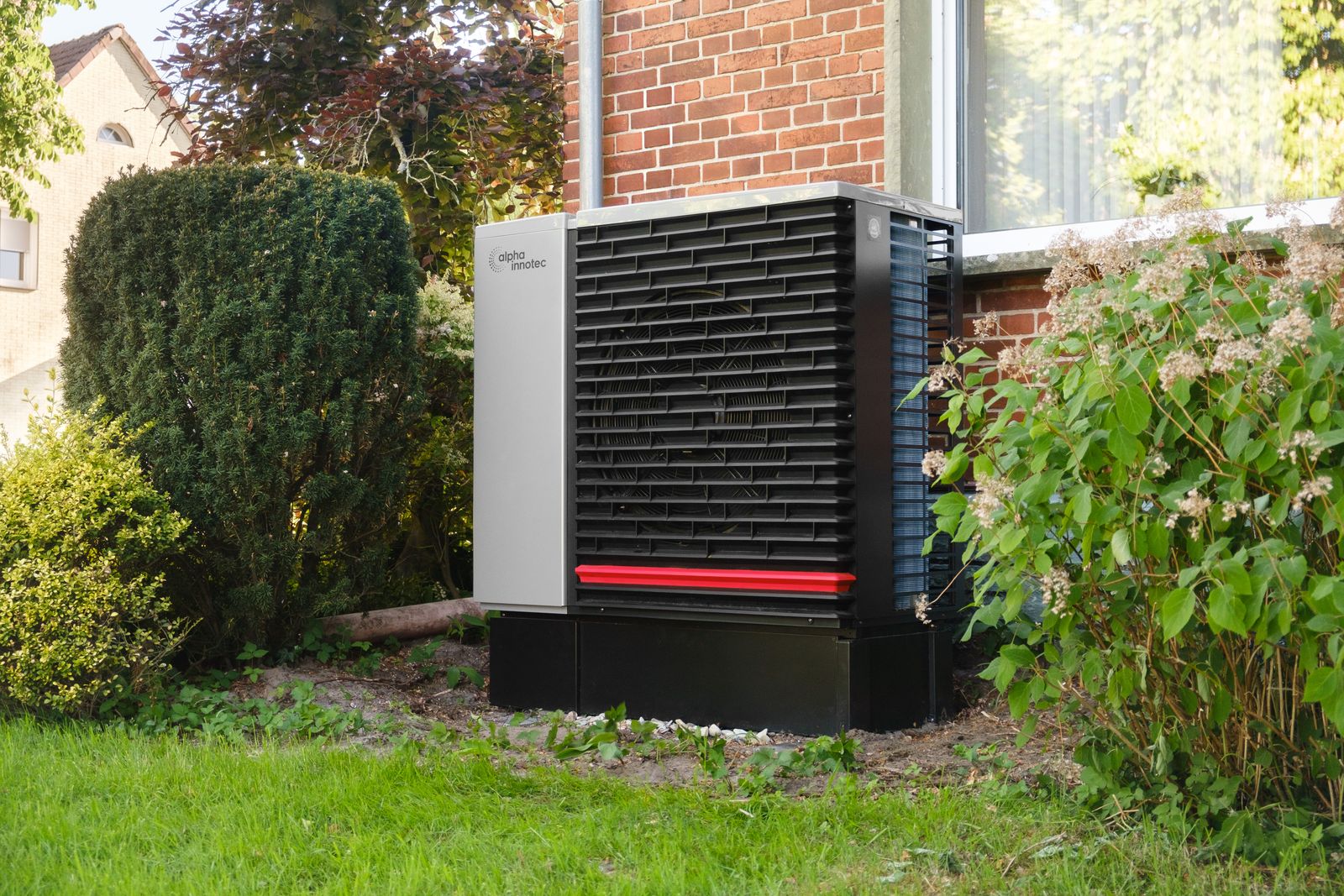
In most cases, no. If your system still cools and heats, the money is usually better spent pricing the house correctly and offering a credit if the buyer asks, because a new heat pump rarely returns its full cost in a market where the typical New Hanover County home now takes 61 days to go under contract.
Replacing an HVAC system is one of the biggest single checks a seller writes before listing, and it is the one we talk people out of most often. The exception is narrow but real, and it has more to do with whether the system runs at all than with its age.
Here is how we work through it with sellers, in the order the decision actually happens.
Start with whether it works, not how old it is
There are three honest categories. A system that is dead, leaking refrigerant or cannot hold temperature is a different conversation from a system that is simply old.
If it does not work, fix or replace it. A buyer’s inspector will find it, the buyer will ask for it, and a house marketed in August in Wilmington with no working air conditioning will sit. In that case you are not choosing whether to spend the money, only whether you spend it on your terms or theirs.
If it works but is old, disclose it and price for it. North Carolina does not require you to replace anything. Under the Residential Property Disclosure Act, Chapter 47E of the General Statutes, you complete the Residential Property and Owner’s Association Disclosure Statement and answer what you know, and you may answer “No Representation” rather than make a claim. Our standing advice is the one from our listing conversations: answer what you know honestly, and remember that checking No Representation down the entire form can push a cautious buyer into ordering more inspections, not fewer.
If it works and is recent, say so with paperwork. The invoice, the model number and the remaining transferable warranty are worth more in a listing than any adjective.
What a new system actually costs, and what it returns
Costs vary more than most online figures admit. Carrier’s own 2026 pricing guide, published September 15, 2026, estimates a new heat pump at $6,000 to $25,000 installed, and that range is national rather than a Wilmington quote. The spread comes from capacity, efficiency, ductwork, electrical work and whether the air handler is replaced too. The only number that should drive your decision is a written quote from a local contractor on your actual house, and we tell sellers to get two. Pricing against those quotes is part of how we build a listing plan.
What you will not find is a credible figure saying a heat pump returns its full cost at resale. We are not going to invent one. What we can tell you from this market is what buyers do with the information: in a county where active listings are up 7.6% year over year and roughly two of every five have already taken a price cut, a buyer with choice treats an aging system as a reason to negotiate, not a reason to skip your house.
- 61 days: median time on market in New Hanover County, up from 34 a year earlier Tidal Realty New Hanover County market update, three months ending September 2026
- 1,251 active listings countywide, up 7.6% year over year, with about two in five showing a price cut Tidal Realty New Hanover County market update, three months ending September 2026
- $464,000 median sale price, down 1.3% year over year Tidal Realty New Hanover County market update, three months ending September 2026
- $6,000 to $25,000: national installed cost range for a new heat pump, not a Wilmington quote Carrier heat pump pricing guide, September 15, 2026
Credit, repair or replace: how we choose
A credit keeps your money in your pocket until a buyer actually asks for it. If no buyer raises the system, you kept the whole amount. If one does, you negotiate against a written quote instead of against a fear.
A repair is often the better middle path. A failed capacitor, a bad contactor, a refrigerant leak at a fitting or a clogged drain line are a few hundred dollars and they turn an inspection finding from “system not operating” into “system operating, unit is 14 years old.” Those two lines land very differently with a buyer.
Replacement makes sense in three situations we see repeatedly. The system is not operable at all. The house is in a price band where every comparable listing has new mechanicals, which happens most often in newer Leland and Hampstead construction competing against builder inventory. Or you are selling a rental or an estate property where there is no one to meet an HVAC technician during due diligence and you would rather hand the buyer something finished.
The coastal wrinkle most sellers miss
Near the water, the outdoor unit ages faster than the calendar suggests. Salt air corrodes condenser coils and cabinets, and we see it most in the beach towns and on the sound side at Wrightsville Beach, Carolina Beach and Kure Beach. A ten year old unit three blocks from the ocean can look worse to an inspector than a fifteen year old unit in Leland. If your house is at the beach, have the unit serviced and the coil checked before photos, because a corroded condenser is the sort of photograph that ends up in a repair request.
The other coastal factor is insurance. Statewide average homeowners rates were allowed to rise 7.5% on June 1, 2025 and another 7.5% on June 1, 2026 under the January 2025 settlement between the Insurance Commissioner and the North Carolina Rate Bureau, reported by Port City Daily on January 25, 2025. Buyers here are already running tighter monthly numbers than they were two years ago, so anything that adds a predictable future expense gets priced.
There is a real case for replacing, and we do not want to talk you out of it when it fits. If your house is competing directly against new construction, a buyer comparing your 2009 system to a builder’s brand new one with a transferable warranty is not making an unreasonable comparison. And some buyers, especially relocating buyers who will not be here during due diligence, will simply pass on a house rather than manage a mechanical unknown from another state. The honest uncertainty is that nobody can tell you in advance whether your buyer is that buyer. What we can say is that a replacement you do speculatively is a sunk cost, and a credit you offer in negotiation is spent only when it buys you a contract. If a contractor tells you the system is failing, that changes the answer, and so does a system that cannot be repaired because parts are no longer made.
Related questions people also ask
How long does an HVAC system last in coastal North Carolina?
Manufacturers generally design residential heat pumps for a service life in the ten to fifteen year range, and coastal homes usually land at the lower end because salt air corrodes the outdoor unit. Humidity and long cooling seasons also mean the equipment runs more hours per year here than in a cooler climate. The practical answer is that age alone does not decide anything. A maintained fourteen year old system that cools properly is a different asset from a neglected ten year old one.
Do I have to disclose that my HVAC is old when I sell in North Carolina?
You have to complete the Residential Property and Owner’s Association Disclosure Statement required under Chapter 47E of the North Carolina General Statutes, and you must answer honestly about what you actually know. You may choose No Representation on an item rather than making a statement. You cannot make a false statement, and if you know the system has a problem, saying nothing while implying everything is fine is the kind of thing that creates liability after closing.
Will a buyer’s lender require a working HVAC system?
Often yes. Government backed loans in particular expect the home to have functioning heating, and appraisers note systems that are not operating. Even on a conventional loan, an appraiser who reports an inoperable system can trigger a repair requirement before the lender funds. That is one reason a dead system is a different problem from an old one.
Get two written quotes from local HVAC contractors and a service call on the existing system, then price the house with that paperwork in hand so you can answer a buyer with a number instead of a guess. If you want help deciding whether to fix it, credit it or replace it on your specific house, bring us the quotes and we will walk the math with you.
Sources: Tidal Realty Partners New Hanover County market update, three months ending September 2026; Carrier heat pump pricing guide, September 15, 2026; North Carolina Residential Property Disclosure Act, N.C.G.S. Chapter 47E, and the Residential Property and Owner’s Association Disclosure Statement; Port City Daily, January 25, 2025.