
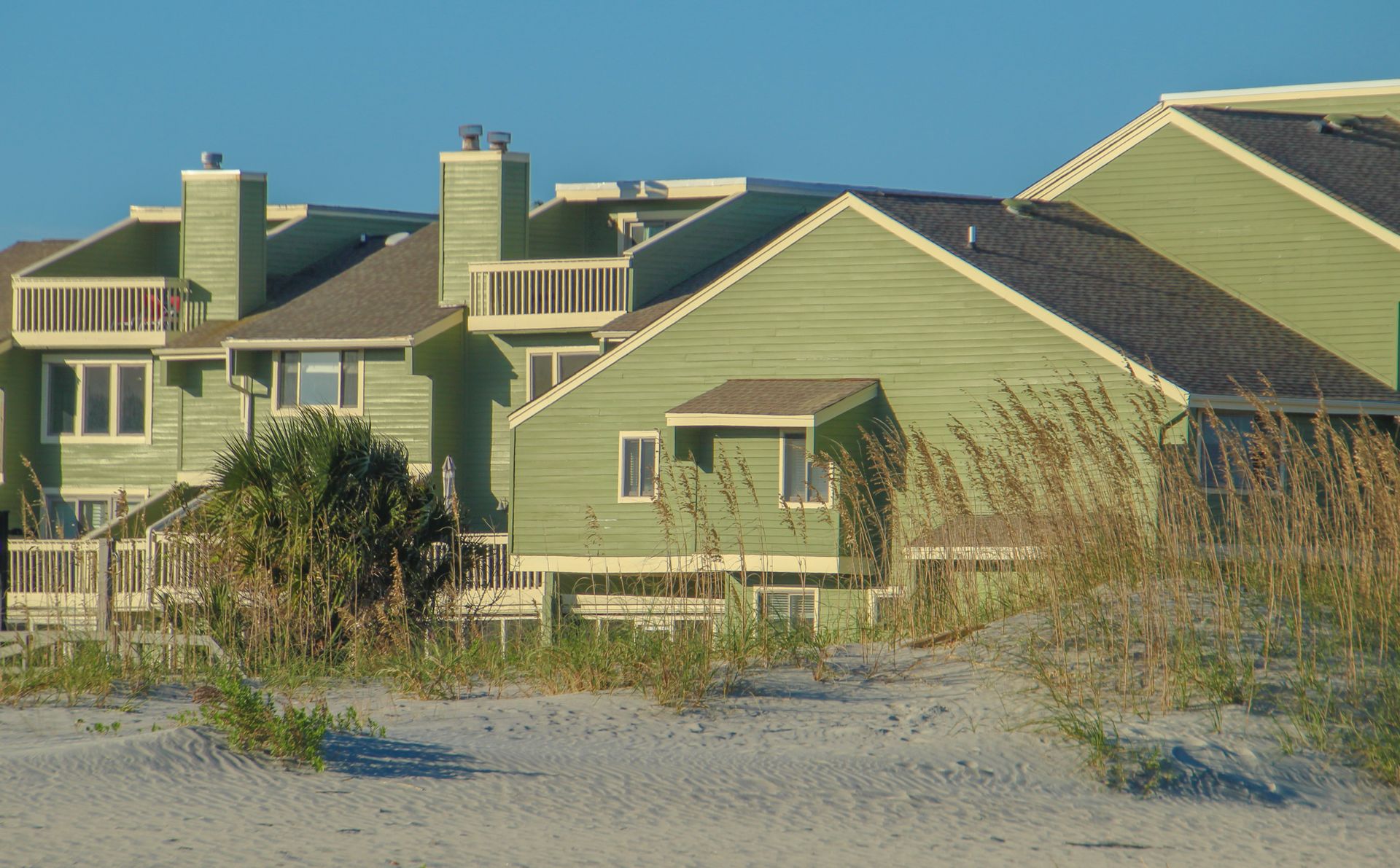
Often yes, but whether you can get a conventional or FHA loan on a Carolina Beach condo depends far more on the building than on you. The lender underwrites the project as well as the borrower, and at the beach the things that most often kill a loan are short-term rental operations, investor concentration and unfunded repairs the association has not paid for.
This is the single most frustrating surprise we see in the Pleasure Island condo market. A buyer gets fully approved, finds a unit, goes under contract, and then the loan dies three weeks later over a building questionnaire nobody asked about at the start. The buyer did nothing wrong. The building simply did not qualify.
You can avoid almost all of that by asking the project questions before you write the offer rather than after. Here is what lenders look at and what tends to go wrong on this stretch of coast.
What is the lender actually reviewing?
Two separate approvals have to line up. The first is you: income, assets, credit, debt ratio, the ordinary file. The second is the condominium project itself, and it is reviewed against standards set by Fannie Mae and Freddie Mac for conventional loans, or by HUD for FHA loans. A building that passes is commonly called warrantable. One that does not is non-warrantable, which does not mean unfinanceable but does mean a different and usually more expensive loan.
The project review is driven by a questionnaire the homeowners association or its management company fills out, plus the budget, the reserve study, the master insurance policy and the governing documents. Two practical consequences follow. One, you are depending on a volunteer board or a management company to answer paperwork on your timeline, which is a real scheduling risk at the beach in season. Two, associations sometimes charge for completing lender questionnaires, which is a cost worth asking about during due diligence rather than discovering on the settlement statement.
What disqualifies a beach condo most often?
Fannie Mae publishes an explicit list of project characteristics that make a condo ineligible, most recently updated August 5, 2026. Reading it with Carolina Beach in mind, several items stand out.
Hotel-like operation is the big one. A project is ineligible if it offers hotel-type services such as registration services, daily or short-term unit rentals, daily cleaning, central telephone service or central key systems. Mandatory rental pooling makes a project ineligible, and so do voluntary rental-pooling or revenue-sharing arrangements, including blackout dates or occupancy limits designed to keep units available for rent. A project managed by a hotel or resort company that also facilitates short-term rentals is ineligible, as is one whose name includes hotel, motel or resort, or one that carries a hotel rating from a booking provider.
None of that means a building where individual owners rent by the week is automatically out. It means the line sits at whether the project operates like lodging rather than housing. On an island where weekly rentals are ordinary, that line gets crossed more often than inland buyers expect, and the on-site rental desk that looks like a convenience when you tour is sometimes the reason the loan fails.
Deferred maintenance is the second common failure, and it has tightened since the Surfside collapse. A project is ineligible where there are material deficiencies that could cause critical system failure within a year, mold or water intrusion, advanced physical deterioration, a failed mandatory structural safety or habitability inspection, or unfunded repairs exceeding $10,000 per unit that should be completed within 12 months. A special assessment tied to a critical repair that has not been addressed also disqualifies the project. For oceanfront buildings exposed to salt air, balcony, railing and envelope repairs are exactly the category that triggers this.
Fannie Mae also flags conditions that require extra scrutiny rather than automatic rejection, including projects where 75 percent or more of units are investment or second homes, projects advertising short-term rentals, projects in resort areas, and units under 400 square feet. Separately, for new and newly converted projects, at least 50 percent of the units must be conveyed or under contract to buyers using them as a principal residence or second home.
- Unfunded repairs that make a project ineligible: more than $10,000 per unit due within 12 months Fannie Mae Selling Guide B4-2.1-03, August 5, 2026
- Extra-scrutiny threshold for investor and second-home concentration: 75% of units Fannie Mae Selling Guide B4-2.1-03, August 5, 2026
- New and newly converted projects: at least 50% of units conveyed or under contract to principal residence or second home buyers Fannie Mae Selling Guide B4-2.2-02, August 5, 2026
- 30-year fixed mortgage rate: 6.95% Freddie Mac weekly survey, week ending September 17, 2026
What changed in 2026, and what changes in January 2027?
Fannie Mae issued Lender Letter LL-2026-03 on March 18, 2026, and it matters for small beach associations specifically. The Limited Review, the lighter-touch project approval that a lot of modest condo buildings quietly relied on, was retired for loan applications dated on or after August 3, 2026. Established projects of more than 10 units now go through a Full Review, where the budget and the reserves get read closely. A Waiver of Project Review remains available for projects of 10 units or fewer, which is a genuine advantage for the small older buildings on the island.
The second change has not landed yet. For loan applications dated on or after January 4, 2027, the minimum replacement reserve allocation rises from 10 percent to 15 percent of the association’s annual budgeted assessment income. Associations that fall short can still qualify using a reserve study, but they must fund at the highest recommended level in that study and can no longer use the baseline funding method. If you are buying in a building whose budget allocates 10 or 11 percent to reserves, a January application and a December application are not the same loan. This is worth raising with your lender now rather than in the new year.
What about flood insurance on a condo?
Condo flood coverage works differently from a single-family house, and buyers routinely budget for it wrong. Under the National Flood Insurance Program, a condominium association, not an individual owner, holds the Residential Condominium Building Association Policy, which insures a residential condo building where 75 percent or more of the total floor area is residential. Coverage B of that policy reaches a unit owner’s contents and the interior walls, floors and ceilings not otherwise covered, but only up to 10 percent of the Coverage B limit, and that sub-limit does not increase the limit. FEMA’s own guidance is that individual unit owners may want their own contents policy.
So the questions to ask are: does the association carry an adequate master flood policy, what does it actually cover inside your walls, and what will your own contents and interior coverage cost on top of it. Our Wilmington flood zones and flood insurance guide covers how zones and elevation drive those numbers, and the wind side is in our coastal NC wind, hail and hurricane deductible guide.
Non-warrantable does not mean unbuyable. Portfolio lenders, local banks and credit unions keep these loans on their own books and will finance buildings the agencies will not, typically with a larger down payment and a higher rate than you were quoted at 6.95 percent. That can still be the right deal. What it is not is a surprise you want to absorb two weeks before closing. Be honest with yourself about the competition as well: Carolina Beach and Kure Beach carry more second-home and investor activity than the rest of New Hanover County, and in a building with a financing problem, cash buyers set the price. Finally, we cannot tell you whether a specific building is warrantable today. That answer comes from the association’s current questionnaire, budget and reserve study, read by your lender, and it can change from one year to the next. For FHA specifically, start by checking the project on HUD’s FHA condominium lookup and ask your lender whether Single-Unit Approval is an option.
Related questions people also ask
What makes a condo non-warrantable?
A condo is non-warrantable when the project itself fails agency standards, regardless of how strong the borrower is. Common causes are hotel-like operation such as daily or short-term rentals, registration desks or rental pooling, too much commercial space, a single owner holding too many units, unresolved critical repairs or failed structural inspections, inadequate reserves, and certain pending litigation. The borrower can still buy, but usually through a portfolio lender rather than a conventional loan.
Can you get an FHA loan on a Carolina Beach condo?
Only if the project is FHA-approved, or if the unit qualifies under FHA’s Single-Unit Approval process. Approval status is public and can be checked on HUD’s FHA condominium lookup tool before you make an offer. Single-Unit Approval lets a lender approve an individual unit in a project that is not approved as a whole, subject to limits in HUD’s Single Family Housing Policy Handbook 4000.1, so ask your lender to confirm both the project status and whether the unit path is available.
Do I need separate flood insurance if I buy a beach condo?
Usually you need something, because the association’s master flood policy is written for the building rather than for your belongings. FEMA’s National Flood Insurance Program rules let the association’s policy extend to a unit owner’s contents and to interior walls, floors and ceilings not otherwise covered, but only up to 10 percent of that coverage limit, and FEMA advises unit owners to consider buying their own contents coverage. Ask for the master policy declarations page during due diligence and price your own policy from that, not from an average.
Before you write an offer on a specific unit, ask the listing agent three questions: does the building allow daily or weekly rentals and is there an on-site rental program, is there a current special assessment or a pending structural repair, and what percentage of the budget goes to reserves. Those three answers predict most financing failures here. Our Carolina Beach community guide and the current mortgage update will fill in the rest of the picture, and our team can run the project questions on a building you are considering before you spend money on an inspection.
Sources: Fannie Mae Selling Guide B4-2.1-03, Ineligible Projects, dated August 5, 2026; Fannie Mae Selling Guide B4-2.2-02, dated August 5, 2026; Fannie Mae Lender Letter LL-2026-03, issued March 18, 2026, as summarized in the Greenbaum Rowe client alert of August 12, 2026; HUD FHA condominium lookup and HUD-9991 instructions referencing Single Family Housing Policy Handbook 4000.1; FEMA National Flood Insurance Program guidance on the Residential Condominium Building Association Policy; Tidal Realty Partners New Hanover County market update, August 2026 data; Freddie Mac Primary Mortgage Market Survey, week ending September 17, 2026.



