Most Raleigh homes are not in a FEMA high-risk flood zone, so most buyers are not required to carry flood insurance and many never buy it. You should still check the specific parcel, because Raleigh has real creek flooding along Crabtree Creek, Walnut Creek and the Neuse, and a required policy on the wrong lot can cost more than the entire premium difference you just saved by leaving Florida.
Buyers coming from Tampa, Fort Myers, Jacksonville or South Florida arrive with a reflex: every house needs flood coverage, and the bill will hurt. Florida built that reflex for good reasons. By January 1, 2027, nearly every Citizens Property Insurance policyholder with wind coverage must carry flood insurance no matter what flood zone the house sits in (Citizens Property Insurance Corporation, flood requirement page, 2026). Nothing like that exists in North Carolina. Here, flood insurance is required only when a federally backed lender finds the structure inside a FEMA Special Flood Hazard Area, and otherwise it is your call.
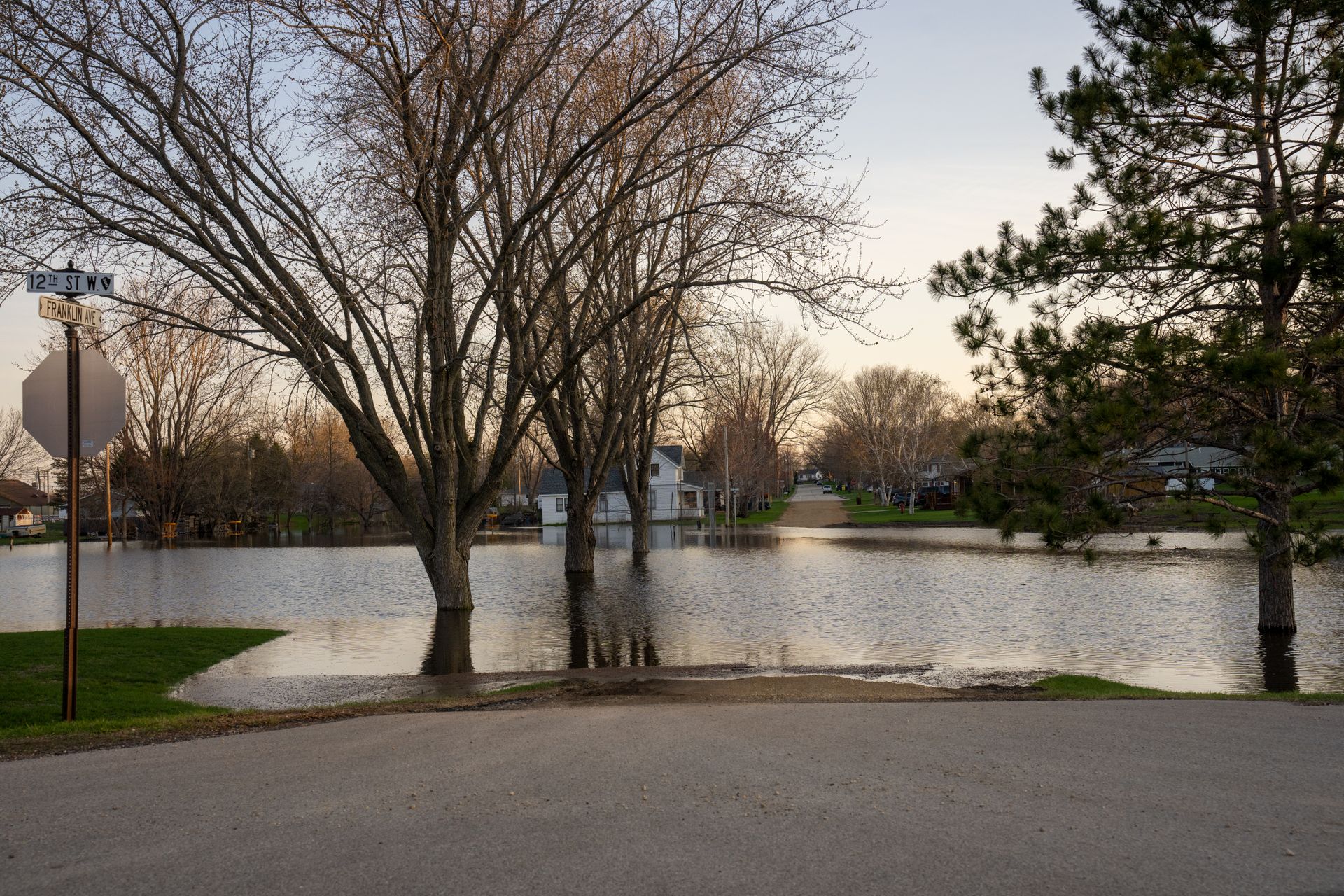
That freedom is where Florida buyers sometimes get it wrong in the other direction and skip the question entirely. Raleigh is well inland, and it still floods, from rain and creeks instead of storm surge.
When is flood insurance required on a Raleigh home?
If your mortgage is federally regulated or backed, and the home sits in a Special Flood Hazard Area on the current FEMA map, your lender will require a flood policy before closing and for the life of the loan. If the home is outside that zone, no one requires it. The FEMA Flood Map Service Center and the state’s Flood Risk Information System both let you look up a Raleigh address, and Wake County’s iMAPS parcel viewer carries a floodplain layer. The City of Raleigh also keeps its own Find the Floodplain map that includes small streams the FEMA maps do not always cover (City of Raleigh Stormwater, checked November 23, 2026).
Two details matter for your timeline. A standard National Flood Insurance Program policy has a 30-day waiting period before it takes effect, and the main exception is a policy bought because a lender requires it at closing (FEMA, NFIP Fast Facts, November 2024). And most homeowners policies do not cover flood damage at all (same source), so a creek that rises into a crawlspace is not covered by the policy you already have. We order the flood zone determination during due diligence, not the week of closing, so there is time to price the policy or walk away.
- Average NFIP premium in Raleigh $1,352 a year; North Carolina average $1,128 FloodPrice, NFIP averages as of November 30, 2025
- One-third of NFIP claims from 2013 to 2023 came from outside current high-risk flood areas FEMA, NFIP Fast Facts, November 2024
- Standard NFIP policy waiting period 30 days, except when required by a lender at closing FEMA, NFIP Fast Facts, November 2024
- Average homeowners premium, $300,000 dwelling: Florida $8,471, North Carolina $3,799, national $2,872 Insurance.com, 2026 study
- Average Raleigh homeowners premium, $400,000 dwelling: $2,258 LendingTree North Carolina rate study, updated July 1, 2026
- Buildings in Raleigh’s mapped floodplain fell from 3,179 to 1,805 under updated FEMA models, with Crabtree Creek seeing the biggest change WRAL, May 16, 2022
- Citizens Property Insurance flood requirement reaches all wind-covered residential policies on January 1, 2027 Citizens Property Insurance Corporation, 2026
Where does Raleigh actually flood?
Along its creeks. The city posts flashing flood warning signs at the places that go under most often: Creedmoor Road near Crabtree Valley Mall, Crabtree Creek at Lassiter Mill Road, Anderson Drive, Wake Forest Road and Atlantic Avenue at Hodges Street, Walnut Creek at Avent Ferry Road, Garner Road and Rose Lane, the Walnut Creek tributary at Lake Wheeler Road near the State Farmers Market, and Raleigh Union Station (City of Raleigh Stormwater, flood warning signs, checked November 23, 2026).
That geography tells you where to pay attention. Homes in the low blocks of neighborhoods that back up to Crabtree Creek between Glenwood Avenue and Capital Boulevard, the streets along Walnut Creek south of downtown toward Garner, and properties near the Neuse River on the east side deserve a careful look at the map and at the elevation certificate. A ranch on a hill in North Raleigh or a 2015 build in a graded subdivision in Wake Forest almost never carries flood risk the map would flag. The map changes too. Updated FEMA models reduced the number of Raleigh buildings in the mapped floodplain from 3,179 to 1,805, with the largest changes along Crabtree Creek (WRAL, May 16, 2022), so an older seller disclosure or an old lender letter may not match the current zone. Check the live map, not the file.
We also look outside the shaded zone. FEMA’s own data shows that from 2013 to 2023, one-third of NFIP claims came from areas outside the current high-risk flood areas (FEMA, November 2024). In Raleigh that usually means a house at the bottom of a sloped street, a backyard that drains toward a small unnamed creek, or a crawlspace below the grade of the road. None of those require insurance. All of them are worth a conversation with an agent who writes flood policies.
How much does flood insurance cost in Raleigh if you want it anyway?
Less than you are used to, in most cases. The average NFIP premium in Raleigh was $1,352 a year, against a North Carolina average of $1,128 (FloodPrice, NFIP averages as of November 30, 2025). Those averages are weighted toward homes that are required to carry coverage, so a home outside the high-risk zone that buys a policy by choice often prices well below them. Private flood carriers also write policies here and sometimes beat the NFIP on an inland home, so we suggest one NFIP quote and one private quote if the house is anywhere near a creek.
Put it beside the homeowners premium and the relief is obvious. Insurance.com’s 2026 study priced a standard policy with $300,000 of dwelling coverage at $8,471 a year in Florida and $3,799 in North Carolina, against a national average of $2,872. The Triangle sits well under the state figure because North Carolina prices its homeowners rates by territory around hurricane exposure, and Raleigh is an inland territory. LendingTree’s study, which uses a $400,000 dwelling, put Raleigh at $2,258 a year (updated July 1, 2026). We cover that in our post on how much homeowners insurance costs in the Triangle.
What should a Florida buyer do differently in the Triangle?
Keep the habit of asking, and drop the assumption that the answer is always yes. Our due diligence checklist for a home anywhere near water in Wake County looks like this. Pull the FEMA map and the City of Raleigh floodplain map for the parcel, not just the street. Ask the seller for any elevation certificate and any past flood claims. Walk the lot after a rain if the calendar allows, and look at where the downspouts and the neighbors’ yards drain. Check whether the crawlspace has a sump pump or signs of past water. Then get a flood quote if anything on that list gives you pause.
North Carolina’s due diligence period is your window to do this, so we schedule the flood zone determination and any elevation survey in the first week, alongside the general inspection. Buyers in our Buyer Advantage Program get this built into the timeline, and anyone relocating can start with our guide to moving to the Triangle. With the Wake County median sale price at $467,500 in October 2026 (Triangle MLS, pulled November 10, 2026; see our Wake County market update), a premium near the Raleigh average belongs in the payment math, but it rarely decides the purchase.
Flood maps describe probability, not safety. A home just outside the shaded zone can flood in a storm that exceeds the model, and the NFIP’s 30-day waiting period means you cannot buy coverage when a hurricane remnant is already in the forecast. The program also depends on periodic reauthorization by Congress, one more reason to bind a policy early rather than at the table. And the map alone cannot tell you how a particular crawlspace behaves in a heavy summer rain; that takes a walk-through and a look at the grading. If the house you love sits in a Special Flood Hazard Area along Crabtree or Walnut Creek, an elevation certificate can lower the premium substantially, or confirm that another house is the better buy. We will tell you which.
Related questions people also ask
Does homeowners insurance in North Carolina cover flooding?
No. Standard homeowners policies in North Carolina, like those nationwide, exclude flood damage from rising water, overflowing creeks and storm runoff. Flood coverage is a separate policy written through the National Flood Insurance Program or a private flood insurer. Water damage from a burst pipe or a roof leak is a different category and is usually covered under the homeowners policy, subject to its terms.
Is flood insurance cheaper in Raleigh than in Florida?
Usually, yes. Raleigh is an inland city with no storm surge exposure, so its flood risk comes from creek and rainfall flooding rather than hurricanes pushing seawater ashore. Average NFIP premiums in Raleigh run somewhat above the North Carolina average, and homes outside the high-risk zone that buy coverage by choice often pay less than the average. Florida premiums vary widely by distance to the coast and elevation, and coastal properties there generally pay far more.
How do I find out if a Raleigh house is in a flood zone?
Look up the address on the FEMA Flood Map Service Center, the North Carolina Flood Risk Information System or Wake County’s iMAPS parcel viewer, and check the City of Raleigh’s Find the Floodplain map for smaller streams. Your lender will also order a formal flood zone determination during the loan process. Ask the seller for any elevation certificate, and if the home is near a creek, have a licensed surveyor or insurance agent review the exact building footprint rather than relying on the parcel outline.
Before you tour, make a short list of the Raleigh neighborhoods you like and let us run each one against the floodplain maps so you know which streets need a closer look. When you find the house, we will schedule the flood zone determination and quotes in the first week of due diligence. Talk it through with our team.
Sources: FEMA National Flood Insurance Program, Fast Facts on Floods and Flood Insurance, November 2024; FloodPrice, North Carolina flood insurance cost guide, NFIP average premiums as of November 30, 2025; Citizens Property Insurance Corporation, flood insurance requirement page, 2026; Insurance.com, where home insurance is least affordable in 2026, state averages for a $300,000 dwelling; LendingTree North Carolina home insurance rate study, updated July 1, 2026, via our Triangle homeowners insurance post; City of Raleigh Stormwater, flood warning signs and Find the Floodplain pages, checked November 23, 2026; WRAL, Models remove thousands of Raleigh properties from floodplain maps, May 16, 2022; Triangle MLS (Doorify) Wake County statistics via our Wake County market update, October 2026 closings, pulled November 10, 2026.