The builder runs it. North Carolina’s Planned Community Act lets the recorded declaration create a period of declarant control, during which the builder appoints and removes every member of the board, and the statute sets no deadline for when that has to end. Your protections during those years come from the declaration itself plus a short list of rights the statute gives you no matter who controls the board.
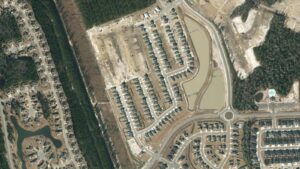
We bring this up with buyers in Leland, Hampstead and Castle Hayne before they sign, because in a community that is three years into a seven-year build-out, the board that sets your dues and approves your fence is not your neighbors. It is the company selling the lot next door.
That is not a scandal. Someone has to run an association that has twelve owners and ninety unbuilt lots, and the builder is the only party with the budget to do it. But buyers should know what they are signing up for before they fall in love with an amenity center.
What the statute actually allows
N.C.G.S. 47F-3-103(d) is one sentence long: “The declaration may provide for a period of declarant control of the association, during which period a declarant, or persons designated by the declarant, may appoint and remove the officers and members of the executive board.”
Read what is not in there. No maximum number of years. No percentage of lots sold that automatically ends it. No requirement that owners get a seat before it ends. Some states cap declarant control by statute. North Carolina leaves the length of it to the document the developer recorded before the first lot sold.
The companion provision, 47F-3-103(e), says that no later than the termination of declarant control, the owners shall elect a board of at least three members, a majority of whom must be lot owners. That is the handover. When it happens is whatever the declaration says.
One more piece of context: under N.C.G.S. 47F-1-102(a), the chapter applies to planned communities created in North Carolina on or after January 1, 1999, and it does not apply to a community of twenty lots or fewer unless the declaration says it does. Most of what is being built around Wilmington right now is squarely inside it.
The four rights you have anyway
Budget ratification. Under 47F-3-103(c), within 30 days of adopting a proposed budget the board must send every owner a summary and a notice of a ratification meeting, held not less than 10 and not more than 60 days after that mailing. Here is the catch worth understanding: no quorum is required, and the budget passes unless a majority of all lot owners rejects it. In a community where the builder still owns most of the lots, that math is not in your favor. Read the budget anyway, because it is the clearest signal of what dues will be when the subsidy ends.
Meetings and a voice. Under 47F-3-108(a), the association must hold a meeting at least once a year, and owners holding 10 percent of the votes, or any lower percentage in the bylaws, can call a special meeting. The 2025 amendments to this section, in Session Law 2025-25, added notice by email where an owner designates an address in writing and require the board, at regular intervals, to give owners an opportunity to attend part of a board meeting and speak about their concerns.
Records. Under 47F-3-118(a), financial and other records, including minutes of board meetings, must be reasonably available for examination by any owner, and the association must make an annual income and expense statement and balance sheet available at no charge within 75 days after the fiscal year closes. Subsection (b) requires a statement of unpaid assessments within 10 business days of a written request, with the fee capped at $200, plus up to $100 more if you ask within 48 hours of closing.
Who pays while the lots are empty. Under 47F-3-115(a), until the association makes a common expense assessment, the declarant pays all common expenses, and once assessments begin they must be made at least annually. This is the mechanism behind the dues increase that surprises people in year four. A builder subsidizing a pool for sixty homes stops subsidizing it when four hundred homes are paying, and the budget that was never stress-tested by owners becomes the budget owners inherit.
- Declarant control period: set by the recorded declaration, with no statutory maximum in North Carolina N.C.G.S. 47F-3-103(d), read November 21, 2026
- Owner-elected board required no later than the end of declarant control, at least three members, majority lot owners N.C.G.S. 47F-3-103(e), read November 21, 2026
- Budget ratification meeting: 10 to 60 days after the summary is mailed, no quorum needed, rejected only by a majority of all lot owners N.C.G.S. 47F-3-103(c), read November 21, 2026
- Statement of unpaid assessments: 10 business days, fee capped at $200, plus up to $100 to expedite within 48 hours of closing N.C.G.S. 47F-3-118(b), read November 21, 2026
- Annual dues in a built-out amenity community for comparison: $3,420 to $5,088 on single-family homes and $6,980 to $7,188 on townhomes in River Bluffs Listing detail pages via our River Bluffs guide, November 18, 2026
What to read before you sign
Ask for the recorded declaration, not the sales-center summary, and find the declarant control section. Three questions answer most of what you need: how long does the period run, does it end on a date or on a percentage of lots conveyed, and does the declarant keep any approval rights after it ends. Then ask for the current budget, the reserve study if one exists, and the last two years of financial statements. Under 47F-3-118 you are entitled to the financials once you are an owner, and most builders will share them before closing if you ask in writing.
Two local notes. Ongoing construction is part of the deal, and it shows up in amenity timing: at River Bluffs, for example, the developer describes 188 marina slips planned with the initial set installed, which is the kind of promise worth getting in writing rather than taking from a rendering. And when you compare a builder-controlled community with a finished one, compare the dues to what they will be, not what they are. Our new construction guide and our new construction versus resale comparison walk through the rest of the tradeoffs.
You cannot vote the builder out early. Owners may remove a board member by majority vote under 47F-3-103(b), but that same subsection excludes a member appointed by the declarant, which is the entire board during declarant control. If the builder is unresponsive about a drainage problem on common area, your options are the declaration’s own dispute provisions, the warranty, or a lawyer, and none of them is fast. The flip side deserves saying too: an owner-controlled board is not automatically better. We have seen volunteer boards defer maintenance for years to keep dues flat, then face a special assessment nobody budgeted for. A builder-controlled association with a funded reserve and a realistic budget can be the better deal. Read the numbers rather than the governance label.
Related questions people also ask
When does the builder have to turn over the HOA in North Carolina?
Whenever the recorded declaration says, because the Planned Community Act does not impose a deadline. The statute only requires that owners elect a board of at least three members, a majority of them lot owners, no later than the termination of whatever control period the declaration created. That is why the declarant control section of the declaration is the document to read before you buy rather than after.
Can the builder raise my HOA dues without a vote?
Effectively yes, in most cases. The board adopts the budget, owners get a summary and a ratification meeting, and the budget takes effect unless a majority of all lot owners rejects it at that meeting, with no quorum required. While the builder still owns most of the lots, assembling a majority of all owners is close to impossible. Your practical protection is reading the proposed budget when it arrives and asking what changes when the builder stops covering common expenses.
Do I have to pay dues on a lot with no house on it?
It depends on the declaration, which sets how assessments are allocated among lots. The statute says that until the association makes a common expense assessment the declarant pays all common expenses, and that assessments are then allocated as the declaration provides, so some communities assess unbuilt lots at a reduced rate and some at the full rate. If you are buying a homesite to build on later, get the answer in writing before closing, because it is a carrying cost for every year you wait.
Before you sign a builder contract, ask for the recorded declaration, the current budget and the declarant control section in writing, and read what dues become when the builder stops paying common expenses. Send us the community name and we will pull the recorded documents and tell you what we see in them. Talk it through with our team before you put down a deposit.
Sources: N.C.G.S. 47F-3-103, Executive board members and officers, subsections (b), (c), (d) and (e), North Carolina General Assembly, read November 21, 2026. N.C.G.S. 47F-1-102(a), Applicability, read November 21, 2026. N.C.G.S. 47F-3-108, Meetings, as amended by Session Law 2025-25, section 29, read November 21, 2026. N.C.G.S. 47F-3-115(a), Assessments for common expenses, read November 21, 2026. N.C.G.S. 47F-3-118(a) and (b), Association records, read November 21, 2026. Our River Bluffs neighborhood guide, HOA dues and marina detail read November 18, 2026.