Plan on $400 to $500 for a standard Wilmington house under 3,000 square feet, based on the fee schedules three local inspection firms publish, all read on October 21, 2026. A crawlspace, pilings, an older house or square footage above 3,000 pushes it higher, and the specialty tests you probably want on a coastal house are priced separately on top of that.
This is a question buyers ask us the week before they go under contract, usually because they are trying to budget the whole due diligence period at once. The answer is easier to pin down than most costs in a transaction, because several Wilmington inspectors publish their rates by square footage instead of quoting case by case.
It is also the cheapest serious money in the deal. Our New Hanover County market update puts the county median sale price at $464,000 for the three months ending September 2026. A $450 inspection is about a tenth of one percent of that. We have never once told a buyer to skip it to save the money.
What the local fee schedules actually say
Seaside Home Inspections, based in Wilmington, publishes a sliding scale for single-family homes, manufactured homes, duplexes and townhomes by finished square footage: $400 under 1,000 square feet, $425 for 1,001 to 1,500, $450 for 1,501 to 2,000, $475 for 2,001 to 2,500, $500 for 2,501 to 3,000, $600 for 3,001 to 3,500 and $700 for 3,501 to 4,000. Over 4,000 square feet and homes over 50 years old are quoted individually, and a crawlspace adds $50. Condominiums and apartments inspected interior only run $325 to $375 up to 2,000 square feet, and re-inspections start at $150 with only one scheduled.
Above Par Home Inspection, which lists Wilmington, Brunswick County and the beaches, prices from a slab base rate: $420 under 1,000 square feet, $440 for 1,000 to 1,499, $460 for 1,500 to 1,999, $480 for 2,000 to 2,499 and $500 for 2,500 to 2,999. Above 3,000 square feet it is $500 plus $0.36 per square foot. Then come the add-ons that tell you something about this market: an open piling foundation adds $20 and a closed one $40, a crawl space under 1,600 square feet adds $60, an occupied home adds $20, and the age of the house adds $20 for 2010 to 2020, $40 for 2000 to 2010, $60 for the 1990s and $80 for the 1970s or 1980s. Anything older than 50 years is case by case, and the firm notes a travel stipend for Pender County and south Brunswick County.
Driftwood Inspections, also in Wilmington, lists home inspections starting at $400, adds $100 for a house over 50 years old, and takes $50 off for veterans, first responders and teachers. Detached garages and sheds are $50 per 500 square feet, re-inspections start at $150, and infrared thermal imaging, gas leak detection and carbon monoxide testing are included with every inspection. Its stated service area runs from Jacksonville through Hampstead, Wilmington and Leland down to Supply and Shallotte.
- Seaside Home Inspections: $400 under 1,000 sq ft rising to $500 at 2,501 to 3,000 sq ft, plus $50 for a crawlspace; condos interior only $325 to $375 Seaside Home Inspections published pricing, read October 21, 2026
- Above Par Home Inspection: slab base $420 to $500 up to 2,999 sq ft, then $500 plus $0.36 per sq ft above 3,000 Above Par Home Inspection published pricing, read October 21, 2026
- Above Par age add-ons: $20 for 2010 to 2020, $40 for 2000 to 2010, $60 for the 1990s, $80 for the 1970s or 1980s Above Par Home Inspection, read October 21, 2026
- Driftwood Inspections: from $400, plus $100 for a house over 50 years old, $50 off for veterans, first responders and teachers Driftwood Inspections published pricing, read October 21, 2026
- Re-inspection after repairs: from $150 at both Seaside and Driftwood Both firms’ published pricing, read October 21, 2026
- New Hanover County median sale price $464,000, 61 days on market Our New Hanover County market update, three months ending September 2026
Why a coastal house costs more to inspect than the square footage suggests
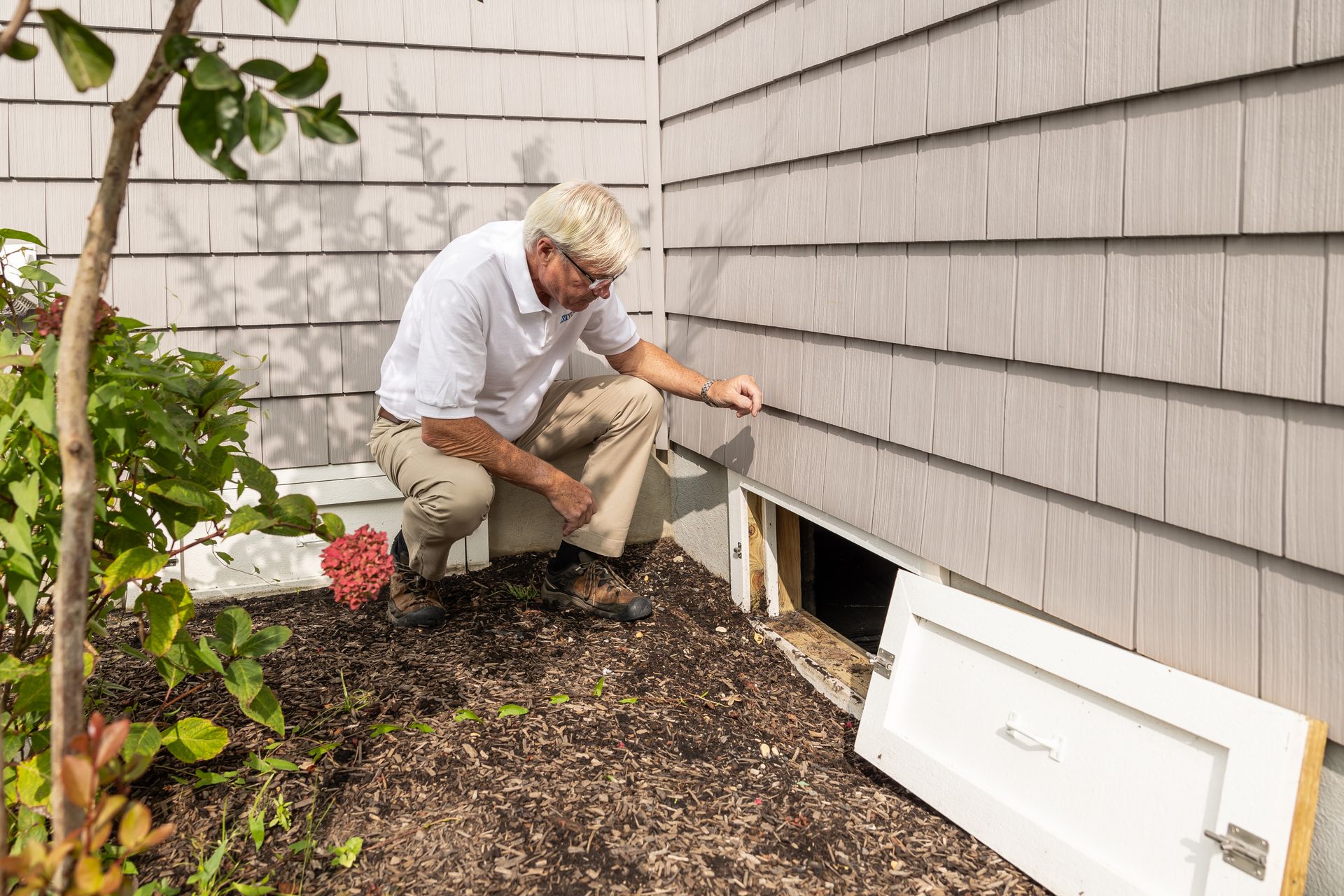
Look again at those add-on lists, because they are a map of what goes wrong in houses here. Crawlspaces carry a surcharge at two of the three firms because a Wilmington crawlspace is where moisture, failed vapor barriers and sagging joists live, and inspecting one properly means getting under the house rather than looking through the vent.
Pilings carry a surcharge because beach houses sit on them and because an enclosed ground level hides more than an open one. Age carries a surcharge because a 1985 house in Winter Park has had forty years of owners and handymen in it. If you are buying a 1990s house on a crawlspace in Myrtle Grove, you are looking at the base rate plus two add-ons, not the base rate.
None of that is a reason to shop for the lowest number. The useful comparison between two inspectors is the report, not the invoice. Ask each one for a redacted sample report before you book, and ask whether they will walk the house with you afterward.
The inspections that are not in that base price
The base fee covers a general home inspection. Several things a Cape Fear buyer needs are separate, and the state’s own rules tell you why. Under 11 NCAC 08 .1105(a)(9), a North Carolina home inspector is not required to report on the presence or absence of pests such as wood damaging organisms, rodents or insects. That means your termite and wood destroying organism report is a separate engagement, not a line item you can assume.
The others worth budgeting for: a sewer scope if the house is older than the sewer line, a septic evaluation and permit record review if the house is on a private system rather than city sewer, a radon test, a pool or irrigation inspection where those exist, and an elevation certificate if the house is in a mapped flood zone. Driftwood bundles a radon test into two of its packages, and Seaside no longer offers pre-drywall inspections, which is worth knowing if you are buying new construction. Ask each inspector which of these they perform themselves and which they subcontract.
Our post on what to actually do during due diligence sequences all of this, because the order matters more than the total. Inspection first, specialists second, repair negotiation third, and all of it inside a window that does not pause for a busy inspector’s calendar.
What you get for $450, and what you do not
North Carolina regulates this trade, and the rules are specific. Under G.S. 143-151.58(a), a licensed home inspector must give you a written report, by the date set in a written agreement or, if none was set, within three business days of the inspection. Under subsection (a1), a prepurchase inspection of three or more systems must carry a summary page, and the statute dictates its opening language, including a statement that the summary is not the entire report and a direction to contact your real estate agent or an attorney about the negotiability of any item. Before the inspection happens, 11 NCAC 08 .1103(b)(1) requires a written contract you have signed that states what services will be provided and the cost.
Now the limits, which are just as specific. The inspector examines readily visible and readily accessible installed systems, and “readily accessible” is defined in 11 NCAC 08 .1101(27) as within reach, without a ladder and not blocked by appliances. Rule .1104(a) states plainly that inspections done to these standards are not technically exhaustive. Rule .1105(a) says the inspector is not required to report on the life expectancy of any component, the causes of a needed repair, the methods, materials and costs of corrections, compliance or non-compliance with codes or ordinances, market value or marketability, or the advisability of buying the property. Rule .1105(b)(1) says the inspector is not required to offer warranties or guarantees of any kind.
Read as a set, that is the honest description of what you are buying: a trained person looking carefully at what can be seen and reached on one day, writing it down. It is not a code inspection, not a warranty and not a prediction about your water heater.
Two things make the price less important than it looks. First, the inspection has to happen early, because the due diligence fee you paid the seller is non-refundable and the clock does not stop for scheduling. Book the inspector before you go under contract if you can, especially in spring. Second, the cheapest quote is often the thinnest report, and a thin report costs you far more than the $75 you saved when it misses a crawlspace moisture problem you then own. The one place we would spend less rather than more: if you are buying a condominium where the association maintains the roof, the siding and the exterior, an interior-only inspection at the lower condo rate is usually the right call, and the association’s reserve study matters more than the inspection does. If you are not sure which of the specialty inspections your particular house actually needs, that is a short conversation worth having before you spend on all of them.
Related questions people also ask
Does a home inspector have to be licensed in North Carolina?
Yes. Home inspection is regulated under the Home Inspector Licensure Act, Article 9F of Chapter 143 of the North Carolina General Statutes, administered by the North Carolina Home Inspector Licensure Board. Performing home inspections for compensation without a current license is grounds for Board discipline, and violating a provision of that Article is a Class 2 misdemeanor. Ask for the license number and verify it with the Board before you book.
Does a home inspection include a termite inspection?
No, not as a matter of course. Under the Board’s rules at 11 NCAC 08 .1105(a)(9), a home inspector is not required to report on the presence or absence of pests such as wood damaging organisms, rodents or insects. A wood destroying organism report is a separate inspection, often performed by a licensed pest control operator, and lenders on some loan programs require it. Arrange it alongside the home inspection rather than after, so the findings land inside the same due diligence window.
Do I still need an inspection on a brand new house?
We think so, and we recommend it on every new construction purchase. A new house has never been lived in, which means no one has yet found the condensate line that was never connected or the bath fan venting into the attic. The builder’s warranty gives you a remedy, but only for problems somebody documents, and the one-year mark is when that warranty starts to close. Some local firms offer new construction and one-year warranty inspection packages for exactly this reason.
Before you write your offer, call two inspectors, ask for their fee on the actual square footage and foundation type of the house you are targeting, and ask for a sample report. Then put the inspection and any specialty tests on a calendar that ends several days before your due diligence deadline rather than on it. If you want help deciding which specialty inspections your house actually needs, and reading what comes back, that is the part of the process our team spends the most time on, so bring us the address and we will plan it with you.
Sources: Seaside Home Inspections, Above Par Home Inspection and Driftwood Inspections published pricing pages, all read October 21, 2026. North Carolina Home Inspector Licensure Board, Home Inspector Licensure Act and Board Rules, effective June 1, 2026, covering N.C. General Statutes Chapter 143, Article 9F and 11 NCAC 08 .1000 through .1300, including G.S. 143-151.58(a) and (a1) and Rules .1101(27), .1103(b)(1), .1104(a) and .1105. Our New Hanover County market update, three months ending September 2026.