
The median single-family flood policy at Wrightsville Beach costs $1,649 a year, but half of them land somewhere between $1,208 and $2,725, and one in five costs more than $3,000 (FEMA OpenFEMA NFIP policy file, data as of September 8, 2026). The bigger issue is not the premium. It is that a federal flood policy will only insure $250,000 of the building, and most houses on this island are worth a great deal more than that.
Buyers ask us this question in two different tones. One is a second-home buyer running the numbers on a sound-side cottage and wondering whether flood insurance quietly doubles the carrying cost. The other is somebody under contract on 28480 who got a quote back that was four times what their neighbor pays and wants to know which number is the real one. Both of them are asking the same thing, and the honest answer is that there is no single Wrightsville Beach flood premium. There is a spread, and where you land in it depends on your house, not on the zip code.
So rather than hand you an average, we pulled the federal data. FEMA publishes every NFIP policy in the country. We filtered it to single-family policies in zip code 28480 that took effect on or after October 1, 2025, which gave us 1,008 policies written in the last twelve months of the file. Here is what our neighbors on the island are actually paying.
What the policy file actually shows at Wrightsville Beach
The annual cost below is what FEMA calls the policy cost: the premium plus the federal policy fee, the reserve fund assessment and the HFIAA surcharge. It is the number that shows up on your closing statement, not a stripped-down premium figure.
- Median annual cost, single-family: $1,649 FEMA OpenFEMA NFIP policy file, 1,008 policies effective on or after October 1, 2025, data as of September 8, 2026
- Middle half of policies: $1,208 to $2,725 FEMA OpenFEMA NFIP policy file, September 2026
- Ninetieth percentile: $4,474. Highest in the file: $10,281. Lowest: $397 FEMA OpenFEMA NFIP policy file, September 2026
- 11 percent pay under $1,000; 48 percent pay $1,000 to $1,999; 21 percent pay $2,000 to $2,999; 14 percent pay $3,000 to $4,999; 6 percent pay $5,000 or more FEMA OpenFEMA NFIP policy file, September 2026
- Condominium units carrying their own contents policy: median $1,006 across 91 policies. Condo association master policies: median $2,520 across 189 policies FEMA OpenFEMA NFIP policy file, September 2026
Read that spread rather than the midpoint. A median of $1,649 is real money but it is not the catastrophe that buyers arriving from Ohio or New Jersey have braced themselves for. At the same time, roughly one house in five on this island is carrying a flood bill north of $3,000, and if you buy that house, the median does you no good at all.
Why the VE homes are not the expensive ones
This is the part that surprises people. Of the 1,008 single-family policies, 958 are rated in an AE zone and only 48 are rated VE, the velocity zone where waves do the damage. You would expect the VE policies to be the painful ones. They are not. The VE median is $1,438 and the AE median is $1,682 (FEMA OpenFEMA NFIP policy file, September 2026).
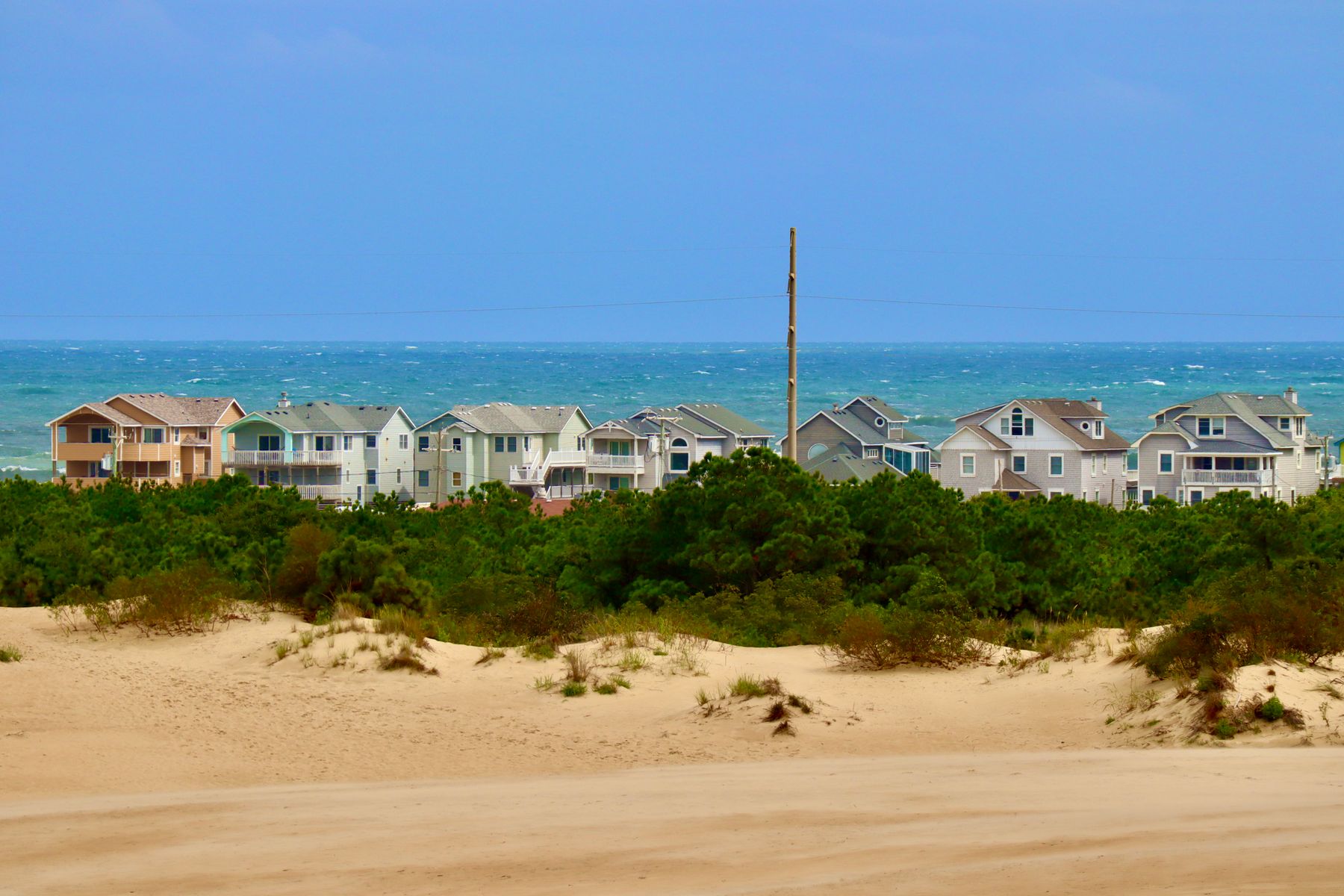
The reason is construction, not geography. VE at Wrightsville Beach is the ocean-facing edge, and almost everything standing there was built or rebuilt to the velocity-zone standard: piles, breakaway walls, living space well above the base flood elevation. Across the whole island, 68 percent of these single-family buildings are coded as elevated and the median original construction year is 1985. FEMA’s current pricing approach rates the building, including how high the lowest floor sits, rather than the line on the map. A 1960s slab cottage three blocks back from the ocean in an AE zone can and does cost more to insure than a new piling house on the oceanfront.
Eleven percent of the island’s single-family policies are on pre-FIRM buildings, meaning they went up before the first flood map took effect. Those are the ones where the number tends to climb. If you are looking at an older, low, non-elevated house here, assume you are shopping in the upper half of that range until a quote tells you otherwise. Our complete guide to Wilmington flood zones and flood insurance walks through how elevation certificates and base flood elevations feed into the price.
The $250,000 problem nobody mentions until closing
Here is the part that matters more than the premium. A federal flood policy on a single-family home maxes out at $250,000 of building coverage and $100,000 of contents. That cap is set in federal statute and has not moved in decades.
At Wrightsville Beach, 955 of the 1,008 single-family policies, 95 percent, are already sitting at that $250,000 ceiling (FEMA OpenFEMA NFIP policy file, September 2026). They are not choosing that number. It is simply all the program will sell them. Of the policies in the file that report a building replacement cost, slightly more than half report a figure above $250,000, and the upper quarter report $625,000 or more.
Translate that into a real situation. You buy a house here, a flood event takes the first floor, and the federal policy pays its $250,000 toward a structure that costs far more than that to rebuild. The gap is yours. That is why we tell buyers at this price point to ask their agent about excess flood coverage, sometimes called private flood, which sits on top of the NFIP policy and covers the difference. It is a separate conversation with a separate premium, and it is far better to have it during due diligence than after a storm.
What actually changes your number
Four things move the price on a specific Wrightsville Beach address, and only one of them is the flood zone.
How high the lowest floor sits
Elevation relative to the base flood elevation is the single biggest lever. Get the elevation certificate if one exists. If it does not, a surveyor can produce one, and on a borderline house that document frequently pays for itself in the first year.
The town’s CRS class
Wrightsville Beach participates in FEMA’s Community Rating System, and every one of the 1,008 policies in the file is rated at Class 7, which carries a 15 percent discount inside the Special Flood Hazard Area (FEMA OpenFEMA NFIP policy file, September 2026). That discount is already baked into the numbers above. You do not have to apply for it and you cannot lose it by buying the wrong house.
Whether the house is your primary residence
Of these policies, 442 are on primary residences and 566 are not. Second homes and rentals carry a different surcharge, which is one reason two similar houses on the same block can quote differently.
The seller’s current policy
Ask for the declarations page, then treat it as a floor and not a quote. Federal law caps most renewal increases, so a long-held policy on an older house may still be climbing toward its full-risk price. Yours starts fresh.
Two things we cannot promise you. First, the federal program itself is on a short leash. Congress extended the National Flood Insurance Program’s authorization through December 11, 2026, and FEMA has said that during a lapse it would stop selling and renewing policies, which would stall closings that require flood insurance (FEMA congressional reauthorization page, updated September 28, 2026). We have not seen a lapse stop a Wrightsville Beach closing yet, but if you are buying here this winter, ask your lender what their contingency is. Second, every figure above describes what other people’s houses cost. It is not a quote for yours, and we will not pretend we can price your address from a spreadsheet. Get a written quote during due diligence, from your own agent, on the actual parcel.
Related questions people also ask
Is flood insurance required at Wrightsville Beach?
If your home is in a Special Flood Hazard Area and you have a federally backed mortgage, your lender must require flood insurance, and essentially every financed single-family home on the island falls into that category. If you pay cash, no one can force you to buy a policy. Going without it on a barrier island is a decision we would argue with, but it is legally yours to make.
Does flood insurance cover wind and hurricane damage?
No. A flood policy covers rising water, while wind, wind-driven rain and hail are covered by your homeowners policy, and on the coast those perils often carry a separate named-storm deductible calculated as a percentage of your dwelling coverage rather than a flat dollar amount. Buyers regularly assume one policy handles a hurricane. Two do, and they have different deductibles.
Can I transfer the seller’s flood policy when I buy?
Often yes. A federal flood policy can usually be assumed by the buyer at closing, which can preserve favorable rating from the prior owner. Whether it is worth doing depends on what that policy costs compared with a fresh quote, so get both numbers before you decide. Your closing attorney and the seller’s insurance agent handle the paperwork, but someone has to ask for it, and it is usually us.
Before you write an offer on Wrightsville Beach, pull the address into our Wrightsville Beach guide and ask the listing agent for the elevation certificate and the current declarations page. Those two documents turn a guess into a number. If you want help reading them, or you want to know how a specific street compares against the rest of the New Hanover County market, talk it through with our team and we will go through it with you line by line.
Sources: FEMA OpenFEMA NFIP policy file, 1,008 single-family policies in zip code 28480 effective on or after October 1, 2025, data as of September 8, 2026, retrieved October 11, 2026. FEMA NFIP coverage limits for single-family residential buildings. FEMA Community Rating System class credits. FEMA congressional reauthorization page for the National Flood Insurance Program, updated September 28, 2026. Tidal Realty Partners New Hanover County market update, Redfin and Realtor.com via FRED, August 2026.



