Wilmington, NC Flood Zones Explained. What Buyers Must Know (2026 Guide)
If you’re buying a home in Wilmington, North Carolina, understanding flood zones is not optional—it’s essential.
With our coastal location, proximity to the Cape Fear River, and history of hurricanes, flood risk plays a major role in property value, insurance costs, financing eligibility, and long-term resale potential.
This guide breaks down everything you need to know about Wilmington, NC flood zones, how they impact your purchase, and how to make a smart, informed decision.
What Are Flood Zones?
Flood zones are geographic areas defined by FEMA (Federal Emergency Management Agency) that indicate a property’s level of flood risk.
These zones are shown on Flood Insurance Rate Maps (FIRMs) and are used by lenders, insurance providers, and local municipalities. They help determine whether flood insurance is required and provide a general sense of a property’s exposure to flooding.
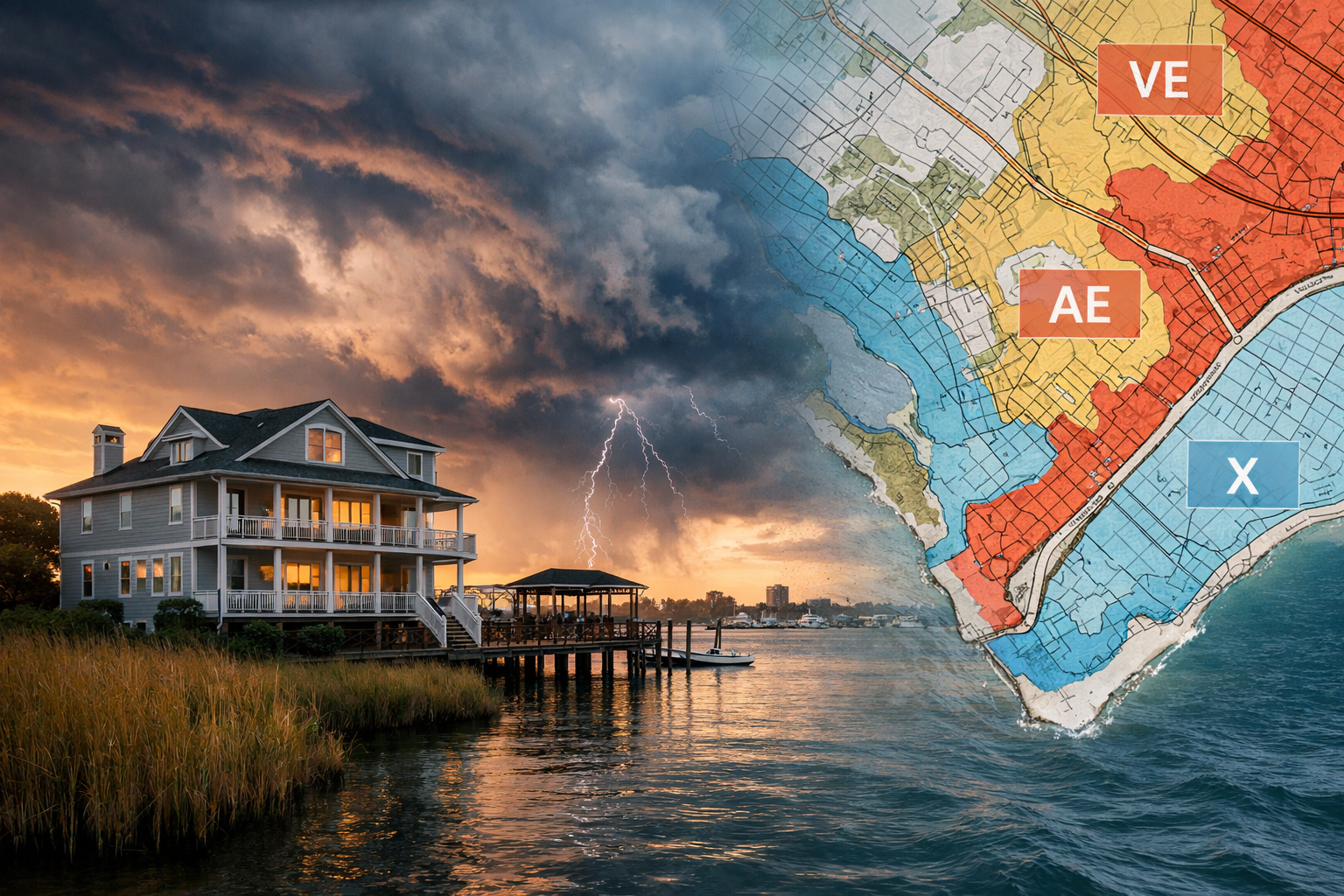
Wilmington, NC Flood Zone Map Overview
Wilmington includes a mix of flood zones due to its coastal geography, nearby waterways, and elevation changes throughout the area.
The most common flood zones you’ll see include:
Zone X (Low Risk)
These areas are considered lower risk. Flood insurance is typically not required by lenders, and they are generally the most desirable from a risk standpoint.
Zone AE (Higher Risk – 1% Annual Chance Flood)
These are higher-risk areas where flood insurance is typically required if you are financing the property. Base Flood Elevation (BFE) standards apply.
Zone VE (Coastal High Hazard Area)
These areas carry additional risk due to storm surge and wave action. Construction requirements are stricter, and insurance considerations are typically higher.
Zone A (Undetermined Elevation)
These are also higher-risk areas, but with less detailed elevation data available, which can add uncertainty when evaluating a property.
Why Flood Zones Matter When Buying a Home
Flood zones influence more than just insurance—they impact your total cost of ownership and future resale potential.
Flood Insurance Considerations
Flood insurance costs in Wilmington can vary significantly depending on the specific property.
Very general ranges buyers may encounter include:
- Lower-risk areas: a few hundred dollars per year
- Moderate-risk areas: potentially several hundred to a couple thousand annually
- Higher-risk coastal areas: can be several thousand per year or more
These are broad estimates only. Actual premiums depend heavily on elevation, construction type, foundation height, proximity to water, and the insurance provider.
Mortgage Requirements
If you are financing your purchase, properties located in higher-risk zones (such as AE, VE, or A) will typically require flood insurance. Lenders will require proof of coverage prior to closing, and this cost becomes part of your monthly housing expense.
Resale Value and Marketability
Flood zones can influence buyer demand, time on market, and negotiating leverage. Some buyers specifically avoid higher-risk zones, while others are comfortable if the property is properly elevated and priced accordingly.
Inspection and Due Diligence
When purchasing in or near a flood zone, it’s important to go beyond a standard home inspection. Buyers should review FEMA maps, request an elevation certificate if available, and investigate any history of flooding or water intrusion.
Wilmington-Specific Flood Risk Factors
Wilmington has several local factors that make flood awareness especially important.
Coastal storm systems, including hurricanes and tropical storms, can bring significant rainfall and storm surge. The presence of the Cape Fear River and Intracoastal Waterway also contributes to localized flood risk depending on elevation and proximity.
Additionally, some areas of Wilmington sit at lower elevations, and ongoing development can impact how water drains across different parts of the city over time.
How to Check a Property’s Flood Zone
Before making an offer, you should always verify the flood zone independently.
You can do this through the FEMA Flood Map Service Center, local county GIS mapping tools, or by working with an experienced real estate agent who evaluates this as part of the buying process.
It’s important not to rely solely on listing descriptions, as they are not always accurate or up to date.
Pro Tips for Buyers
One of the biggest mistakes buyers make is automatically eliminating any home in a flood zone. Not all properties within the same zone carry the same level of risk.
Elevation is often more important than the zone designation itself. Two homes in the same flood zone can have very different insurance costs depending on how high they are built relative to base flood elevation.
Requesting an elevation certificate can provide valuable clarity and may help reduce insurance costs. It’s also smart to obtain a flood insurance quote early in the process—ideally before submitting an offer—so there are no surprises.
Should You Buy in a Flood Zone?
Whether or not you should buy in a flood zone depends on your risk tolerance and the specific property.
A property may still be a strong opportunity if it is properly elevated, has no history of flooding, and the insurance cost fits comfortably within your budget.
On the other hand, buyers should proceed cautiously if there is a known history of water intrusion, limited elevation data, or insurance costs that significantly impact affordability.
Final Thoughts
Flood zones are a key factor when buying real estate in Wilmington, NC, but they don’t have to be a deal breaker.
The goal is to understand the risk at the property level, evaluate the financial impact, and make a well-informed decision that aligns with your long-term goals.
Frequently Asked Questions
Do all homes in Wilmington require flood insurance?
No. Typically, only homes located in higher-risk flood zones require insurance when financing is involved.
Can flood zones change over time?
Yes. FEMA periodically updates flood maps, which can affect flood zone designations and insurance requirements.
Is flood insurance expensive in Wilmington?
Costs vary widely depending on the property, elevation, and other factors. The best approach is to obtain a quote for any specific home you are considering.
Work With a Local Expert
If you’re considering buying in Wilmington, we can help you evaluate flood risk, insurance considerations, and property-specific details so you can move forward with confidence.
Request a custom property analysis or get a list of homes in lower-risk areas.